



Hello! This is a riff on episode #412 of the Reversing Climate Change podcast by me, Ross Kenyon. You can listen to the show on Apple Podcasts, Spotify, YouTube, or wherever else you get your podcasts.
Misspent or correctly spent youth
I spent a good chunk of my twenties writing pieces and producing videos while traveling. I studied my final semester of my undergraduate degree in Istanbul, then wandered around the Balkans for a month, growing an unkempt beard, hitchhiking, and generally misunderstanding the region in tragicomic fashion before landing in New York.
Many of my most memorable moments of so many years on the move were disasters that I recount in self-deprecating style. On that same Balkan jaunt, I was having dinner one night in Niš, Serbia.
Niš is a unique place. Emperor Constantine hailed from there, and their gastronomy still haunts me. Their street food is world class barbecue called roštilj . But it’s also a place where the Ottomans put down a Serbian revolt and then built a tower of Serb skulls as a warning to posterity. I’ve seen it. It’s hideous. They keep it covered by a tower that surrounds so that you don’t just walk by it, presumably for reasons of both reverence and protection.
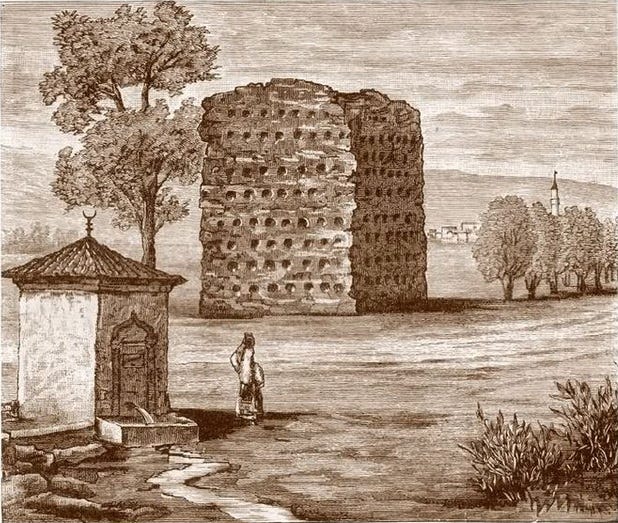
One branch of my family hails from this region: Croats, Serbs, Hungarians, Austrians, Jews1—all mixed up in the chaotic pastiche of genealogy that is true for so many. I love genealogy and have become increasingly obsessed with place, language, history, and the incredible stories that have led each of us to this exact present moment. But at this time in my life, I didn’t yet have this interest. I didn’t yet know the exact contours of my heritage except for an old last name, “Vukcevich” (which means “son of [the] wolf” because I’m really cool), and my hand waving over nearly the entire peninsula.
Now back to the dinner. This was a white tablecloth prix fixe establishment. I had beautiful steak and quince rakija (this was Niš after all), and the restauranteur asked me about my travels. I told him I was next heading to Pristina, Kosovo. He was sure that I had meant Pristina, Serbia. Foolish me, not realizing he was making a normative claim about how he didn’t recognize the state of Kosovo’s right to exist, insisted that no, I was in fact heading to Pristina, Kosovo.
Extremely rapid and agitated Serbian followed. My limited language ability here can only pick out a few words: “Turks”, “NATO”, “Hitler”, and incongruently… “Mahmoud Ahmadinejad!” The waiter, struggling to keep up in translating, rushes out “everyone picks on the Serbs: the Turks, NATO, Hitler. And your shitty beard makes you look like Mahmoud Ahmadinejad!”
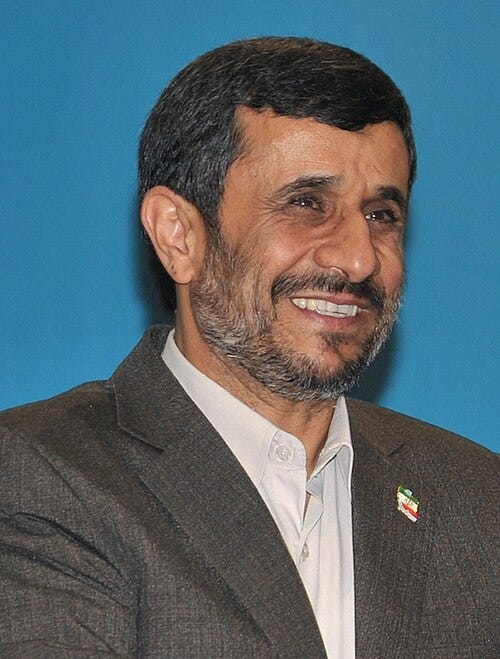
To this, what can be said? I had clearly stumbled into Balkan nationalism and revanchist thought in the most avoidable and careless way possible. All I could do was pay my tab quickly and leave before I somehow made it worse.
It was so bizarre to me. I feel so insulated from history and identity as a white presumably gentile American that I would have to synthetically recreate a white American identity in order to be offended by insults to it. Some white Americans still find a way to be defensive about it, but I digress.
This restauranteur’s experience was so instructive and revealing to me. How deeply wounded and near to the surface was this person’s trauma both personal and epigenetic to be sent into a tirade against this ignorant American.
Of course, he was also seemingly cut off from his own ethical culpability in how the Albanians of Kosovo might also feel similarly to him and about him, and that they might also have a legitimate grievance.
There is something beautiful and tragic about how ensnared he was in the pain of his people and potential inability to recognize the parallel pain of his neighbors. It points to history not as a place to settle scores but a game to leave behind entirely. “An eye for an eye will make the world blind.” The goal is to forgive our historical and recent antagonists, ask for forgiveness from those our group(s) have harmed, and try to find a way to live free and beautiful lives on this planet. This might be the first time my safety and distance and race was disarmed enough to understand how identity works outside of that most peculiar of nationalities: being American.
And it happened in what I hope was a halfway humorous way for you. It was (ideally) profound, but also self-deprecating, as I brought this calamity on myself.
J. Maarten’s Troost’s travels and life in Oceania
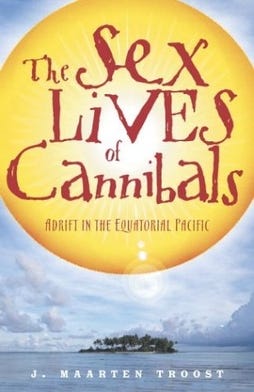
J. Maarten Troost’s books about Oceania all attempt and I think succeed at doing something similar. Like any travelogue, they point to difference among peoples, of culture shock, and inconvenience. But also of respect and friendship and the recognition of the universally shared nature of fellow humans. And it mostly involved Maarten screwing something up and getting bitten by centipedes or swimming in raw sewage or something of the like. It’s at Maarten’s expense, and I believe that editorial decision is genuinely wise.
Travel writing is so much more than escapism, or it can be. And while Maarten’s books are genuinely funny, I do think he treats his genre with the respect that it deserves.
To this day, I am still so chuffed Maarten hung out with me on the Reversing Climate Change podcast. This is a personal favorite of mine where we got to discuss his books, how Oceania is/was changing at the time, and what he’s learned by being a fish out of water for so much of his life.
I hope you enjoy listening to this episode, and maybe even picked up a little extra appreciation for a genre that is sometimes not treated as seriously as it deserves to be.
The full transcript is below if you prefer to read rather than listen. But if you scroll to the top of the piece you can listen in several different ways.
Thanks for being here with me!
Sincerely,
Ross
This podcast has been running for almost a decade. There are some real gems buried in the catalogue that I am happy to have a chance to rerelease. This is one of those episodes. It has a new intro.
I recorded it with J. Maarten Troost in April 2020 and published it as S2E9, "Travel writing a disappearing Oceania". It remains a personal favorite of mine.
Travel writing a disappearing Oceania—w/ J. Maarten Troost

J. Maarten Troost on travel writing a disappearing Oceania, in the original 2020 conversation.
Maarten wrote four travel memoirs: The Sex Lives of Cannibals (2004), about the two years he spent in Kiribati after his partner got a job at an NGO who operated there; Getting Stoned with Savages (2006), about their move to Fiji and Vanuatu; Lost on Planet China (2008) where Maarten ends up wandering around quite a bit of China; and Headhunters on My Doorstep (2013), a Treasure Island retracing written in recovery.
We talk about his time in a huge place that very few have visited to the depths he has, and how the world was changing (or maybe beginning to change) since his time in the region.
Travel writing when it's good, acknowledges both difference and universality. It helps us understand Other, and mocks the way that we are in taking our Otherness for granted. Maarten does a wonderful job at both.
And he hates the f*@!ing Macarena.
This Episode's Sponsor
2026 EcoForums Training Series: Navigating Global Carbon and Fuel Regulations, Market Mechanisms, and Life-Cycle Analysis Fundamentals
Resources
Check out my new show, Climate Workers Anonymous
J. Maarten Troost at Penguin Random House
J. Maarten Troost at BJ Robbins Literary Agency
The Sex Lives of Cannibals: Adrift in the Equatorial Pacific (2004)
Getting Stoned with Savages: A Trip Through the Islands of Fiji and Vanuatu (2006)
Lost on Planet China: One Man's Attempt to Understand the World's Most Mystifying Nation (2008)
Headhunters on My Doorstep: A True Treasure Island Ghost Story (2013)
What became of the Kiribati land purchase in Vanua Levu
Kiribati's Office of Te Beretitenti on the Fiji land purchase
Paul Theroux, The Happy Isles of Oceania: Paddling the Pacific (1992)
Christina Thompson, Sea People: The Puzzle of Polynesia (Harper, 2019)
David Foster Wallace, "Shipping Out," Harper's, January 1996, later collected as "A Supposedly Fun Thing I'll Never Do Again"
John Jeremiah Sullivan, "You Blow My Mind. Hey, Mickey!", The New York Times Magazine, 2011
Jon Ronson, So You've Been Publicly Shamed (Picador, 2015)
407: Charles C. Mann on the wizards & prophets of climate change, the first rerelease
326: Confronting our shadow: Jung, the Vietnam War & climate change, w/ Karl Marlantes, the other author episode Maarten's intro name-checks
More from the show
Ad-free episodes and other benefits come with a paid subscription.
Carbon Removal Newsroom, the news show that ran alongside this one, is over. Its episodes are still up, on the feed Climate Workers Anonymous now uses.
Carbon Removal Memes is still goofing around.
The books that come up on this show are collected on my Bookshop shelf.
🎧 Apple Podcasts · Spotify · YouTube
Paid subscribers get this episode ad-free. The ads in the free feed are inserted by Spotify when you press play. They are not in the file I make.
Full Transcript
Ross Kenyon: Hello. Thanks so much for listening to Reversing Climate Change. This is Ross Kenyon, I’m the host of the show.
You know that old King James line about new wine into old bottles? This is a new intro for an old podcast. I’ve been podcasting for, like, a decade, and there’s a bunch of people who are more recent listeners, and they may have missed some of the earlier gems of the show, which I’m actually going through the catalog right now trying to pull out some of my favorites that I just don’t want to die in obscurity.
Not die in obscurity. Maybe be buried pleasantly for the super fans who wanna go back through the catalog of old shows.
Some of those old shows are good listening, but they’re very much time-stamped. Some of the things that are in there, the way that issues are discussed, they will be part of the oral history of the late teens when carbon removal was gaining its footing. But if you listen to them, you would have old stats and old insights from a world that no longer exists. And while that can be very useful sometimes, to go back through and poke around in and see what you can learn, they’re more of a time capsule than anything.
And in fact, I’m going to do a show about this for a bunch of different reasons. I’ve become somewhat obsessed with it. One of the funny things, and maybe this is being an American, maybe this is being anyone, but I haven’t really thought of myself as being that historically situated at all in my life. Or maybe it’s just youth, I don’t know. But there’s something about those years of your life, maybe it’s your 20s, maybe it’s earlier than that for you.
It’s like when you’re the generation that has the cool slang that everyone else tries to use but fails at. You know? And you can see this too, like some of the shows that I’ve been most influenced by and really love, like I love Six Feet Under. If you’ve never seen Six Feet Under, it’s an amazing show for various reasons. It’s a little bit soapy. It’s a little bit like a soap opera. And parts of it maybe aren’t great, and some parts are campy and maybe a little bit silly, and not all of it aged wonderfully.
But it’s one of those things, it’s like, it’s the perfect Gen X show. So I’m an elder millennial. I’m not Gen X, but you come of age looking up at the Gen Xers who are making the music that you listen to and things like that. And you think about someone like Nate Fisher, you know, Peter Krause in Six Feet Under, and there’s something about that sort of... I link it so strongly to Stephen Malkmus and Pavement and this sort of DIY early indie, slacker, Richard Linklater, lifestyle artist kind of vibe. And I’m sure at the time that Alan Ball was making that show, it felt like that was so true, and it felt like it was pointed at something that was urgent and a way of life that needed to be documented.
And it’s only if you watch this show 20 years after it’s made, you realize how strongly time-capsuled it is. The references in that show are the dinner table debates that would’ve happened during the early Bush years. They’re about why is the US in Iraq if Iraq didn’t attack the US for 9/11? That was, like, not a connection. And what’s actually driving foreign policy, and is it all about energy politics?
This isn’t unique to Six Feet Under, obviously. There are other shows of that same era that I also feel that way about. If you watch Arrested Development now, if you did not come of age during the W. Bush years, if that was not a time period for which you were politically aware in any way, or your brain was not being turned on to politics during that time like it was for me, Arrested Development, so many of those gags will go right over your head.
You won’t understand the various things about Halliburton or the Bush family as a whole. There’s just a lot of jokes that are at the expense of political culture and the W. administration during that time that you’d watch it and be like, “That’s a reference to something, but I have no idea what it’s a reference to.”
It’s bracketed in time. And now if you watch it, it’s almost like studying this show that’s been dunked in amber and sort of like, “Oh, what an interesting artifact from a previous era.” And when you’re living it, it feels much more universal than that. And maybe one just needs to have enough life experience that you don’t think that you’re always going to be at the crest of the wave.
But sometimes the things that you grew up with will fall away and become a thing of the past. That’s a bittersweet way of putting it. It doesn’t have to be. That’s just the way of the world. Things do pass like this. And there are many, many episodes of Reversing Climate Change that you can go back and listen to if you want.
I doubt in all of them I’m especially wise or astute, and I like to think that I’ve gotten better over time, but I’ll probably look back on this period and think, “Wow, I really did not know all of the things that I did not know at that time.”
And again, that might just be part of life. And some of them I’m not going to bring to the forefront. I’m sure they’re still good listening. There’s probably some good points in there.
But there are some that I think do deserve to be brought to the fore, you know, shows that are favorites of mine. Now that I’m doing Substack more, I’m being able to bring out full transcriptions of episodes. I’m able to write about the ones that I like and why I like them, what did I not get into in the podcast itself that deserves some riffing on, and this is a way of doing that now.
And this episode is one of those. I think I’ve only done one of these previously, or at least recently. I did a re-release of the Charles C. Mann episode just because wizards and prophets kept coming up. I’m like, “All right, it’s time to revisit this and let people hear the original episode with the man himself.”
And this is one of these episodes where I’ve been able to get some of my favorite authors on the podcast, and I’ve been able to do it by just being an obsessive fan and being like, “Wait, wait, hear me out. I know you don’t really do climate stuff, but here’s why you should be on the show.” And me doing that shtick has worked a decent number of times because if you’ve engaged with someone’s work seriously, you wanna talk about it.
I think authors wanna hang like that. I think when they go on their press junkets when a book comes out, interviewers just read a little blurb about it and then have them on the show, and the conversations aren’t that deep. But for the artists and the authors that I’ve been able to have on, they’re often people where I know their work super well, and I’ve prepared for this. And people I’ve been really proud to have on.
Like, I’ll probably re-release the episode I did with Karl Marlantes. If you watch the Ken Burns Vietnam War documentary, which you absolutely should, it’s incredible, and Trent Reznor and Atticus Ross do the score for it, so it’s extra good. But Karl Marlantes is one of the main people that are interviewed from their time serving with American forces in Vietnam. He’s a novelist. He’s written a bunch of really cool books, none of which are about climate. And again, just able to be like, “Wait, wait, hear me out. You should be on this podcast. Let me tell you why.”
And I was able to do this with today’s guest that I’m re-releasing, J. Maarten Troost. Maarten’s a journalist whose partner at the time got a job with a nonprofit or an NGO in Kiribati, formerly called the Gilbert Islands, in Micronesia, and moves there and writes a book called The Sex Lives of Cannibals. And we talk about the appropriateness or inappropriateness of that title in the episode in the beginning. So hold your horses. We’ll talk about that.
But he’s written several books about his time living in Oceania, which has also become no easier for me to say since I asked him about that as well. I just love his writing. We end up talking about climate change, what he had observed in the region during his time there, what he’s watching out for in the future, and just able to talk about the craft of travel writing and why it’s important and why it’s good and why it’s a beautiful thing, and why it can be so funny and humane.
And one of his last books was about recovery and addiction and what it was like doing travel writing while in recovery. And he’s got a gimlet eye for everything, and he’s got a funny satirical take. And I found it to be such a nice maturation of theme and no less funny or humane as a result. And it’s one of those shows that’s a personal favorite. I’m so happy that I was able to get J. Maarten Troost on Reversing Climate Change.
One of the rules, or at least my rules, of making art is that the only way I can tell if it’s good is if I can get excited about it. There are shows that I’ve made that I don’t have that feeling for, and sometimes people will tell me how much they liked that episode and how good it was, and I’ll be like, “I can’t really tell if it was, but thanks for telling me. I’m glad you liked it.” And this is one of those episodes where I was like, wow, I put together something that no one else would probably make a show like this, and got to hang out with sort of a legendary travel writer and how fun that was.
And not to just pat myself on the back, but some of those shows where you know you maybe did something that wasn’t going to be done. Like, there are some artists and authors, you know, like right after you interview them, you’ll see them go on all the other climate podcasts too, and you’ll be like, “Okay.” Yeah, that’s because it’s not a surprising guest choice. And some of these ones are a little bit more esoteric, a little bit stranger.
But it also takes a little bit of vulnerability to share something like this because it is time capsuled in the same way that I described Six Feet Under and Arrested Development. And even my choices of those shows are so time capsuled, isn’t it? Can’t you just peg me as an elder millennial for even name-checking those?
And going back and listening to stuff that you’ve made, oh man. I think this is five or six years ago. Some parts are probably gonna be cringey, but also some gems are gonna shine through, and I’m happy enough with it. I’m gonna take that risk, I’m gonna bring out an old episode where I might feel a little bit goofy, but I’m really happy that we got to do it.
Thank you for tuning in. I hope you enjoyed this episode that I did with J. Maarten Troost, travel writer of the Pacific, and here it is.
Ross Kenyon: Hello and welcome to the Reversing Climate Change podcast. I’m Ross Kenyon. Today, I have with me J. Maarten Troost, author of The Sex Lives of Cannibals, Getting Stoned with Savages, and Headhunters on My Doorstep, which is part of his South Pacific trilogy, or I guess I should just say Pacific trilogy, and then also Lost on Planet China: One Man’s Attempt to Understand the World’s Most Mystifying Nation. Maarten, thank you for being here.
J. Maarten Troost: Hey, it’s good to be here. Thanks.
Ross Kenyon: Indeed. I’ve read all your books. I think they are very funny and insightful travelogues. I enjoy the genre. I am puzzled by... yeah, I don’t even... This word sticks in my mouth. Maybe you can help me. Oceania?
J. Maarten Troost: Sure. Oceania. You don’t like the word?
Ross Kenyon: For some reason there’s, like, too many vowels in it, or there’s too many syllables for how short it is, and I can never pull it off.
J. Maarten Troost: Oh, for sure. Hard one. It’s not something that comes up in everyday conversation. Most people just use the Pacific or the South Pacific or something like that. But I think Oceania is maybe a better literary word than a conversational word, because it really does describe sort of life in the islands, which feels more like being on a boat than on a continent.
Ross Kenyon: Oh, so that’s a nice little poetic interpretation. I think it’s good. Because I have trouble with it, and it is a little bit puzzling, that’s how I feel about the entire region, because it is just enormous in scope. It’s giant. I’ve long wanted to do shows for Reversing Climate Change about the region, but I haven’t found the right way in yet.
So I was reading your travelogues, and I read Paul Theroux’s The Happy Isles of Oceania and Sea People: The Puzzle of Polynesia by Christina Thompson, and I’m trying to find the way to be doing shows about this region. I’d like to do a lot more. So you are a very nice intro into this space, and you’ve clearly spent so much time there, but this isn’t like going to Europe. Everyone at this point of my peer group, they’ve gone on trips to Europe. It’s easier and easier to travel, yet this has not happened in the Pacific. This is still a hard place to get to, yet you’ve spent a huge amount of time there. How did that happen? Why were you in the region? And then also, you started in Kiribati, which I doubt many listeners even know where that is.
J. Maarten Troost: No, it is kind of a peculiar story. I think the origination of all this is, like, after college I moved to Prague in what’s now the Czech Republic, and someone made a terrible mistake and hired me as a journalist there for an English language newspaper.
And so I spent these years in Eastern Europe, traveling to the former Soviet Union and Russia. I covered the war in Bosnia. I was down in Croatia during the fighting there. I was there for the dissolution of Czechoslovakia. And all the meantime, I’m living in Prague, the most beautiful city basically in Europe, in my opinion, particularly back then. It was still a raw place to be.
And then I moved back to D.C. and I finished my last year of grad school, started temping. So you can imagine the difference between sort of living with mercenaries in Mostar, Bosnia and getting shelled at, and going to your temp job at the American Overeaters Association or whatever it was that I happened to be assigned to that week, and feeling sort of this dissonance, like I’d become accustomed to this really exciting life in a really formative point for me.
Ross Kenyon: This is like that scene in Hurt Locker when he comes home and he’s in the grocery store. That’s you basically?
J. Maarten Troost: It is basically like that. But I have to say my experiences in Eastern Europe were a lot more fun than whatever was going on in the Hurt Locker. All right? So it was a little different. I don’t mean to make it sound more dark than it was, ‘cause it was just a lot of fun as well, and it was really adventurous. You know, you’re twenty-two, you’re twenty-three, you’re off to these exotic, difficult places that no one wants to go to. Cost of living was nothing back then, so you can actually afford to do it as a recent grad.
So anyway, that was my mindset. And then I came back to D.C., did grad school again, finished that up, found that tedious, didn’t know what I wanted to do with my life, was working stupid temp jobs, which as most of us know, at some point in life we typically all go through something like that. It’s boring, it’s saddening, it’s depressing. You’re looking at the next sixty years of your life going, “Really? This is it?”
And then suddenly out of nowhere, my girlfriend, she worked at a non-governmental organization that had offices in the South Pacific, and their person in Kiribati had to leave for personal reasons, let’s just say. And they needed an emergency fill-in, so that’s how we ended up in Kiribati. I’d never heard of it either. It was just sort of like, okay, I can get on the metro at 7:30 every AM and go to my tedious temp job and rearrange the files, or I have this offer here to move to a tiny little island in the South Pacific. So, what are you gonna choose?
Ross Kenyon: Seems pretty easy to me.
J. Maarten Troost: It seemed really easy to me as well, but of course I had absolutely no idea what I was in for. But that’s ultimately how I ended up in Kiribati, and that’s how things started.
Ross Kenyon: The TLDR of what you were in for is the Macarena, essentially, right?
J. Maarten Troost: Exactly, exactly.
Ross Kenyon: Indeed. And I wanted to ask you about this too. So the titles of these books are very provocative, and when I see them they remind me of this sort of 19th century understanding. So this is the age of industrialization, and then you have these reports coming back from sailors who are going to Tahiti where the sexual culture is very free, people are just lounging under coconut palms and eating off the land, and it’s this beautiful sort of prelapsarian society. And they would write these things that sort of... They have that era’s racism, which is this sort of noble savage kind of quality to it. Right. And then it seems like you’re kind of playing with this. I imagine someone listening heard those titles and was like, “Why those titles?”
J. Maarten Troost: Yeah. No, ‘cause I get that. The thing is, when you look at the literature of this region, the South Pacific, almost nothing has been written about it in the post-war years. Really, literally almost nothing if you really go through it. And so once you start digging into it and you start doing sort of the background reading that’s available to you, some of it dates back to sort of Rousseau and the noble savage kind of nonsense.
Then you have sort of your Paul Gauguin-type stuff where he’s looking for paradise, but he’s a complete scum as a human being. And then you’ve got some of the James Cook stuff. James Cook stuff is actually pretty good. That’s not so bad. But a lot of it is sort of this, you’re right, it’s this Victorian mindset of these dominant, more advanced Western cultures coming to explore and understand the savage people that live in faraway places.
And it had my eyes rolling most of the time, and I thought sort of like with these titles, I’d just be making a mockery of that. It was meant completely ironically, just in jest, just in fun. Basically, what it did is like once I came up with the title The Sex Lives of Cannibals, it made me snort with laughter. And I figured if I could make myself laugh, other people would laugh. And I think it becomes very apparent to anybody who’s ever read my books that the only idiot in any of my books is me. So it just comes with that. They’re just silly, fun titles.
Ross Kenyon: Yeah. There’s a big incongruity there between the titles and the contents of the books, a lot of which is self-deprecating of you just trying to live your life, and you have these expectations for how things shall go. And as anyone who’s ever traveled outside of your own culture in some significant way, it’s often baffling. Like, one of the cultural norms that happens in Kiribati is, I forgot the name of this, but if someone asks you for something, you just give it to them. You have to.
J. Maarten Troost: Yeah. It’s called the bubuti.
Ross Kenyon: Bubuti.
J. Maarten Troost: Yeah, it’s the way sort of on small, difficult islands things work. I will ask you for your fishing net. You’ll give me your fishing net. That creates a certain obligation. So later on, maybe you need to use my, I don’t know, my canoe or something like that, and so on and so forth.
And it was a way of creating a very egalitarian society. The bubuti, you can’t abuse it because it comes right back at you. But it’s just the way the island culture worked, because to survive on these islands every village needs to work as a team. It doesn’t work otherwise. And so that was just part of the cultural development that occurred. But it’s an interesting thing to observe when you’re an outsider, that’s for sure.
Ross Kenyon: Definitely. And this is just one example of many things where you go in and nothing in your life has quite prepared you for it. So sure, these titles sound idyllic and Edenic, and actually you get there and you’re like, “I would kill for a fan that worked.”
J. Maarten Troost: Oh my God, yes.
Ross Kenyon: And yeah, so I like the incongruity there. Well, this is the Reversing Climate Change podcast, so I have to at least try to find a way to make it fit in, or my colleagues will get mad at me, Maarten. So what exactly was the arc of your experience with climate change and your time in the Pacific? Because I believe in your first book, The Sex Lives of Cannibals, there is a mention of climate change, but it isn’t very prominent. And then by the last book on the region, Headhunters on My Doorstep, I remember there being much more involvement with climate change as a theme. What happened during that time?
J. Maarten Troost: I think it’s partly both my evolution as a writer and also as an observer of what’s actually going on around the world, and willing to be honest about things. Even when I lived in Kiribati the first time, for those first few years, we were all well aware of it. I mean, it was an issue and all that kind of stuff. But I didn’t want to highlight it in the book because at that time, it just seemed in America, and I knew my audience would be mostly Americans, they would just put it through a partisan lens, and I just didn’t wanna go there with people for that particular book.
I do recall living there, even at the time, from time to time the tides would get up really high. I mean, there’s the king tides that come up high. And I remember my second year there, we had tides that would cover parts of the islands. I mean, these islands are only 100, 200, 300 yards wide. There were parts that were inundated from ocean to lagoon, and there was no storm. This was just a perfectly sunny, calm day. The water would be glassy smooth, and it would just come up and up and up, and it would cover the causeways and all that kind of stuff.
Ross Kenyon: Wow.
J. Maarten Troost: And then when I came back some years later for my fourth book, and seeing what had happened, the way all the coconut trees near the shoreline had died. I mean, they were just shells. And these coconut trees were 50, 60 years old, but they’re gone because of the salination, the saltwater coming in. The way people had to change their gardening habits. The only gardens that still worked were the ones that were only in the middle of the island. Anything close to either the lagoon or the ocean, nothing would grow anymore.
And seeing the tides come up. Coral is like limestone. It’s very porous, so you can’t really stop it. Even with a sea wall, you can’t stop the water coming. It comes up through the ground itself. And actually observing that, like a high tide coming in, and the water, it’s not just coming from the waves and the water just rising higher. It’s coming from the ground itself. And just immediately recognizing that as long as this goes on, this is completely unsustainable.
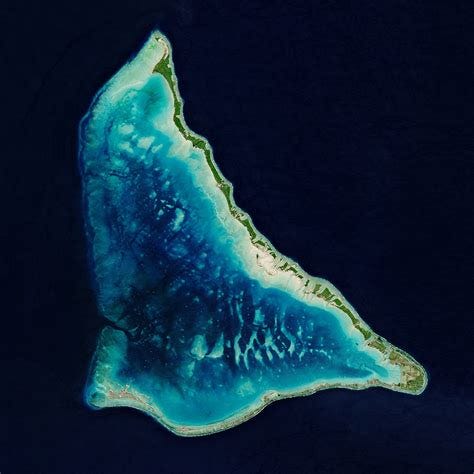
And we’re looking at the death, first of all, of the atoll nations in the South Pacific: Kiribati, Tuvalu, the Marshall Islands, other island groups like the Tuamotus, others. They are going to become uninhabitable, I think, within the next 20, 30 years.
Ross Kenyon: Wow. And for listeners who may not know, they might be imagining Hawaii or the Marquesas. So you have these giant, tall mountains that are verdant and beautiful. But atolls are... I have a hard time even wrapping my head around what exactly they are, but they’re very low-lying.
J. Maarten Troost: Yes. They’re typically not more than two or three feet above sea level. They’re basically the rim of an old undersea volcano. So coral grows on top of that rim of the old volcano, and coral seeks the sunlight, and so that’s what builds the atoll. And so it just reaches to get above the water level, and that’s it.
So there’s no mountains growing here. It’s just like walking around the rim of a gigantic ancient undersea volcano, with lots of channels and all that kind of stuff. Your tides, they run the day. Where you can possibly go on these islands, it’s all dependent on the tides. Yeah, they’re very, very difficult places. I don’t think there’s any place in America that’s comparable. Deeply unique. The environment runs everything. And they are, for sure, going to be unsustainable.
Ross Kenyon: Wow. That’s pretty grim. Well, when you’re spending time in the Pacific, do people... Okay, you’re a writer, so here, I’ll make some literary comparisons to you, or cinema references. Like Rick from Casablanca. So at the last minute he goes from being indifferent and saves the day. Or kind of like a Han Solo moment. Do you think people on the islands are waiting for the Earth to wake up and figure this out, or are they just expecting to have to immigrate or do adaptation or both?
J. Maarten Troost: In my experience, there’s two schools of thought in the Pacific. One of them is... You have to remember, the missionaries had enormous influence in much of the South Pacific.
Ross Kenyon: Oh, yeah, I’ve read both of those too.
J. Maarten Troost: Yeah. Many of the islands are deeply Christian, and they had a very powerful influence on many of the islands. So there is still a segment on many of the islands that really truly believes that God will take care of them, that their people have survived on these islands for hundreds of years, God will look over them, and so on and so forth.
And then there’s another group of people that see what they see and accept what they accept, and are now starting to make plans for what’s next. Like in Kiribati, you’ll notice that they’ve bought land in Vanua Levu, which is the largest island in Fiji. So they bought 20 square kilometers in Vanua Levu in the expectation that that will be their emergency exodus. Vanua Levu is a high island, it’s a mountainous island, it’s a very fertile island, and so they bought land there with the expectation that they’ll migrate to Fiji when sustainable life in Kiribati becomes untenable.
And then you’ve also noticed them changing the way they educate their young. There’s a lot more emphasis on vocational training right now, and that’s to prepare the kids fifteen, sixteen, seventeen years old, so that they can get a job in New Zealand or Australia or something like that, something vocational.
So it’s really those two different schools that are kind of in conflict with each other, and that tends to be the on-the-ground reality for what I’ve seen in much of the Pacific.
Ross Kenyon: Wow. So it doesn’t sound like there’s too much middle ground. It either sounds like it’s faith or it’s exodus. Is there much emphasis on adaptation and making the islands flood-proof, or dealing with the water table with all the salinization that’s happening?
J. Maarten Troost: Well, I think people have sort of accepted reality for what it is. An atoll is a very finite space. You can’t have just, like, a landfill. You know what I mean? A landfill will pollute your groundwater. You can’t do so many different things that we take for granted here living on a continent, because everything affects everything else, and I think people are very mindful of their geography. So we’ll see how it goes. But reality is reality.
Right now, when you look at it, we’ve already raised temperatures almost a degree Celsius since industrial times. By 2100, so 80 years from now, on our current projection, we’re looking at almost a four-degree centigrade increase in temperatures. That’s completely unparalleled. Those islands will be gone. The people will disperse. It is what it is, and not much that can be done about it unless there is some divine power that decides to use his special magical powers to change things. But yeah, no, it’s bleak. It is what it is.
Ross Kenyon: Very bleak. We’re working with Nori. We’re a carbon removal marketplace, and we’re trying to scale up that industry. What we say internally is, “Don’t look down.” The stakes are actually very high if you fail, or if we do fail.
Have you seen much, though, in the way of... I’ve heard this described as climate porn, of people going on cruises to the Arctic or Antarctic, and it’s like, “See it before it’s gone.” Has there been much of that happening in the Pacific yet?
J. Maarten Troost: I don’t know. I haven’t seen that in the Pacific myself, but the islands that I’m most accustomed to are really obscure islands that people just wouldn’t go to anyway. The only people I run into are missionaries. So I don’t see that there, but I have to plead guilty to some of that myself. I was in Africa last year, and one of the reasons I wanted to do it was because I wanted to see rhinos in the wild, and so that’s one of the reasons I went to Africa. I’m doing something like what you’re talking about. I want to see some of these things before they disappear.
I do think that’s something that’s going to happen in the foreseeable future. Not in the foreseeable year. You know, coronavirus is going to decimate the cruise ship industry, that’s for sure. But yeah, no, I think for real, it’s going to be people going off to see a glacier while they still can, people going off to see an atoll while they still can, people going off to see a certain animal because they still can, because they’re so pessimistic now that they realize that in 10, 20, 30 years you won’t be able to see these places like they were. The world is changing incredibly rapidly right now, as you know, I’m sure.
Ross Kenyon: Yeah, I don’t think... Obviously calling it climate porn is pejoratively framed and is kind of an insult or a criticism of the behavior. I guess I’d have to read more. I don’t know if it’s bad in and of itself to wanna do this, especially if you’re pessimistic. Alternatively, you could go and be inspired to work extra hard to avoid these consequences that will make this type of tourism irrelevant, impossible, et cetera. So I don’t know if there’s the self-crit that is too necessary.
J. Maarten Troost: No, but it is one of those things, like, everything that we do by ourselves, we travel in a certain way, we have an electric car, we don’t use any plastic, and so on and so forth. All that we do as individuals doesn’t match up to what is happening at a systemic level. You know what I mean? We drastically need to drop carbon emissions, and for the past two, three years, our carbon emissions have been going up again.
And it’s a hard battle to fight, and particularly when there are so many nations around the world who are electing absolute morons to be their leaders. We have that here in the US, we see it in Australia, we see it in Brazil, we see it in so many different other countries, that we are not creating... Like, all this is going to have to happen politically, and we’re not creating a political infrastructure where we can really create those systemic changes that will help mitigate the worst of climate change.
And as you know, a lot of things are already baked into the system. I mean, we can stop everything right now, but things are gonna continue for years to come. It’s hard not to be pessimistic, to be perfectly honest. I hope that doesn’t ruin the vibe of your show.
Ross Kenyon: You’ve totally ruined it. No, we try to be optimistic. We work in the field. We want to have a very large impact in addressing this. The emissions you’re talking about that are locked in right now for temperature change, we would like to begin drawing that out and making the financial infrastructure to fund that sort of thing happen as quickly as possible.
The stakes are very high though, and we see that. And there are definitely times when I will read something that will really bother me. I don’t have a lot of climate anxiety. I try to be productive and focus on what I’m actually doing to address it. But there are definitely times where it gets to me. It sounds like you get got to more often than I, perhaps.
J. Maarten Troost: Well, it’s ‘cause I had to do some research into all of this, and it’s like, let’s look at human... All right, let’s go big. Let’s go real big right now. Let’s look at human civilization. All right? So we’ve been around in our current evolutionary form for roughly 300,000 years. 300,000 years ago, people were just as smart as we are. Same physically, et cetera, et cetera.
But let’s be completely honest here. We didn’t do squat until 10,000 years ago, right? I mean, no great civilization, no great agriculture, no great cities, no space shuttle, no supercomputers, no anything for 290,000 years. So what changed 10,000 years ago? And that was the end of the last real ice age, and our temperature stabilized. And in these 10,000 years, our temperature has never deviated more than one degree Celsius, even during the little ice age. I’m talking global mean temperatures.
The entirety of human civilization, from the first farms and the first villages to quantum computing and everything we’re doing now, has occurred in a very, very tight climate zone bandwidth. And now we are talking about changing that bandwidth by three degrees, four degrees centigrade. It changes everything. It changes everything from agriculture, it changes everything from fisheries, it changes everything from what’s habitable and what’s not. These are, I believe, profound challenges to civilization, and it’s going to go on for decades.
And there’s no quick and easy solution to any of this. And then you have to take into account, of course, the modern realities of politics and blah, blah, blah, and economics and jobs and infrastructure and all that kind of stuff. It’s a hard road to get out of this hole.
Ross Kenyon: God, Maarten, you really killed the vibe in here.
J. Maarten Troost: I know.
Ross Kenyon: You’re supposed to be the happy-go-lucky... Yeah, I called you a cartoon character of Jimmy Buffett. Like, come on, man. Be the island guy, the beachcomber I want you to be.
J. Maarten Troost: It’s why I’ve been taking time out, dude. It’s like... But when you really start looking at it, I mean, we all live our own lives and all that kind of stuff, and everyone’s capable of having a happy life. But when you’re looking at things at the macro level and looking at where we’re at now, our response is completely inadequate. Completely inadequate. And there’s so much that we can do, as you know probably more than I, but we’re not getting there. We’re not electing the people that will bring us to these places. We are not creating the economic incentives, in law, that will help renewables and help with climate mitigation and all that kind of stuff.
It’s a hard one, and we’re going downhill right now. So I hope that changes. I hope that changes very rapidly. I mean, I’ve got kids, you know? I don’t want them to deal with this. So we’re already seeing it, every season, wherever it is you live. You’re in California. You’ve got your fires. I’m currently in Washington, DC. I don’t think we’ve had a snowflake yet this year.
Ross Kenyon: We’re actually... We’re in Seattle. We’re in the coronavirus land right now. We’re feeling it.
Well, I’m glad you said all that, Maarten, because now I’m about to nail you. It’s gonna be ugly.
J. Maarten Troost: Go ahead. I’m up for it.
Ross Kenyon: Assuming that you like this term, and maybe you don’t, but you’re a travel writer. Travelers, man, aren’t they the worst? They’re sort of buying stuff. They’re flying all over the world. Their emissions are gigantic. What’s the role of the travel writer in the age of climate change? How is this supposed to work now?
J. Maarten Troost: Yeah, that’s a good one, and that’s not something that I’ve ever had a real deep think about. I’ve never thought of my role in writing my books in any kind of moral light. It was sort of, I come across some interesting material and have interesting experiences that I think I can create something that will be enjoyable or informative for other people to read, and I didn’t really think much of it beyond that. I don’t put myself on some kind of totem pole to be representative of what one should follow. I’m curious about the rest of the world, so I spent many years seeing it.
I don’t know what the role of a travel writer today is, to be honest. I think the era has just changed for that genre. Like just hopping on a plane and going someplace new and writing about whatever you encounter, I don’t know if there’s a huge market for that right now. I think everyone is looking for travel as a source of personal meaning. And I don’t think that ever really goes away, you know? And it won’t, because you were a traveler. We’ve all gone somewhere to experience something novel that changes us and hopefully enlightens us and improves us. And that’s hard to negate. We’re always going to want to go someplace else to experience something new.
But yeah, no, I have no idea what the role of the travel writer is right now. I mean, all I know is that I don’t wanna be one of those stupid travel writers always writing about sunsets or whatever. You either get some red meat or you don’t. So we’ll see. I don’t know if I’m gonna go back to that genre, to be honest, so we’ll see.
Ross Kenyon: Yeah. I’m curious to know what you’ll end up doing next. I think the genre probably has taken a hit because when I... So I spent most of my 20s traveling. People who’ve listened to the show all the way through, they probably heard me talk about this some. And sometimes people would build me up too much. They’d be really impressed that I’ve been able to do this, and I was really like, “All you have to do is buy a plane ticket and not have a job.” It’s not that impressive. It’s not like I’ve done Kon-Tiki or something. I just flew somewhere.
And then, yeah, there is something about finding yourself. So before Nori, and before I got into the tech world at all, the last thing I was doing is I was working with a manager in LA on a sitcom pilot, and it was a satire of travel and travelers, because I would go places and be often miserable. I would find the company to be very much in that, like, fulfilling, faux yogi bullshit and, like, super, super spiritual.
J. Maarten Troost: Oh, so the indie act is... Yeah, yeah, yeah. I’ve done that.
Ross Kenyon: Yeah. And I’m just dirty and miserable, and oftentimes kind of ill or not exercising nearly enough. I’d spent, like, a decade doing that, and I wanted to just nail the entire genre of it, and I ended up getting sucked into this thing anyways, what I’m doing now. But there’s something about that whole milieu that I find really obnoxious. And so how do you travel write when basically anyone with even a small amount of disposable income can experience the same thing? Within, like, 12 hours you can get anywhere on planet Earth.
J. Maarten Troost: Yeah, but that’s different. And so, like, when you’re going out as a travel writer, like I remember being in China and having some really sort of awful experiences. I remember being encountered by this sort of gang in Hangzhou, and they were, like, slapping me on the back of the head, and of course they were speaking Chinese. That was terrifying. I didn’t know what’s going on. I don’t know if I’m about to be knifed.
And there’s a thousand people on the street, and no one’s helping with anything. They’re just stopping with their dead-eyed faces staring at me. Everyone’s removed, no one’s engaged. This really sucks. It’s a little terrifying, but all I know is that I get five pages right here. I’ve got five pages of going through this. All right? So that’s the thing, sort of like when as a travel writer, even when you’re experiencing the suck, you know you get some material.
You know, a book just full of la-di-da experiences, I mean, I would not find readable. So I’m aware of the reality of all that. And again, it’s interesting. It’s different. It’s not Seattle, it’s not DC, you’re experiencing something novel, which is for me something I greatly enjoy.
Ross Kenyon: Well, it’s getting easier to travel, but that’s not to say that it is... Like, there’s a Larry David deep in my heart that just—
J. Maarten Troost: Lives in all of our hearts. Deep down in our dark space.
Ross Kenyon: Oh, he’s there. Yeah. And any of the big travel writers, like Bill Bryson, has made an entire career out of just, like, niggling over the smallest little social interactions, just complaining. Or Paul Theroux can be a cantankerous kind of guy, and I love that. But I also compare that to something like Instagram, and that medium just rewards this sort of false idea of what travel is. I don’t know what it is about images versus words there, but—
J. Maarten Troost: The big difference though is, people like Paul Theroux, people like Bill Bryson, they have a voice. You know what I mean? They have cultivated, they have worked very, very hard at their craft, and they’ve developed a voice that resonates with a lot of people, and that’s not anything you’ll ever find on Instagram. It’s a totally different medium. What those writers are doing is they’re connecting with something deep inside the reader’s brain or heart or soul.
You don’t even have to go far away. Like, I always think one of the best travel articles I’ve ever read was David Foster Wallace, A Supposedly Fun Thing I’ll Never Do Again. He goes on a little seven-day cruise through the Caribbean, right? So from a travel writing genre, that’s a big fat nothing. You know what I mean?
Ross Kenyon: Yes, not impressive.
J. Maarten Troost: Yeah. It’s sort of like, I got nothing there. It’s a freaking cruise. Hundreds of thousands of people do it every single year. It’s going to be awful. Not my thing, whatever. He writes such a great thing about it.
And then I think about John Jeremiah Sullivan. He’s a writer, sometimes writes for The New York Times Magazine. He wrote an article about going to Disneyland, and he’s a pothead, so he’s always trying to look for places to smoke in Disneyland. I can’t believe The New York Times published this, but they did. And it’s really good travel writing.
So you don’t have to go far. You don’t have to do anything exotic. What people connect with is a writer’s voice, and that’s so different than the pathetic Instagram stuff, which I don’t even follow and don’t do anything with.
Ross Kenyon: Yeah. That’s the thing that’s terrible about going to Pisa and seeing thousands of people all holding it up at the same time.
J. Maarten Troost: Oh. And but you know what? The thing is, with a good writer, you can make that good material that you can all connect with. But the Instagram stuff isn’t trying to do that. The Instagram stuff is more about, “Look at me. I’m bragging. This is where I’m at.” It’s tedious. It’s tiresome to see. It’s not interesting. Whereas a good writer will bring out the human in almost any setting. That’s what I’ve always been kind of attracted to with the writing.
Ross Kenyon: That’s a great point. I have often said that I like meeting people who are passionate about anything. Like I love it if I’m at a party and I’ll find someone, like pick a boring hobby that you would never wanna do, and if that person is really into it, I’ll be like, “Okay, I can kinda see why you would like that. Yeah, I get in that head space.”
So I think if you can do that with any location, yeah, you don’t have to go somewhere exotic. Like a lot of the travel books I’ll see, I saw one recently about someone biking the Silk Road. I was like, “Wow, that’s amazing.” Or a lot of them are endurance-based or weirder places that are off the beaten track to do. But also I could probably just, if I was a good enough writer, write a great book about cruising around Seattle and the Pacific Northwest, that would be good, right?
J. Maarten Troost: You absolutely could. You absolutely could. It’s all about cultivating the voice. It has nothing to do with the location. It’s all about the voice and whether or not people click with it. And there are some people who are very, very, very good at it, and I will read just about anything from them.
But I do see that for a while in the travel genre it was like whoever could do the most extreme thing. That doesn’t appeal to me. It’s all about... I can tell within 10 pages whether or not I’m gonna like something, no matter where they are.
Ross Kenyon: Yeah, I think that’s a good point. Well, what can you say about what you might be doing? You’ve alluded to the fact that it may not be more books. I know you’re writing articles now. What are you looking forward to doing?
J. Maarten Troost: So I divide my time right now, you know, kids going to college and all that kind of stuff. So I do some consulting for some of the big multilaterals here, and I’m hoping to get a TV show launched. I have a writing partner for that, and we’re starting to go through the process for that, kind of have the story figured out. That’s what I would really like to do for the short term.
Ross Kenyon: A narrative show, not a documentary?
J. Maarten Troost: No, no, no. It’d be a fictional thing. Totally fictional. Something completely new. It’d be a lot of fun, I think. It’d be collaborative, which is very appealing for me. It’d be topical, it’d be funny, it’d be dark. I mean, it’d be perfect. So I’m hoping to see if I can get that worked out. That’s where I’m at right now. I just decided to take a time out from writing books for a little while, so maybe in the future.
Ross Kenyon: Cool. Yeah, that’s good to know. I would love to watch anything you made for television. I wish you lots of success with that.
J. Maarten Troost: Yeah, thanks. I hope this one works ‘cause it’d be so much fun to work on. I believe we’ve got something solid with this one, but we’ll see how it goes. New York publishing and Hollywood are two entirely different beasts, and I’m familiar with one, and I find the other difficult to read. So we’ll see how it goes.
Ross Kenyon: Well, Maarten, maybe you could help me plan out some future shows for this. You don’t have to name drop if you don’t want to, but who should I be talking about? I’d love to talk to people who are actually from the various islands in the Pacific. What type of work on climate change in the region is good that you know about? And I’ll of course do research on my own and keep programming here, but where should I be looking?
J. Maarten Troost: For me, my contacts are more with... I know somebody that works on coral reefs in Fiji. He’s been doing it since I lived in Fiji, so for a long time. He’d be good to talk to. He’s a lunatic, but he’d be good to talk to. There’s another guy who used to be an ambassador to the United Nations and the US from Solomon Islands, who is very much on top of things as well. So those would be good people to talk to. That’s what I can think of off the top of my head.
But yeah, the South Pacific is gonna go through some difficult times, unfortunately. And the unfortunate thing about it too is that Pacific Islanders, for the most part, are the most chill people ever. You know what I mean? And so it just saddens me so much that they’ve got so much catastrophe coming in their future, ‘cause for the most part they’re good people who have it figured out about what’s important in life.
Ross Kenyon: Yeah, and they’re also the least responsible, or among the least responsible, for climate change.
J. Maarten Troost: Oh, absolute least responsible. Completely. They have nothing to do with it at all, and the fact that they’re going to be the first to really suffer from it is most unfortunate. And then the other thing is, each of these nations, really not even nations, each of these islands has such unique cultures, and to see that disappear in a fairly rapid span of time I think is tragic.
So we’ll see how it goes. But who knows? I mean, you know more than I do. Maybe we’ve got some carbon-sucking machine that’s right around the corner that’ll fix everything. I know people are working on all sorts of solutions, so we’ll see.
Ross Kenyon: Yeah. We’ll keep plugging on that, and we’ll see. And if you’re listening out there and you know of good stories that are happening in regions that we haven’t yet covered in nearly enough detail, please let me know. [Nori promotion cut from the transcript. It's still in the audio, but it no longer applies.]
Yeah, I guess, Maarten, is there anywhere that you want to steer people to? You want them to buy your books, or is there someplace online where they can follow you?
J. Maarten Troost: I’m just skulking from the online world. It’s one of the big things that’s changed in the publishing industry. When I first started, you could quietly write your book, get your material, then publication day comes, and you do like a month of publicity. You get to travel and talk to people and all that’s very nice, and do some radio or TV and blah, blah, blah, and you feel really special for a few weeks, and then you’re left alone, and you can go back to just doing your damn thing.
You know what I mean? That’s kind of how I started, and then over the years things changed, and now it seems to me like writing books has become more an extension of developing a brand for yourself. It’s like I see so many of my writer friends that have to spend so much time cultivating their Instagram and Twitter feeds, and they have to deal with the garbage that is Facebook. And I just took a... Like I said, I’ve taken a long time out from all of that.
Ross Kenyon: Yeah, I had to track you down.
J. Maarten Troost: What’s that?
Ross Kenyon: I had to track you down. I was like, “Okay, who’s Maarten’s agent at least? I will get to him.”
J. Maarten Troost: Yeah. No, you found my agent, so that can be done. But I’m inactive on Facebook, but I will from time to time check whatever messages appear on there. So I guess that’s the easiest way, but I’m not active on it. Yeah, I know. I’m being a total recluse these days. But that’s all right.
Ross Kenyon: Well, that’s fine. Yeah.
J. Maarten Troost: And when it’s time to go back into the sun, I’ll go back into the sun. But that’s all right. I don’t mind being in the shade for the time being.
Ross Kenyon: Yeah. There’s links in the show notes if you’re listening and you’d like to follow up with Maarten’s work. I feel very similarly, too. We just launched a Patreon for the podcast and I’m not, like, on Twitter. I’m not really that accessible. You could email me if you really wanted to, but you have to put in a little bit of effort to track down where that email is.
I don’t like what social media has done to humanity in lots of ways. Like, I don’t wanna be that accessible. I’m happy to talk to people who wanna make the effort, but I don’t wanna just be like someone can tweet at me and oh my God, now I have to respond or something. I don’t know. I feel like a recluse.
J. Maarten Troost: Well, it’s a complete rabbit hole, and I think that’s been... Let’s continue with our negativity. I think the internet, think of what we were thinking about the internet 10, 15 years ago, how promising it was. Like, we’d have these phones that would have all the knowledge of the world available to us. We could be connected to everybody. I mean, right now there’s more than 5 billion people that have smartphones. The Androids that most people use are very affordable, so everyone’s connected or whatever, and look at this garbage environment we’ve created.
You know what I mean? We all have to sort of navigate our own space and all that kind of stuff, but when you think about the misinformation and the way the algorithms kind of accelerate antagonism and conflicts and all that, it’s disappointing. And I choose not to play right now. So maybe one day.
Ross Kenyon: When I was in LA, one of the things I would hear in meetings too was people wanna know how many followers you have, and I’m like, “Can I just be a screenwriter?” I also have to have a personal brand and have insightful stuff to say every day?
J. Maarten Troost: Yeah, you do. I know. I’ve dealt with that myself. And yeah, you do. It’s unfortunate, but it is what it is.
Ross Kenyon: There’s people out there who, I don’t know, like for instance, David Sedaris is amazingly generous with his time when he’s on tour. He will, like, hang out after every reading until, I think, every fan who wants to say hi has said hi.
J. Maarten Troost: Yeah. He’s great. I’ve seen him myself. He’s a really good dude.
Ross Kenyon: But does he do that online? I think he just does that in person and then, like, online—
J. Maarten Troost: Well, I’ve seen him in person. I went to one of his readings. And he will stay and he’ll meet with everyone. And the other thing that I like about him is ‘cause he has such a big platform, he will always mention writers or works that he’s come across that he wants to promote and all that. He’s an incredibly generous man. No, I think David Sedaris is a great guy.
Ross Kenyon: But I also... I don’t know that I’ve ever seen anyone share anything out from it. Like, is he active on Twitter at all? Or is he just, like, the analog version of what everyone’s expected to be online now.
J. Maarten Troost: Yeah, I think he was maybe of the last generation who could get away with this, where he could just write his books, I guess he publishes every two or three years, something like that. He’s on tour a lot, I know that. He spends a lot of time on tour, and he just does it that way. But like I said, I’m not a big social media guy, so I don’t know what he does online.
Ross Kenyon: I just looked. I don’t even think he has one. So my instinct was correct. But yeah, I think maybe it is that. That’s the last generation. Like, I’ve been thinking about writing a book, or doing more creative endeavors as Nori grows and we focus on creative media more and more, and I’m like, “Ah, but then I have to do all this other stuff.” I don’t know. It trips me up more than the actual writing of a book, and I know how hard it is to write something that is long and arduous itself.
J. Maarten Troost: Yeah, the big difference is, when I’m working on a book and I’m writing something and, you know, is this the right thing? Is this the right direction that I wanna go? Is this the right thing to say, or is this too much? Is this just too much? You know what I mean? Is this going to be a trifle offensive to people? I will have lots of time to go back and reconsider, and figure things out, and make whatever it is that I’m trying to do the best possible.
Twitter, for me, is a dangerous beast because I am impulsive. I have my thoughts. I can tweet them out. I can destroy my life in seconds. And we all know how many people that’s happened to, you know? We all have our idiot friends. Or we’ve seen it happen, where somebody tweets something out and poof, they get fired or their career is over, and all that kind of stuff. That would totally be me. Absolutely.
Ross Kenyon: You’d be in, like, have you read Jon Ronson’s So You’ve Been Publicly Shamed?
J. Maarten Troost: I’m familiar with it. I have a friend of mine who reviewed that book, and who’s talked to me about it. You know, we’re human beings. We all have stupid thoughts, and the fact that we have a little thing in our pocket now where we can share our stupid thoughts is an incredibly dangerous thing for some of us, including me. Yeah, it’s not a good medium for me. Not for now in any event.
Ross Kenyon: Okay. Well, in the show notes we’ll put up the places where you can buy your books and, I don’t know, I guess we’ll just have a lacuna there instead of something that’s more ready.
J. Maarten Troost: Yeah, sorry. I apologize. I know. I’m a publicist’s nightmare right now. I’m just doing things a little differently right now.
Ross Kenyon: Yeah, that’s good. I feel you on this one. I think we are kindred. Maarten, thanks for being on the show. I think this is a good place to call it.
J. Maarten Troost: Great. It was my pleasure. Thanks for the chat. I really enjoyed it.
Ross Kenyon: Yeah. It was a lot of fun. And if you like the show, please rate and review us on Apple Podcasts, Stitcher, tell your friends. I hope you don’t mind that this was a little bit of an elliptical episode. I mean, there’s some solid climate change moments in there, but I like that we were able to talk about creative stuff. And thank you so much for listening.
I will be doing some podcasting and writing on this soon. There is persistent family lore about matrilineal Jewish ancestry that has sent me into deep investigation into so much. But I do not know if it is literally true as of yet. Even that sentence alone opens up so many intriguing questions of what it means to be something, or anything at all.


