

Listen on Spotify, Apple Podcasts or YouTube.
To tackle the climate change problem, we need to move traditional industries closer to net-zero and create new industries from scratch.
But how do you build a new carbon removal industry, for example? What is the best way to nurture startups in the climatetech space?
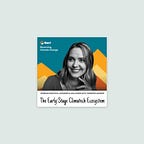
Jennifer Wagner is a Breakthrough Energy Business Fellow where she helps early-stage climatetech startups advance the groundbreaking technologies we need to reach net-zero by 2050.
Prior to joining Breakthrough, Jennifer served as VP of Sustainability, EVP of Corporate Development, and President of CarbonCure Technologies in her 12 years with the company.
On this bonus episode of Reversing Climate Change, Jennifer joins Siobhan and Asa to walk us through the journey of a Breakthrough Energy Fellows startup and describe how the program supports its teams in scaling up.
Jennifer discusses the three teams with female founders she works with directly and explains how to work through a high volume of applicants and find the right people for your climate tech startup.
Listen in for Jennifer’s insight on securing funding for a carbon removal startup and find out how you can be part of the prestigious Breakthrough Energy Fellows program.
More from the show
Ad-free episodes and other benefits come with a paid subscription.
Carbon Removal Newsroom, the news show that ran alongside this one, is over. Its episodes are still up, on the feed Climate Workers Anonymous now uses.
Carbon Removal Memes is still going.
Resources
Breakthrough Energy Fellows Program
Breakthrough Energy on LinkedIn
Jack Andreasen of Breakthrough Energy on Reversing Climate Change
Amazon’s $53M Fund for Female Climate Tech Founders
How to Pursue a Career in Carbon Removal on Reversing Climate Change
Full Transcript
Alexsandra Guerra: You’re listening to the Reversing Climate Change podcast by the team at NORI, the carbon removal marketplace. This is a show about the innovators and entrepreneurs developing solutions to climate change.
Siobhan Montoya-Lavender: Hello and welcome to the Reversing Climate Change podcast. I am not Ross Kenyon. I am Siobhan Montoya-Lavender. I’m here today with Asa Kamer. And we’re here with Jennifer Wagner, who is a Breakthrough Energy Fellow, who today we’re going to be talking to you about supporting and augmenting startups in the climate space. Welcome, everybody.
Asa Kamer: Hi. Hi, Siobhan. How are you doing?
Siobhan Montoya-Lavender: I’m hanging in there, Isa. How’s your week going?
Asa Kamer: Good. I’m here in Oakland, California, and it’s raining. And all those dry, crispy, dusty leaves and twigs are... Slowly softening and becoming less flammable. So that’s wonderful news for me.
Siobhan Montoya-Lavender: And Jen’s coming in from British Columbia. Where are you coming in from, Jen?
Jennifer Wagner: Other side of Canada. It’s a place called Prince Edward Island. It’s a little island off the coast of Nova Scotia, and it is very cold here today. We were spoiled for the last few weeks. It was unusually sunny and warm and Jen is a fellow at Breakthrough Energy, and we’ve had actually, I think, some people from Breakthrough Energy on the podcast before.
Siobhan Montoya-Lavender: But for those of us who are not super familiar or listeners, could you just walk us through, Jen, what Breakthrough is all about?
Jennifer Wagner: For sure. Yeah. And thank you for having me talk to you today. Super excited to be here. So Breakthrough Energy, there’s a lot of different things. And there’s sort of three main areas of interest. The one that most people would be familiar with is the Breakthrough Energy Ventures arm, which is the $2 billion focused on climate tech startup investing. They also have a catalyst program. Which is for larger scale sort of demonstrations of projects. They just announced a $50 million investment through Lanza Jet Stable Aviation Fuels. So that’s their catalyst program.
And then the third program, which is where I spend my time, is on the Breakthrough Energy Fellows Program. And that’s really focused on launching very early stage climate tech startups.
Siobhan Montoya-Lavender: Why do we care about climate tech startups? I feel like sometimes we all, you know, when you work in climate, it’s a real startup scene, right? Like there’s a lot going on here with startups. And sometimes I wonder, are startups the correct lever to be pulling on? Is this where we should be focusing our time? And why do we care about startups as opposed to trying to build out pre-existing industries?
Jennifer Wagner: I think when we think about tackling the climate change problem, we need to do a bunch of different things. We can’t like just do one thing and forget about the rest. So yes, we have to like transition the way we drive our cars or like get to work or fly around the world. All of that needs to sort of evolve and get closer to net zero. But while we’re doing that with the more traditional industries, we also need to think about creating new industries. So that could be everything from direct air capture or carbon mineralization and concrete.
All of these industries need to essentially be created. And in order to do that, we need to use some really innovative thinking and actually build these industries from scratch.
Siobhan Montoya-Lavender: Yeah, I mean, I think you’re right. Obviously, I’m biased working in the startup sector myself. But I do think when you’re starting an entire new industry, which, you know, an example of carbon removal is incredibly a burgeoning industry, we need to start somewhere. And so I do think startups are an important lever to pull on. Jen, you have a lot of credibility in this space because you spent, I think, over 10 years at CarbonCure doing mineralization and concrete. What were the kind of key takeaways that you learned from being the president there?
Jennifer Wagner: When I started with CarbonCure, it was a very different space. We actually didn’t even have the words to really describe what it was that we were doing. And, you know, over that decade, a lot changed and New industries emerged and new competitors came into the landscape and so many new ideas were generated. And I think one of the sort of things that kind of helped set the stage for that to happen was XPRIZE. And so you may recall, I think it was back in 2015, they launched their Carbon XPRIZE, which was a $20 million prize to essentially create a new industry of how do we take carbon and like do something with it?
So focus more on the utilization side of things. And we ultimately ended up winning the competition. But over that period of time, So many new companies entered the market. Of course, you know now that there’s the $100 million Carbon Removal XPRIZE, which is sort of a separate but related competition. And really, over the last decade, I mean, it’s changed so dramatically.
Siobhan Montoya-Lavender: I can only imagine. I mean, I feel like you’re one of the first guests we’ve had on that is like really seeing... The spectrum of change for carbon removal. And like when you say there’s way more competitors, were there any to start?
Jennifer Wagner: Was there anybody doing this besides you guys when you started? The short answer is not really. I mean, like on a more sort of personal note, like when I was graduating out of university, I was looking for a job in what I now would say climate. But back then I would just say sort of sustainability because that was the word that I had to use at the time. Right. And there were no options like I was asking some of my professors, I was like, hey, you know, I’m a chemist. I haven’t got an MBA, but I really care about sustainability.
Like, where are my job prospects? And they’re like, they don’t exist. You can pick like two of the three, but like those three things you cannot have. And of course, now that’s like laughable, right? Because there’s so many opportunities for folks who are either coming out of grad school or university or looking to actually switch in to climate from other more traditional sectors. I think there’s so many more opportunities for folks to spend their time and energy trying to tackle climate change. And there’s also a lot more money and capital and support and attention and effort spent on helping these companies succeed.
Asa Kamer: It sounds like it must be a world different, the companies you’re working with that breakthrough. And I also want to ask about what you’re doing on a day-to-day level there. But it sounds like it’s probably a lot different for the people who are entering that program and starting companies and trying to enter the space versus your experience a little over 10 years ago, where there’s a bit more of an infrastructure for them now, or a lot more of an infrastructure.
Jennifer Wagner: Yeah. And I bet if you were to ask some of the other companies that existed 10 years ago, which was maybe like a handful, they’d probably say the same thing is that they were really not only trying to build the company and hire the people and refine the technology, but also create the industry and create awareness in the marketplace and convince people that sustainability actually mattered. Fortunately, I don’t think you have to do that as much anymore. People now understand they need to take action and government’s playing a role, private sector’s playing a role.
I suspect that some of these startups will spend less time on that sort of having to convince people to take action and actually more time spent on either de-risking the technology, building their teams, figuring out how creatively can we find that right business model to help supercharge our growth and actually have an impact as quickly as possible.
Siobhan Montoya-Lavender: Yeah. So to Ace’s point, give us a kind of a day-to-day, what are you doing at Breakthrough and how are you kind of supporting these early stage startups? Startups and what kind of support do they need and what kind of problems are you seeing from them?
Jennifer Wagner: Yeah, so the companies that are involved in the Breakthrough Energy Fellows Program range in terms of the sectors that they’re addressing and also the stage, although they’re all relatively early. So some will be teams of one individual who have literally just incorporated and are just getting started. And some teams are a little bit more advanced where they have You know, a prototype. They’ve got a team of about a dozen people. They’re starting to engage with customers and so on. But they all are relatively early stage, focused on climate, of course, and must have a pathway to show that they could potentially either reduce or remove 500 million tonnes by 2050.
So that’s sort of the threshold to get into the breakthrough network. So that would be everything from green hydrogen to biofuels to direct air capture. It really ranges in terms of the sector they’re trying to address, but they’re all obviously focused on climate and have a dramatic potential impact on carbon.
Asa Kamer: And what kind of work do you do with them?
Jennifer Wagner: Yeah. So the way it’s structured is that there’s about 30 teams of innovator fellows, and they’re the ones with the ideas. They’re the ones with the technologies who are starting the companies. The role I play as a business fellow is to essentially support all of those innovator fellows as they’re launching and scaling their businesses. So there’s about a dozen business fellows who are essentially COO for hires. And we sort of support each of those innovator teams in whatever they need done at that particular moment. So at this point in time, we’re doing a lot of hiring because many of these companies have just started with the fellows program.
And then for some of the companies that started last year, They’re doing some later stage stuff around getting ready for their pilots and prototyping. They’ve got their labs operational. They’re maybe starting to engage with some customers. It really does range, but we are sort of there to support them in any way that they need in terms of like building out their businesses and getting them ready to go and sort of raise their first round of financing after they graduate from the program.
Asa Kamer: Wow. And how has that shift been for you going from being, you know, intimately involved with one startup, or I guess it wasn’t even a startup the whole time you were there with CarbonCure, but one company. Yeah, it’s been super interesting. And I think that’s sort of the main reason why I decided that it was time for a change was we’d done so many incredible things at Carbon Care. We’d sort of de-risked the technology. We’ve kind of worked out all the bugs.
Jennifer Wagner: And like, they didn’t really need me anymore. We’d set up this awesome team and they were sort of just, you know, kicking butt. And I thought, you know, maybe now’s the time to kind of step aside, let them do their thing. And rather than focusing on just one technology, Try to focus more broadly, sort of supporting many companies at an earlier stage and in theory, be able to have a much larger impact in the long term from like a climate perspective. So can I find a way to help build like a hundred other companies that have an impact like Carbon Peers had?
Wonderful.
Siobhan Montoya-Lavender: Yeah. I love that COO for hire kind of framework because I do see a lot of brilliant... But I think a big hurdle is like not all the people that have the background to like develop the science have the appropriate background to build the business, right?
I mean, I think we see that a lot of times is that I certainly felt that, you know, starting a startup was like, I don’t have a business background. You know, I spent my master’s degree measuring carbon fluxes and learning about carbon and stuff. So I know that really well. But in terms of like writing a business plan and a revenue model, that’s stuff I think a lot of climate startups need help with.
Jennifer Wagner: Yeah, and it depends how you look at the problem because there’s 30 teams. Some of those folks, like you say, have no experience running businesses. They know their technology very intimately, but many of them have the same challenges. So like you say, how do I build a revenue model? How do I write an onboarding plan for my new employees? Or how do I think about recruitment and retention and business model? All of the stuff that’s sort of not specific to their technology, it’s a lot of the same challenges that each of those 30 companies will have.
So as a business fellows cohort, we’re thinking about how do we make that a bit more scalable and how do we serve the innovator fellows in a more scalable way? And really, whether that’s like leveraging existing frameworks that are already available to sort of get them to the point where they can really hit the ground running and scale up a lot faster than if we weren’t helping them.
Asa Kamer: What does it look like sort of when they come into the program and when they Finish the program, whatever that looks like. Like what’s sort of the goal for the, you know, the sort of full cycle for a company that’s joining the program?
Jennifer Wagner: Yeah, I think the main purpose of the program is to sort of let the entrepreneurs focus on de-risking the technology. Because many of these technologies haven’t been tested in industrial settings, or maybe they haven’t even built a prototype. Maybe they’re just, you know, getting their lab set up for the first time. So if they can spend the two-year program really focused on de-risking the technology... The business fellows can support them from like a professional standpoint, building up all of that, you know, infrastructure processes, help them hire their people to build their team.
And then at the end of the two years, they should be ready to go raise their first round of funding. So that’s the other sort of key pillar is that. As part of the fellowship, the innovator is actually provided with, you know, like a stipend, but also some cash to pay for all that stuff. So they don’t have to worry about funding or raising from external funding sources until after the program. Because, of course, that can be a huge time suck is trying to raise money. So we essentially give the innovators a two year window to sort of do all the stuff from a technology de-risking and a sort of business building standpoint.
And then once they have that ready to go, then they’re in a really strong position to be able to go out to the market to raise their first round.
Siobhan Montoya-Lavender: I did not realize it was a two-year program. That’s terrific. I feel like that really makes it stand out from a lot of the other kind of accelerator-esque programs that are out there. I did not realize it was two years. Wow. So they’re getting a full cycle of support there.
Jennifer Wagner: For sure. Yeah, I think that is one of the other differences between what the Fellows Program does and the other accelerators is that some of the accelerators do provide cash, and obviously cash is great. This Fellows Program provides a lot of hands-on support. So I’m employed full-time by the Fellows Program to help these 30 companies, and there’s 12 other people like me who are also employed full-time to help. So I think that’s pretty unique in the ecosystem. I haven’t seen that elsewhere.
Asa Kamer: When they get to the end of their two years and you’re saying that’s when they’re able to go out and seek financing and seek investment, is there a pipeline that you all support them with? Or do you introduce them to investors? Or what’s that process like? Or is it just sort of like, well, I hope you’ve been networking. Good luck. Go start messaging people on LinkedIn. What is that process from the perspective of fundraising for the companies once they’re towards the end of their two years?
Jennifer Wagner: Yeah, so I would say it’s like still in progress because the first cohort hasn’t even graduated yet. So this is only the second year of the program. So the folks who were part of cohort one will be looking to raise in the spring of next year. But of course, you have a two-year window to plan for that fundraise, which is inevitable. So we help support them through that entire process. Definitely make introductions. We’ve got great networks in terms of all of the climate tech investors. And of course, we have a natural sort of partnership with the Breakthrough Energy Ventures side of Breakthrough Energy.
So that would be a natural place for folks to look to raise as well. So definitely lots of Hands-on support in terms of helping them get ready to raise and make those necessary introductions so they really feel well supported once the time is right.
Asa Kamer: Great. And I guess, well, this is going to be my next question, but maybe it hasn’t happened yet. But I was wondering, you know, I know that at least it seems from the outside that Bill Gates has been really successful with, you know, there’s been two billion dollar rounds. I heard in a recent interview they’re working on a third, you know, in terms of the venture side. That must help to have, you know, to be for these companies to go say, you know, we happen to be in Bill Gates’ Climate Tech Accelerator.
That probably opens some doors.
Jennifer Wagner: I think so. I mean, like I said, these companies are just getting ready to raise. So I’m really excited about what they’re doing. And I think the people that they’ve been able to attract to the fellows program are really top notch. I know we were just at the BE Summit in Seattle a few weeks ago. And we were able to meet with not only everybody within the Fellows Program, but also more broadly Breakthrough Energy and Breakthrough Energy’s network. And it’s amazing. I mean, you just leave the room saying like, these people are insanely smart.
They’re insanely motivated. It’s just a real joy to be in their presence and really feel the energy and community that they’ve created. So I personally am very excited about being part of the BE community and really optimistic about the future.
Siobhan Montoya-Lavender: I know you’re unlikely to answer this question, but is there like a technology that you’re kind of secretly rooting for? Or is there one sector that you really feel like, you know, when they bring a problem to you, you’re like, oh, I got this. I know how to solve this one. This is kind of what excites me. Is there anyone that’s kind of a standout for you?
Jennifer Wagner: So as part of the onboarding process, they do a bit of a matchmaking process where the business fellows and the innovator fellows kind of voted who they wanted to vote with. And so I was paired with two teams and I’m obviously very excited about them both. And then another team I’m also informally advising as well. But the sort of the other thing that matters to me besides climate is helping get more female founders, setting them up for success and folks from diverse communities, helping them to play leadership roles at an earlier stage of the climate tech company’s evolution.
So I’ve been drawn to help more female founders. So the three companies that I’m directly helping On a daily basis are all female founders. So I’m super excited about what they’re doing. One of them’s in the hydrogen space, one of them’s in the biofuel space, and the other one’s in direct air capture. So really excited about each of those sectors and their personal and professional stories and really hoping that I can continue to work with really awesome companies like that. That’s very cool.
Asa Kamer: I agree. It’s very cool. And I was just going to say, since we do focus on carbon removal, would you mind sharing a bit about the direct air capture company and founder that you’re working with?
Jennifer Wagner: You know what? I actually sent her a text about an hour ago and I asked her that exact question and she said, not ready. Okay. All right. So ask me again in a few months and I’ll be able to reveal more. But I can tell you that she’s amazing and she’s working on a direct air capture solution, which I think is going to change the world. So super exciting. All right.
Asa Kamer: That’s so bittersweet because I love to hear it. But at the same time, it’s like now, you know, our listeners on their seats, you know, so there’s a suspense factor. We’ll have to bring her on.
Siobhan Montoya-Lavender: That’s it. You tell her that we want to talk back with her. I will tell her.
Asa Kamer: If she wants to break some global news on our podcast, we’re available.
Siobhan Montoya-Lavender: We’ll see what we can do. Yeah, I think that’s obviously like as a female founder myself, I think it’s great that there’s drive and willingness to support most female founders. I don’t know if you guys saw, I think it was like a couple of days ago, Amazon announced like 58 million for female specific climate tech founders and initiatives and supporting them. It’s still a really low number. Like I don’t have the numbers off the top of my head. I know at Airminers, we were trying to put together like a survey to kind of understand how many female founders are in the carbon removal specifically.
Sphere. And so that’s being worked on. What do you think are some of the main blockers that’s stopping more women from being part of the climate tech ecosystem? Is it just the same as every industry or is there anything specific to climate tech?
Jennifer Wagner: I don’t know. I think maybe like technology in general, it would be a set of similar issues around like, you know, having more women or I guess girls like Stay interested in STEM from like an earlier age so that they can, you know, go on to graduate school, get their PhDs and then be able to start companies. So like stuff that we can do sort of earlier on to build that pipeline. But also something like really simple about just like telling their stories of the women who have been successful and showing them that they can achieve their dreams and see themselves in successful entrepreneurs.
For me personally, like I always have in my mind, like a few people who I’m inspired by. And who, you know, I eventually like to work with or work for or replace. That was always a fun question that one of my MBA professors asked was like, I’m not going to give you any advice unless you can tell me like three people who you want to replace. And I was like, that’s a bit aggressive, but I like the sentiment. So I always like try to jot that down and like it changes from year to year.
But seeing yourself in those successful positions, I think can really be motivating and show you that it is possible.
Siobhan Montoya-Lavender: Yeah. And carbon removal isn’t devoid of women. I would point to like Remora. I would point to Kelly Hearing over at Charm Industrial. I would point to Lithos as a female CEO. Mary’s amazing. Mary’s great. Seeing her speak at a bunch of different events. So it’s good that within carbon removal, even though I recognize it’s still lacking female representation, that the ones we have are just like powerhouses, man. Like The women in this field are really kicking ass. So that’s always exciting. And hopefully we’ll draw more women into the field.
Totally. That’s hope. Yeah, let’s hope. And so in terms of your day-to-day and in terms of, you know, kind of unblocking problems in the business realm, you know, we talk about scalability all the time. But what do you see kind of from a business side and scalability? Like what are you trying to kind of get founders to understand around? The business aspect of scaling their innovation.
Jennifer Wagner: We did a webinar the other day as part of the Fellows Program around hiring. And I sort of joked at the start of the webinar, I said, I took the liberty of expanding the definition of hiring to like everything that has to do with people on your team. Because I think clearly there’s like a market need for all of these solutions. Like that doesn’t even need to be discussed. Like we need more climate solutions. The main purpose of the program is for people to be de-risking their technologies. So they’re like, Nose down, really doing whatever they need to do to ensure that they can improve the technology and it’s ready to scale.
But I think that third pillar of what’s required to make these companies successful is their people. I personally feel very strongly that’s the case for companies that maybe don’t think about it or say like, oh, that’s an HR problem or oh, I’ll hire somebody to manage that. That’s going to come back to bite them later on. I think having that really strong foundation of culture from day one Can really set these companies up for success in the long term. I like to spend a lot of time with these companies that I’m coaching, trying to figure out how do you find the right people to join your team who fit your culture?
How do you screen for the right ones? How do you retain them and motivate them? And ensure that they’re bringing the best versions of themselves to work every day. Because I think if you can build that really strong foundation of your core team from a very early point in the company’s history, that is going to set you up for success in the medium and long term. So I think people is key to making this all work. If you have a great technology, that’s the first step. But you have to have the right people and the right seats in order to get that bus to where it needs to go.
Siobhan Montoya-Lavender: How are you finding those people? Yeah. Like, what’s the process? Do you think Ace and I did a show a while ago on like just kind of tips and tricks for getting into climate tech and what has worked for us and some amazing resources? Because there certainly are lots of resources for people who want to transition. But in terms of finding those those right people for these early stage climate tech startups, where do you start?
Jennifer Wagner: I think the first thing people always think is referrals, but I always have a little asterisk by that because yes, referrals are easy and they’re good most of the time. But I find the sort of counterpoint to that is that it can lead to a bit of homogeneity within your team. It’s like everybody from the same school or everybody from the same form of company. I think if you’re trying to build diverse teams, which I am a huge advocate for, you need to go beyond your immediate referral network. So yes, use referrals.
That’s great. But I think you need to think bigger than that. So of course, there’s like all the standard job boards. There are a bunch of diverse job boards, which are sort of popping up here and there, which I love to leverage as well to get your word out. Traditional stuff like LinkedIn, you know, social media can be a great way to find new people who you maybe are not immediately connected with. And then there’s some sort of more creative things that you can do. Like a colleague of mine had suggested, like running a hackathon, like one of the local universities and seeing if you can kind of Attract some people that way and like maybe a less less traditional approach.
I think it’s there’s no like one size fits all for how do you find the right people? It’s kind of like a bit of everything. But I think when you’re talking externally about finding the right people, like leading with your values and your culture is super important because like, you know, a list of like skills and expertise is like not that interesting. You know, you need a master’s in this or 10 years in that or whatever. But I think where you really get To the heart of the kind of company you’re trying to build and the kind of people you’re looking to attract is like, what does it mean to work for your company?
And like, what kind of a leader are you? And what kind of people do you want to be joining your team? Like what matters to you? Like what’s the purpose of the business? Like those things for me, if, you know, when I’m looking for a role, like that’s the stuff that really matters to me is the culture that you’re trying to build. And I think that can get people really excited and be a bit of a differentiator when there’s like so many jobs out there. Like how the heck do you, Navigate that.
I think that the piece around culture can really help sort of distill down the whole process.
Asa Kamer: At this time, at this moment where climate tech is obviously getting a huge amount of attention. And, you know, I see so many news stories about like people in the oil and gas industry want to work in climate tech or people coming out of college want to work in climate tech. And then I’ve also heard, you know, either on air miners or in different forums that carbon removal, at least some of the buzzier carbon removal startups are getting a huge amount of applications, you know, job applications. So what is that like, you know, when you’re talking about finding the right team?
Like, I agree. I also see a ton of jobs for these companies. But at the same time, like I said, I’m hearing certain people say, there’s so many applicants for these specific jobs. So taking the temperature right now, what is that job market like? Or what is that interest like? Is there like a huge influx? And does that make it easier or harder to kind of create these teams at this early stage?
Jennifer Wagner: I think that’s really, yeah. I mean, yes. I think like when we were hiring at CarbonCure, we would get like, A ridiculous volume of applicants, which is a great problem to have, but it can be very overwhelming for some of the earlier stage companies who were like a team of one. And you’ve got like 500 applicants, like where do you even start, right? So I have a friend of mine who he would do this thing where as part of the application process, he was just like an online form, like, you know, submit your resume there, your cover letter here, but like answer these five questions.
And it was like really trying to get To the heart of like, what kind of person are you? Like, what matters to you? Asking some creative questions like, talk to me about like, you know, your personal goals, your personal values. You know, what does work-life balance mean to you? What kind of a culture are you looking to join? Softer questions that can reveal a bit more about a person that you can’t find or see on a resume and then be able to kind of screen that way as well. Again, it’s hard, but hire slow, fire fast.
It’s a process and you don’t want to misstep, especially when you’re hiring your core initial team.
Asa Kamer: Is my impression that there’s a lot of people who want to work in the field right now? Is that what you’re seeing with these companies?
Jennifer Wagner: I hope so. There’s a few new tools and I don’t have them off the tip of my tongue, but what’s the one where it’s like you’re working in traditional industries and they’re trying to recruit you into climate? And then try to like match make you with roles like that never existed when I was looking for work. And I would have loved that. That would have been so cool. Yeah. So I feel like there’s so many tools to support folks in their journey for getting to climate. And I think once you’re in climate, it’s really hard to think about anything else.
Like I can’t imagine working in any other sector. Plus one. Yeah. Yeah. Right. So like if we can just get people here, then they can like move around and like try a few different things to figure out like where’s the best place for them. But I love that a lot of people seem to be moving into the space because we need more hands on deck. Yeah, absolutely.
Siobhan Montoya-Lavender: What’s the fun part? Like, I want people to know that actually, like, climate work is super fun. I mean, I find it super fun and enjoyable. Obviously, we lean into, like, you know, meme making and podcasting and a lot of maybe the more fun genres in general. But what do you find is, like, just really sparks joy and is fun in climate tech and carbon removal?
Jennifer Wagner: I mean, where do I begin? Personally, I think it’s all fun. And I’m not just saying that I actually truly believe that. But I’m a huge nerd. So I love digging into models and playing around with different business plans and ideas. And that stuff just really floats my boat. Maybe that’s not for everybody. I don’t need a meme to get me excited. Give me a spreadsheet and I’m there. It comes back to the people. I know that’s a big cliche, but it’s kind of true. So like for me, when we were at this, so there’s been two work events that I’ve attended since I started.
The first was like a meet and greet, like a welcome week for the whole cohort. And like, to me, that was just like heaven on earth. So it was like, get like 100 people in a room who are also equally as nerdy, like super smart, super motivated, all really care about doing the right thing, creating this sort of like community of people who just want to help and like help each other too, right? Like I used the word competitor earlier, but I don’t really mean competitor in the traditional sense. It’s like you’re doing similar stuff in a similar space, but you can both win.
I was actually talking to this guy the other day who said he had this idea, which I won’t share because it’s still in the works. But anyways, he’s... Telling me this idea. And I was like, you know what? I don’t actually feel comfortable advising you on this because like I have all this other information and like, I don’t know. I was like, are you worried about me like stealing your ideas? He’s like, you, you, it’d be great if you stole my idea. Then I don’t have to do it. Like he actually wants someone to steal his idea so that he can do something else.
So I think there’s just like this sort of sentiment of like helping each other. Like we’re all in this together. Systems approach to solving climate change as opposed to like, I’m going to like Elbow you out of the way so that I can win and you can lose. I just feel it in the people I talk to who are also in this space. And that just makes me happy and makes it fun to come to work every day to work with these people.
Asa Kamer: That’s something I wonder about a lot, actually, is how much competition for resources is there among, especially in carbon removal, but I guess in these other climate tech spheres as well, like On one hand, we’re seeing all this investment and a lot of headlines about a lot of money pouring in. Obviously, Breakthrough represents some of that. But on the other hand, in general, when you think about startups, that’s generally very competitive. You know, world. And so do you feel that is that a bottleneck for, you know, if you have a good idea for a climate tech company and you’re smart and you have a good team and you have a pathway to get there?
Like, is it bonanza time or is it like, you know, is the fact that there’s so much interest in so many entries? Is that like a bottleneck or a challenge for the companies that you’re advising?
Jennifer Wagner: I mean, I think, like you say, if you’ve got the product market fit, you’ve got the technology de-risk and you’ve got the right people. You should be able to get it funded. And if not, you haven’t thought about every angle or something’s missing there. I don’t know. There are a lot of climate tech companies emerging from the world. We need that. That’s a good thing. And there’s lots of capital available. That’s a good thing. So the good ideas and the good teams are going to get funding. That’s not what I’m losing sleep over.
I think what I’m losing sleep over is, are we going to be able to de-risk these technologies, build these teams? Fine tune that business model and scale them up fast enough for us to actually have an impact. Like that’s what I lose sleep over.
Siobhan Montoya-Lavender: Yeah. 2050 is approaching, man. Like, you know, it feels far away some days and other days I’m like, wow, that’s no time to get where we need to go.
Jennifer Wagner: Have you guys seen the CDR. FYI? Yeah, I think so. Yeah. Have you looked at it recently?
Siobhan Montoya-Lavender: Not recently, but yeah.
Jennifer Wagner: Okay. So I just looked at it the other day. And I was kind of, we were giggling because I sent it around to all the fellows and I was like, check this out, we’re whatever it was, point something, way less than 1% of the way to our 10 gigatonne goal. And someone was like, ooh, you missed a zero. Like, we’re so far off this. It’s like, I actually, there’s so many zeros that I lost track. So it’s like 0. 006% of the way to the goal. Um, so like, great. Like there’s like more than half a million tonnes of carbon removal purchase.
Wonderful. Like almost $200 million spent. Right. But like, we’re so far from where we need to be. So that’s the stuff that I lose sleep over is like, we got to get moving here.
Siobhan Montoya-Lavender: Yeah. I mean, yeah, I agree. I agree. We got to get moving. People who are listening, come join the movement. We’re here with open arms. How can people get involved with the Breakthrough Fellowship? I mean, when’s the next cohort application? If people think they have the skills and want to be a business fellow themselves or something, how can people get in touch?
Jennifer Wagner: So one immediate call to action is if you’re looking to join one of the teams, almost all of them are hiring. So that’s a great way to get involved. I believe there’s a job board with a bunch of open roles on it right now. So check out the Breakthrough Energy job board. And then if you are an entrepreneur who is looking to become a fellow on the innovator side, I think the submission deadline just passed. But if there’s something super exciting, please reach out. They’re always looking for new companies. And then if you are a business fellow candidate, then they’d be looking to gather your applications, I think, in the early part of 2023.
So follow Breakthrough Energy on LinkedIn. It will all be on social as those deadlines approach, but lots of ways to get involved.
Siobhan Montoya-Lavender: That’s terrific. And I know this is going about it kind of backwards, but Jen, as a woman who is successful in this industry, could you just give us a little more on your background before we close and kind of like how you got into this industry and where you’ve found places that can flourish that maybe other women feel that they could flourish there too?
Jennifer Wagner: Yeah. So I started my career as a chemist way back when I was doing my master’s degree in some sort of like Hardcore analytical chemistry stuff and decided that I wasn’t really super happy at the lab. That wasn’t my sort of thing. So I decided to do an MBA that I figured that would complement it somehow. And as I was graduating from my MBA, I was having these conversations with my profs being like, okay, sustainability, chemistry, business, like where are those jobs? There are none. Didn’t like that idea. So I decided to just plow forward and try and figure it out for myself.
So I probably met with like 100 people for like informational interviews. Wow. Trying to figure out like, where do those three areas converge? And eventually just had coffee with Rob Niven, who was the CEO and founder of Carbon Care. And it was super informal. A mutual friend had introduced us. And I sort of told him what I was looking for. And he, at the time, was running some other company called Carbon Set Solutions, doing some carbon management consulting for heavy emitters. And he’s like, oh, yeah, sure. Like, come by on Monday.
Like, we’ll sign a contract. You can just start to work for me. And I was like, OK, like super informal. That was sort of like the start of the journey to CarbonCure. So we ran the consulting firm for a few years, put that to rest, and then eventually started CarbonCure. Funny enough, my husband was the one who actually came up with the name Carbon Care. We had a little internal competition about who could find the best name to name the company. So we landed with Carbon Care. And then I was there for 12 years.
So saw it all. It was awesome. It was almost like a bunch of different companies sort of strung together where it was like, you know, a team of three really just starting out trying to like raise our first grant money and then, you know, get our first customer, raise our first funding, scale up, you know, expand internationally and Build up that team. And now I think they’re pushing like 700 operational facilities in like 38 countries or something. So lots of success along the way. And it was super fun. So happy to have had that experience and really happy to see what’s next with Breakthrough.
Siobhan Montoya-Lavender: Yeah, we’re excited to see what’s next too. Let’s get your DAC fellow on when she’s ready. Because I’m just now it’s like the suspense is killing me. And I love DAC. I think DAC’s just a really exciting field. And I mean, I don’t know, I love a lot of different carbon rule methods, but I would love to hear about new DAC technologies coming online. Asa, what else are we missing? What else do we want to hear from Jen? I feel like this is, give us some fun factoids that you can lay down on us.
Jennifer Wagner: Okay, so this is like an unofficial factoid, but in my mind, it like really sort of sets the stage for why this all matters. So I was leading a hiring workshop the other day as part of the fellows program. And I was trying to like set the stage for like why it matters to think about your people. And so I was like, no, you need the market need, you need the technology and then you need your people to be successful. Like you can’t forget about any one of those three things.
So I was like, if you need motivation to like why it’s important to think about your people. I can think of 14 billion reasons why. I was like, there’s 28 companies in the cohort and each has the potential to reduce or move 500 million tonnes by 2050. So like basic math. Tells us that’s like 14 billion tonnes on the table. It’s like, there’s, I don’t know what percentage is that is from like a, it might be like 30% of our collective. Annual anthropogenic. Yeah. Like it’s a big number, right? And so, you know, we have an opportunity, but also a responsibility to try to get as close to that number as physically possible.
And so for me, that’s the motivation for doing what we’re doing. That’s what gets me excited. That’s why I wake up each morning and I’m like, I cannot wait to get to work because of these 14 billion reasons. So I thought that was kind of cool.
Asa Kamer: Yeah, I love that. Yeah, that is amazing. One thing about this field that might be different than others is it’s not like you’re competing for a small market. Like there’s plenty of carbon for everyone out there. So there’s a lot to tackle.
Siobhan Montoya-Lavender: Yeah. Thank you so much for coming on the show with us. And we look forward to having you back. And yeah, if anybody’s interested, please, you know, follow along with the Breakthrough Energy’s journey. You can follow them. And as she’s mentioned, LinkedIn and social. We’ll drop some links in the show notes. If you enjoyed this podcast, please give us a great review on Apple or Spotify and share it with a friend. Thanks so much for listening. Thank you so much for listening. If you could please subscribe and give us a great rating and review on Apple Podcasts or a rating on Spotify, that’d be much appreciated.
It helps us get our content out to more people. [Nori promotion cut from the transcript. It's still in the audio, but it no longer applies.] We will catch you next time.


