


Listen on Spotify, Apple Podcasts or YouTube.
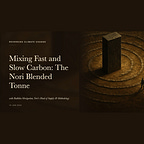
The carbon removal industry and science have evolved greatly since Nori was founded in 2017. In this special Reversing Climate Change episode, Nori's Head of Supply and Methodology Radhika Moolgavkar, joins host Ross Kenyon to talk through what’s changed, what’s still the same, and how Nori is evolving with a new net-zero-friendly ‘blended tonne’ that they just published a new whitepaper on this week.
What is this ‘blended tonne’ Nori is developing?
What did the carbon removal industry look like back in 2017?
Why did Nori choose to start with soil carbon and how has soil carbon progressed since then?
What is a carbon cycle and why should carbon removal credit buyers care?
What is the difference between the geological (‘slow) carbon cycle and and biological (‘fast’) carbon cycle?
If you emit a tonne by burning fossil fuels and remove a tonne through soil carbon, is it net zero?
If you emit a tonne by burning fossil fuels and pre-purchase a future DAC carbon removal, is it net zero?
What role does soil carbon play in reversing climate change?
Tune in to dive into the questions above, and more!
More from the show
Ad-free episodes and other benefits come with a paid subscription.
Carbon Removal Newsroom, the news show that ran alongside this one, is over. Its episodes are still up, on the feed Climate Workers Anonymous now uses.
Carbon Removal Memes is still going.
Full Transcript
Alexsandra Guerra: You’re listening to the Reversing Climate Change podcast by the team at Nori, the carbon removal marketplace. This is a show about the innovators and entrepreneurs developing solutions to climate change.
Ross Kenyon: Hello and welcome to the Reversing Climate Change podcast with Nori. I’m Ross Kenyon. I’m the creative editor and one of the co-founders at Nori, which is a carbon removal marketplace in Seattle. Today we have a show that is very much about Nori and I have my colleague here.
Radhika Moolgavkar: Radhika Moolgavkar, head of supply and methodology at Nori.
Ross Kenyon: I wasn’t planning to make you introduce yourself in that way, but yeah, hi Radhika, very nice to have you.
Radhika Moolgavkar: Hi Ross.
Ross Kenyon: Obligatory plug, if you don’t listen to Radhika’s podcast, Carbon Removal Newsroom, my goal is very much, you start listening to Reversing Climate Change, you become obsessed with carbon removal and you eventually graduate, you matriculate into Radhika’s care.
Radhika Moolgavkar: Yeah, it’s a high, high bar, Ross, very high.
Ross Kenyon: Well, this show has lots of literature and philosophy and history and it’s more of a humanities focus and it’s broad. There’s lots of carbon removal content in here, but it’s also a lot of things that are not super close to carbon removal, but carbon removal newsroom is if you want to stay on top of what is happening in the fast moving, evolving field of carbon removal. There’s a couple other great podcasts too about carbon removal, but none that have this panelist news keeping you up to date on it. I don’t know if you agree with that.
Radhika Moolgavkar: We try, we try. It is always evolving, but it is a great show and a lot of fun to do. So I’m very grateful for the panelists and for our producer, Asa, always.
Ross Kenyon: Yeah, Asa even hosted a show that just came out too. I thought he did a very nice job on. You might be, watch out for your job security, Radhika. Asa’s coming for you.
Radhika Moolgavkar: Oh no. Well, you know, it’s always good to have friends and backups, so I’ll take it.
Ross Kenyon: Yeah, we love you. It’s a great job. We’re talking about the blended tonne today. So today is Wednesday, the day before the show will be published. And we just released a white paper that we’ve been working on and thinking about for a long time. It’s a concept called the blended tonne. Radhika, you are the driving force and first co-author behind this. Would you please introduce it for us?
Radhika Moolgavkar: Yeah, the blended tonne arises out of a need that we identified at Nori in that net zero claims are very difficult to make today because you either have carbon removal that’s in the future for many of the more durable and permanent storage technologies like DAC or rock weatherization, things of that nature. Or you have more current credits like soil and forestry. But as anybody who’s familiar with carbon removal knows, these are a little bit shorter term, have a little higher risk sometimes around reversal. And so how do companies go about creating net zero claims today?
Many do it at a portfolio level. So they’ll buy a bunch of nature-based credits, if you will, forestry, soil. And then they buy future permanent credits. But that doesn’t work for most companies. Most companies don’t have that kind of bandwidth to do that type of ESG work. And so we’ve created our portfolio level approach, but at a tonne. So what it is, is simply the combination of Nori’s Soil Carbon Removal Credit or Nori Removal Tonne, NRT, which will overlap with a future delivered permanent tonne Of which it could be of any of the many different types of, you know, bikers, DAC, oceans, we don’t know yet what exactly, to create, allow a company to make a net zero claim today with the assurance that it will be enough to offset a fossil fuel emission.
Ross Kenyon: But I thought Nori was just a soil company.
Radhika Moolgavkar: No, Ross, and as you know, and I know you’re just teeing this up for me, we have always been carbon removal agnostic. You as a founder know this better than anyone. We launched in soil, and actually I think you can probably give a better history than I can, but we launched in soil for a whole bunch of reasons, but we never intended to stay in soil. And in fact, a large part of my job is trying to understand all the various technologies that Their upsides and downsides and kind of figure out how we bring on new methodologies into the Nori marketplace.
Ross Kenyon: Oh, I can give a little bit of a history lesson. I’m sure people want to know why Nori is changing the way that we characterize soil. When we started almost six years ago, I was just looking on LinkedIn of when I started and it said five years, 11 months at Nori, which blows my mind to even think about. When I look back on those days, forestry is quite represented in other types of voluntary marketplaces. Forestry is pretty available. Soil had been left out since the collapse of the Chicago Climate Exchange.
So there was a huge number of farmers who may have wanted to participate. Nowadays, with carbon removal, if you’re looking at the marketplace, you’d be like, well, why wouldn’t you just go right towards something more durable? None of that existed at the time. Carbon engineering, I think, was the only operational one when we started.
Radhika Moolgavkar: With a twinkle in the eye.
Ross Kenyon: Yeah, a little twinkle in the eye. Nori was super early. We made a bunch of assumptions about how in order to move a trillion plus tonnes of carbon removed from the atmosphere, we needed to build something like a commodity market. And you don’t build a commodity market based upon the way a lot of the registries were working, which is very bespoke. You would select projects individually. We said that we just wanted people to care about carbon removed from the atmosphere. We used to say a tonne is a tonne is a tonne.
That story has also become complicated as time has gone on too. Nothing, basically every startup you ever talk to, if they’re around long enough, we’ll be like, here’s what we thought when we started. Here’s how we eventually had to amend these beliefs. And like the long-term vision is still for Nori. We need to build a commodity market for carbon removal. Like we need to have that kind of skill to have the kind of impact necessary to reverse climate change. If we do not do that, I’m not sure that we’re going to get where we need to go.
The problem is we also live very far in the future where there is no supply available to have a commodity market right now. And then also the stuff with soil, the complicating factors too. We also, one other thing, Radhika, sorry, I realize I’m just ranting here, but I feel like I’ve been wanting to explain this for a while. Like we started off being very critical of ex-ante credits. Yeah. Nori made a deliberate design choice to only do ex post credit. So things that have happened in the past, but when we started Nori, we were looking at ex anti credits.
So forward looking credits for forestry that would estimate what the future carbon yield of force would be. And oftentimes it was very badly baselined. They would burn down, but the credits were already issued and retired by someone. So we made these choices. And then a lot of things and thinking have evolved around us and left us in a position of being like, hmm.
Radhika Moolgavkar: I mean, I think it makes sense when you think about what a net zero claim is and what is available today. Of course, you have to look at future credits, right? Because the technology is just not online. Or if it is online, it’s at very, very low volumes at very high costs, which is why AMCs exist kind of in the first place to create that market driven signal. So I think... What has happened is the science has also evolved a lot around really what is carbon removal and how it can be meaningful.
We have these two competing issues going on, or not competing, but maybe in tension a little bit. You have tipping points, but you also have potential future ramifications, and you need a balance of both, which is what we believe the blended tonne does. But you can understand why companies are looking for permanent solutions that aren’t available today, but are truly offsetting a fossil emission versus a land use emission, which is what is generally accepted for soil and forestry kind of credits.
Ross Kenyon: Two related questions. Why not just use soil credits to negate these fossil emissions? And if that doesn’t work, why not just buy many multiples of the fossil emission out of less durable types of carbon removal like soil?
Radhika Moolgavkar: So you kind of answered your first question with your second question. You can’t use soil carbon removal credits because of The fact that, well, there are two things. One, it’s part of the fast carbon cycle, right? So it eventually, when soil reaches its saturation point, there will be flux and carbon will be drawn in and carbon will be released. And that is actually what should happen in healthy soils. So soil never permanently stores carbon, but even when it’s building up carbon and getting to that level of equilibrium, You still don’t have the same permanence.
We only guarantee it for 10 years for a whole bunch of reasons, not the least being that we work with farmers who have other competing intentions within their agricultural systems and they have to make decisions every year. So it’s just not the same as what is released from geological storage or rocks or what’s used for basically the creation of fossil fuels. I think there is an argument to be made for the type of stacking you mentioned, where you buy year after year after year after year after year. But the governance around that is difficult.
How do you ensure that people buy it for that long? Also, don’t forget, corporations, they are around for human, maybe a little bit longer lifetimes. We’re talking about civilization lifetimes in terms of The types of emissions that are created by fossil fuel, and you just don’t have a human span to create that. We can’t monitor that in a meaningful way. And so I think that is why you can’t use the stacking mechanism ad nauseum, but you could certainly use it in a meaningful way for the human-type timelines.
Ross Kenyon: That governance question is so interesting. I know we can think of companies that have stood the test of time that are just brand names that we all think of. GE is the first one I come to mind that’s been several generations have been around during its corporate lifespan. Ford. Okay, yeah. Sort of the legacy institutions of American capitalism. But how many are there like that? I feel like many companies probably, is it like... The first generation makes the wealth, the second generation tries, the third one loses it. There’s actually a fair amount of income mobility with families that are rich.
Is that true with corporations too? They just get merged and acquired?
Radhika Moolgavkar: I don’t know. I think corporate law is relatively new. It’s a turn of the century, late 1800s, 1900s kind of creation. Even if you’re looking at the oldest corporations who might have been absorbed into other corporations, you’re still looking at timeframes of 150 years at best, right? And so it just doesn’t do enough for what the legacy emissions that are in the atmosphere, what we have to deal with.
Ross Kenyon: I know you’re curious about this too, because we’ve talked about it, but how does long-term liabilities like carbon being emitted interact with something like a rule against perpetuities as well? Can you keep a corporation on the hook for horizontal stacking for centuries? Is that even legal?
Radhika Moolgavkar: I mean, the rule against perpetuities, you’re stretching my brain from law school, but in many, many states, it’s becoming a lot less illegal. Applicable. States are loosening up around that. You have lifetime and legacy trusts. There are a lot of different ways to work in and around the rule against perpetuity. So I don’t think that actually would prevent you. It’s more that generally the rule against perpetuities, you’re passing along wealth to somebody. So it’s like a good thing for the person who’s involved in it. In a corporation, this is a liability if you think about emission reduction.
So it’s not maybe something That they would want to continue if they weren’t forced to continue it. And so it’s kind of, I think, a different mindset.
Ross Kenyon: So it sounds like for governance reasons, horizontal stacking, while it might be theoretically sound, might for political economy reasons be difficult, is vertical stacking possible, credible?
Radhika Moolgavkar: Yeah, then you’re, yeah, I think you can look at it, but again... It’s all about when those tonnes are released in the future and what that means in terms, you know, a lot of people’s critiques around even that type of stacking is that in 10 years, what if there is a re-release and you end up causing actually higher temperatures than what you would have ended up because not only have you not removed the legacy emissions, you have also released a whole bunch of emissions or, you know, a whole bunch of carbon emissions.
And this is also theoretical too, right? So I just wanna be clear, these are all kind of games we’re playing in our head. We don’t really know what the answers around this because if somebody is critically looking at their blended tonne white paper, they’ll also note that we have governance issues we have to resolve. So I’m not pretending that any one of these solutions is perfect, but it’s a weighing of what we think the higher risks and the lower risks are of the different products. And what control we can exert as nori versus leaving it to others.
So at least in the blended tonne on the governance side, we have a say in how it’s created, how it’s executed, and can put in what we hope are very strong guardrails.
Ross Kenyon: I’m attracted to the idea of vertical stacking. If you can take some quantity, some multiple of a fossil emission and buy 10, 15, 20 times that amount of less durable carbon removals and hope that it adds up to either the half-life of that carbon molecule or the entire decaying lifespan of that carbon dioxide molecule, there’s something that’s Powerful about that idea. But also that’s a theoretical mathematical approach to geophysical reality of one fossil tonne emitted. And should we be adding some theoretical financial device here when really you just need to immobilize a tonne of fossil carbon?
It’s got to go back to the slow carbon cycle. It needs to go back to the lithosphere, the deep ocean. It’s got to go somewhere. Is that okay? Do you agree with that?
Radhika Moolgavkar: No. I, you’re asking some hard questions, Ross. Um, I’m supposed to be objective. Like I’m, I’m the CRN’s carbon removal newsroom podcaster. I’m supposed to be objective.
Ross Kenyon: I’m the wild card. I get to do whatever it’s my show, Radhika. I’m asking the hard question. You’re the supply, you’re head of supply at Nori.
Radhika Moolgavkar: You know, I think Quite frankly, that we should be using all of the solutions that are out there. For some people, maybe what you are describing makes a ton of sense because they’re either in agriculture and they want to support soil carbon or in the food system, or they have a strong interest in soils for whatever reason. That is totally reasonable. I think where things get difficult is with carbon accounting and all of those other layers that we’ve added from a policy perspective. What you’re describing becomes much more difficult to equate if you’re using it in a net zero solution.
And this is coming very dangerously close to 10-year accounting, which as you and I have talked about many times, on the face seems reasonable, but there’s been a pretty significant rejection of it in recent times. So maybe we’ll come back to it because nothing’s set in stone. So, well, from my perspective, what you described seems great. I think right now the market has rejected, the buyers have rejected what you have postulated.
Ross Kenyon: One thing I’ve been thinking about, and I’ve had a few conversations about this, is that on your accounting, which is very similar to this vertical stacking idea that we’ve been talking about, if you’re listening and maybe it’s a new concept to you, Is that it isn’t an objection in kind, it’s more in scale perhaps, because I’ve also heard that biochar, which maybe we can benchmark at about a hundred years, maybe 10 of those could credibly equal a thousand years of permanence. Maybe that durability, and maybe it’s just when you’re doing delayed forestry harvesting, like NCX was doing, or you were doing soil credits with Nori, maybe just the amount of measurement and credibility at that scale is just not good enough to equal Like super long civilizational permanence.
Is that correct or no?
Radhika Moolgavkar: I mean, I don’t know if it’s, I think it’s just one of the arguments that’s put forward, right? I think as you and I are talking about this, what I at least am hearing is that there’s just a lot of uncertainty around many different pathways to removing legacy emissions and getting to net zero. And, you know, People are trying different things and in the market, some things are being accepted and some are not, and some are being accepted because they’re scientifically sound and some are being rejected even though they’re scientifically sound potentially.
So I think it’s difficult to predict what the future will hold. And I think on the face, all of these solutions would be reasonable, but I think that the fact that they’re being rejected isn’t always, it’s often because of the constructs we’ve put on top of them, particularly around carbon accounting and things like that, where you really do need to track your emission to credibly report. And things like soil and forestry don’t allow you that same type of tracking. So maybe that’s kind of your point, right? Like they’re just not as durable, they’re not as measurable, and therefore they can’t be used as easily within these mechanisms.
Ross Kenyon: One thing I’ve noticed in conversations around us developing this blended tonne idea is that even people who may have been quite critical of our approach to soil or had very good challenging questions to it, once we were no longer talking about A strict carbon accounting use for soil credits from Nori, a lot of the objections banished. I think a lot of the concern is political economy concerns that corporations are going to use the cheapest credits possible to get the most PR bang for the buck. And if companies that produce credits allow them or permit them to make unscientific claims, they will not actually do the permanent removals that they need to negate.
Radhika Moolgavkar: Or the emissions reductions they need to do, right? They’ll rather you offset over a more difficult emission reduction.
Ross Kenyon: Yeah, but if we’re coming out and saying, hey, that’s not an appropriate use of soil, I feel like people have been much more understanding and say, well, of course we need everything. Of course we need temporary carbon removal going full speed. We need all of it if we’re going to do this. And it really just when carbon accounting comes into it and like the businesses are trying to move credits in ways that may not be supported by science, that’s where we’ve seen objections that fall away when carbon accounting is no longer the front and center reason for existing.
Radhika Moolgavkar: Yeah. And I think, you know, it’s also when, when we as a business, as Nori say that, look, these are, this is a good use of soil carbon removal and This is not the use of soil carbon removal, right? Soil carbon removal can be used for a subset of your carbon accounting potentially in like a like for like situation where you’re using a land use change or you’re only claiming it for like one millionth of an emission or something like that, you know, but it can’t be used in a truly net zero for a true net zero claim and We always have as a company, and we continue to push the narrative.
You have to admit, reduce your emissions first, and then worry about your legacy emissions through carbon removal. And that is the message we’ve always said.
Ross Kenyon: Let’s talk about like for like. Marguerite Kuiper is one of the people I acknowledge who’s thinking impacted this paper. And she gave notes really big in the carbon take back obligation paradigm. Eli Mitchell Larson also from Carbon Gap also spoke about this when he was on the podcast several years ago. And it’s over for a long time. What does like for like mean for carbon removal?
Radhika Moolgavkar: I mean, like for like is just Basically, exactly as it sounds, where you match the type of carbon removal to the type of emission you have. So I think about it as, again, the two different carbon cycles. You have the fast carbon cycle and the slow carbon cycle. And slow carbon emissions are created by fossil fuels. So you need to return that percentage of the carbon that has been released, our carbon budget, to that type of storage, which is geologic, lithosphere- Ocean, you know, rocks in the ocean type of storage.
Then you have the fast carbon cycle, which is what we kind of touched on earlier, the idea between high and soil and forestry is where eventually you reach a state of equilibrium and carbon is both being drawn down and released. And the amount being drawn down and released is dependent on the time of year and, you know, the conditions. However, you’re never permanently storing all the carbon that’s being drawn into The soil or into the photosynthetic activity. And for scientists who are much more versed in this, I apologize if I’m getting it not quite right, but this is how I understand it.
And you want to return. So land use changes where you potentially remove a forest or you do a type of agriculture that results in carbon being lost. If you adopt a practice that then Negates that, so regenerative ag or planting a new forest, that is an appropriate use of that type of carbon removal. And so you have like for like, which is sort of fast carbon returning to the fast carbon cycle and slow carbon returning to the slow carbon cycle.
Ross Kenyon: And that strikes you as being an acceptable use of soil credits.
Radhika Moolgavkar: Yeah, I mean, yeah, I think it’s an acceptable use of soil credits. I think most people would agree with that. The trickiness is how you track that, right? Just like everything, the devil’s in the details and how you track that as a company and how you track that as a society. I don’t know if we fully, fully figured out.
Ross Kenyon: One other funny part of Nori is that we had expected soil science to become clearer and to become easier to measure and model as time has gone on. It turns out the opposite has happened.
Radhika Moolgavkar: Yeah, I mean, I don’t know whether it’s the opposite so much as it’s gotten more complicated, right? As would be expected. I guess the opposite that has gotten clearer. Yes, it’s the opposite of that. It’s muddier. But I don’t know I think some things you expected are not showing, are not actually being demonstrated. You know, the most, like kind of a classic example is no-till. Does it really sequester carbon? Does it potentially create carbon deficits at a lower level? There’s still a lot of outstanding questions around that. And so I think everybody agrees that carbon is being sequestered.
But how much and how is still very much up in the air. And I think that is to be expected because soil carbon science is relatively new and it’s very complicated based on so many confounding factors. And there’s a lot of carbon in the soil, no matter what. So there’s a lot of background carbon you have to like account for. So it’s it’s tough.
Ross Kenyon: How do you think Nori will treat soil in the future? Are there upgrades or different systems that you might recommend Nori implement that would improve the measurement of soil?
Radhika Moolgavkar: Yeah, there are so many interesting and exciting ideas out there around soil. So for one, I think using it in this blended tonne concept is a great application of it. We’ve gotten very positive feedback from lots of people who are deep thinkers in the space. And so In that general sense, I think the use of any type of fast carbon credit makes a lot of sense. And then soil, you’re seeing a lot of both investment from the USDA, specifically North America, the EU has a strong interest in these regenerative farming practices.
So there is a lot of investment, a lot of smart people working in the space to figure out how do you Either bring down the cost of soil sampling and testing, which is generally considered the gold standard if done correctly. And there’s a lot of nuance in that, but if done correctly, it’s considered the gold standard of measurement. So there are companies working on that. There are big companies that we work with who are also invested in helping those other smaller companies develop. So there’s sort of this generic ecosystem embrace of soil carbon, which I think will help with the Measurement piece, you know, and in the science, it is what it is.
It’ll take time, but you see a lot of people working in the space. You see a lot of interesting academic papers coming out. So you expect, I would expect that in the next decade or so, we’ll see a huge shift in our understanding around soil organic carbon. And then there are a lot of imaging technologies out there that are also being developed that will play a really interesting role in Ongoing monitoring, potentially measuring, but that’s, I think, much further down the road. But even the ongoing monitoring, which can be a big problem for soil carbon because the reversal risks are pretty, you know, can feel pretty significant, will help shore up people’s confidence around soil carbon.
And we’ve talked to at least like probably 10 companies who are interested in doing different types of imaging, whether it’s satellite, Drones, airplanes, you know, sensors in the ground, you name it. They’re all looking at different options.
Ross Kenyon: We’d also like to thank all the help that we got. Radek and I are both co-authors on this piece, but Rick Berg, who’s our carbon removal methodology R&D lead here at Nori, was also very, very helpful in making this. Rick is an unsung hero. He’s got to come on here at some point. I’m going to get him.
Radhika Moolgavkar: Good luck with that. He’s not super enthusiastic about being on a podcast.
Ross Kenyon: Also, Patrick Sow is Nori’s Head of Product, very enamored with this idea, helped drive this forward, interested in the productizing, the portfolio approach that big corporations with sustainability departments have available to them, turning that into a product innovation, really important on driving that forward. And we also had help from a number of external people too. Holly Jean Buck, the regular at Carbon Removal Newsroom and a university at Buffalo. I also wanted to ask, Radhika, I’m a fan of Holly’s. I have been for a long time. Does that make me a buckaroo?
Radhika Moolgavkar: Yes, you and me both. We both, I fangirl over her all the time. My husband makes fun of me, but I’m like, but it’s Holly.
Ross Kenyon: You heard it here for us. We’re both buckaroos. Yeah, Holly’s great. Marguerite Kuiper, who we’ve talked about previously, who is a consultant within the world of carbon management. Naeem Merchant, who recently is the founding executive director of Carbon Removal Canada. That’s right, right?
Radhika Moolgavkar: Yep. And just recently moved back to Canada.
Ross Kenyon: Oh, wow. Our home and native land. Well, he’s great. He’s also a regular on the Carbon Removal Newsroom business shows. Robert Hoagland. Robert, we need to just have you on this show. I don’t know why it’s taken this long. It’s outrageous that it has. We need to correct it right away. So let’s find a good topic. If you are anywhere near to the world of carbon removal, you’ve probably read Robert’s blogs. They made a huge impact on our thinking here. Like Robert’s been just this voice in the back of my head for years now being like, we can innovate here.
We can innovate here. We need to change the way we’re thinking about this here. So really appreciate your leadership there. Will Burns, another regular carbon removal newsroom on the policy front.
Radhika Moolgavkar: And also one of the old guard of carbon removal who knows more about the history than probably anybody else does.
Ross Kenyon: His comments on carbon removal newsroom are the ones where I’m like, okay, stop washing the dishes, listen up, let this soak into your brain.
Radhika Moolgavkar: Yep.
Ross Kenyon: Yep. And Zeke, housefather of Stripe.
Radhika Moolgavkar: I mean, what... What is there not to say about Zeke? He is a leader in the space. He’s a leader in the industry, helping Stripe and Frontier do some really innovative work as AMCs. So just appreciate his voice and his help in developing what we think is a pretty cool product.
Ross Kenyon: Agreed. And I think it goes without saying, but I’m going to say it anyways. The team at Nori, so many conversations were had in the hallway. So much happened in the Creative and marketing department to get this deployed and out there. And just thanks everyone. Thanks for your help. And we hope this can be, I think, bigger than Nori too. Like we would hope this is a concept that might be useful as a framework for finding the rightful place of nature-based solutions within carbon removal, which I think it’s had a difficult couple of years of figuring out exactly where it fits.
And I’m hoping this is one potential avenue that we can, not to quote Sacha Baron Cohen, but to heal the divide.
Radhika Moolgavkar: It’s sort of unfortunate there’s a divide at all already. We’re a little too young as an industry.
Ross Kenyon: Yeah, I think no matter what, I think we all agree that we just need all of it. I think that’s a pretty common view. And it’s only when carbon accounting or other things come up that it gets really spicy. And I think there’s often good reasons for the spiciness. Anyways, thanks to everyone who was also just a really good constructive critic. We learned a lot from those notes. I think it’s good that not everything just gets a rubber stamp of approval. I like that we had a lot of productive, hard conversations.
It made me think, which is the reason I love my job. I got the gears going, and I think we found a potential way to innovate that really helps soil and helps carbon removal broadly. I hope you feel similarly, Veronica, yeah?
Radhika Moolgavkar: A hundred percent.
Ross Kenyon: A hundred percent. Well, thanks for being on here. I hope you reciprocate and ask me on Carbon Removal Newsroom relatively soon. It’s my turn.
Radhika Moolgavkar: I feel like this is the first time you’ve told me you want to be on Carbon Removal Newsroom. So for all you listeners, don’t think I’ve been pushing him away. He’s just not offered himself up. All right. You want to be on with Holly Jean Buck sometime? You want the two buckaroos together?
Ross Kenyon: I’m like, I’m a really good question asker, I think, but I think I’d rather go to Holly for a lot of these answers. I think I...
Radhika Moolgavkar: Oh, so you want my job?
Ross Kenyon: Yeah, I’m coming...
Radhika Moolgavkar: I put you in there.
Ross Kenyon: I thought Radhika would be better than I am in carbon removal newsroom. We will build a show around. Now you’re getting an inside peek inside of Nori. This is, this is what it’s like.
Radhika Moolgavkar: Anytime you let me know and we will get you on.
Ross Kenyon: If I’m the right fit for anything cool, but I don’t have the ego tied up in it. I’m a passionate consumer of the show though. I think I am the number one fan. Thank you so much for listening. If you could please subscribe and give us a great rating and review on Apple Podcasts or a rating on Spotify, that’d be much appreciated. It helps us get our content out to more people. [Nori promotion cut from the transcript. It's still in the audio, but it no longer applies.] We will catch you next time.


