


Listen on Spotify, Apple Podcasts or YouTube.
What would happen if businesses were expected or even required to store a tonne of carbon for every tonne of carbon they produce? A Carbon Takeback Obligation is a policy framework that aims to make that the new standard. Today we learn more about how such a system might operate.
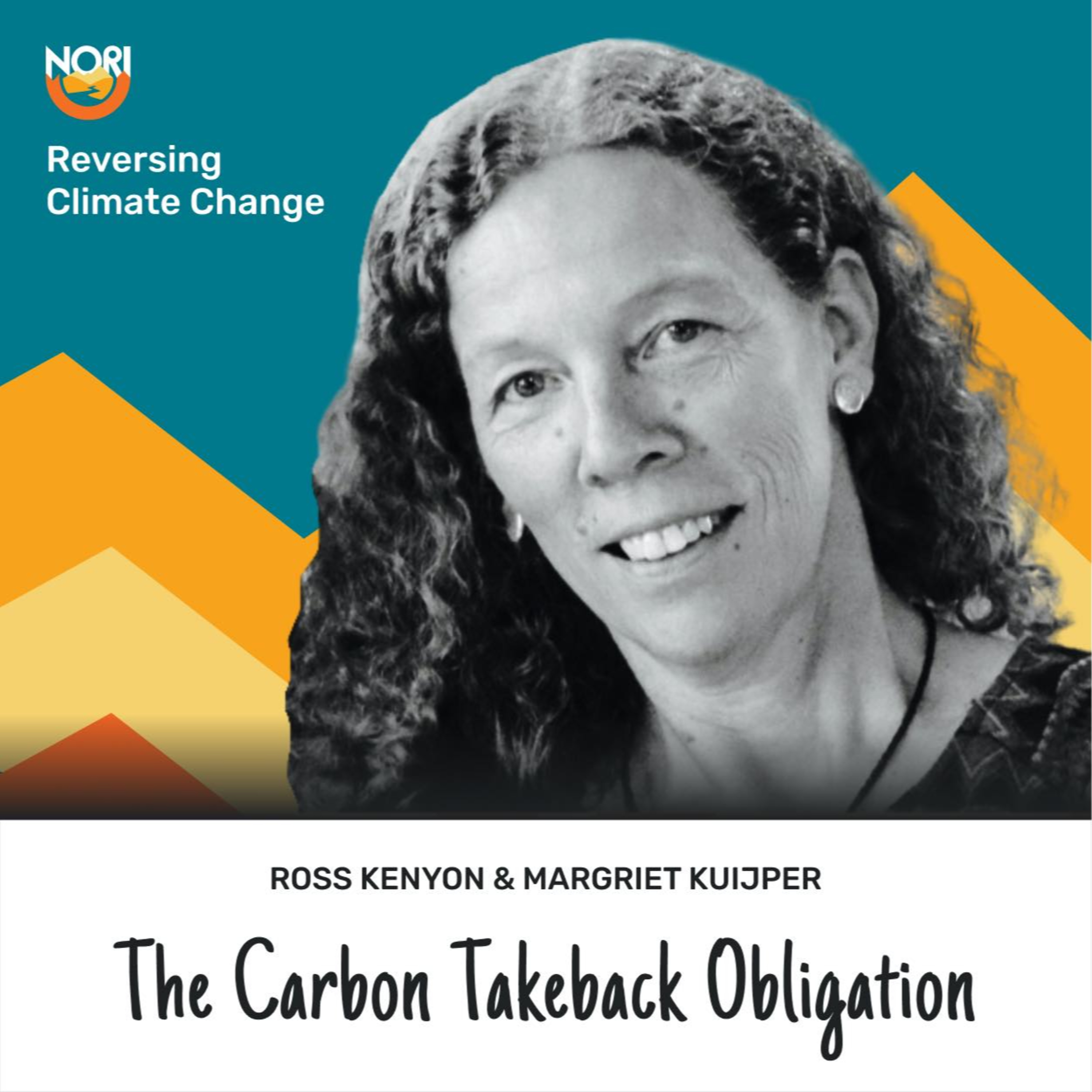
Margriet Kuijper is a former civil engineer for Shell, where she focused on the development of carbon capture and storage projects. Today, she serves as an independent consultant working on a Carbon Takeback Obligation, otherwise known as CTBO. On this episode of Reversing Climate Change, Margriet joins Ross to share the simple idea behind a Carbon Takeback Obligation and explain how it addresses the common concerns associated with oil and gas carbon capture projects.
Margriet discusses how CTBO makes polluters pay to clean up their emissions and describes how CTBO policy could work in tandem with a carbon tax or emissions trading system, incentivizing both emitters and producers to find solutions together. Listen in to understand Margriet’s take on the role of offsets under CTBO and in a net-zero world, and learn how businesses would benefit from the long-term policy certainty of a Carbon Takeback Obligation.
More from the show
Ad-free episodes and other benefits come with a paid subscription.
Carbon Removal Newsroom, the news show that ran alongside this one, is over. Its episodes are still up, on the feed Climate Workers Anonymous now uses.
Carbon Removal Memes is still going.
Write to me through Substack @ rosskenyon.com.
Resources
Eli Mitchell-Larson on Reversing Climate Change S2EP62
Europe’s Extended Producer Responsibility Policy
Making Climate Policy Work by Danny Cullenward and David G. Victor
Full Transcript
Ross Kenyon: Hello and welcome to the Reversing Climate Change podcast. I’m Ross Kenyon. Today I have with me Marguerite Kuyper, who is an engineer with a long and varied career, including time at Shell. She is now an independent consultant working on carbon take back obligations. Thanks for being here, Marguerite. Thanks for having me, Ross. Yeah, I’m so happy to have you here. I think you might be the first person who held a position at an oil major who’s been on the show. I’m not sure about that.
So what was that like? I want to hear your backstory and how you got into everything before we get into the carbon take back obligation paradigm.
Margriet Kuijper: Well, yeah, it’s really not as exciting or... Yeah, some people have an idea that oil company people are very different from normal people, but in general, we’re all just people. And I ended up working for Shell, indeed, as an engineer. I studied civil engineering and I worked in project engineering management in different countries. I worked in Canada, in Africa, in the UK. Along the way, I got more and more interested in sustainability issues and climate change, environmental issues. So every time there was a reorganization, I went to a bit closer to where in the company they were actually working on these issues.
So that’s how I ended up in the end working also on climate capture and storage within Shell. And that’s basically, yeah. And it works on a few other issues, of course, also. But yeah, that’s basically what it was like.
Ross Kenyon: And my understanding of the overall trajectory is getting more and more into the gravity well that is environmental, social, governance kind of space within the company. And then now you’ve sort of transitioned your external, you’re an independent consultant now, but you’re still thinking about those things.
Margriet Kuijper: Yeah, I mean, in a sense, that hasn’t changed. When I worked within Shell, I tried to get Shell to work more on carbon capture and storage. And we did a few projects and we did a lot of studies, of course, and we worked with others to try to develop things. And when I left Shell, actually, what I call the second wave of CCS projects was just starting. After the Paris Climate Convention, a lot of companies and governments started doing the sums, net zero sums, and realized that really they did need carbon capture and storage to get to net zero on time.
So yeah, there was actually quite a bit of work developing. And since I had a background on this topic, I started getting involved again in the studies for scenarios and analysis, roadmaps, those kind of things. And I basically realized that we still had the same problem with CCS, which was more broader support and a business case. Those are the two issues that were bugging CCS in the first wave of projects around 2005, 2010, I think. It was the first wave of projects and now there is a second wave of projects in the make, but they’re still challenged from a business case perspective and from a societal support perspective.
Ross Kenyon: I think it’s safe to say that the oil and gas majors don’t have a warm reception in a lot of circles. Their climate commitments are often viewed as instrumental or insincere. What is it like actually being there though? I imagine people do actually care about climate. How much room do they have to innovate? Is there enough possibility for them to run the process in reverse as has often been the lingo lately in carbon removal circles?
Margriet Kuijper: I think it’s not. I mean, I always said that as a company, you can no more suddenly build 10 wind farms than do 10 carbon capture storage projects. You need permits and you need a government to approve where you put the wind farms, where you put the carbon storage. So there is a license to operate issue that if the government hasn’t It’s up to politicians to decide whether they want more nuclear, whether they want more solar and wind or more biomass or more fossil fuels still, and also whether they want carbon capture and storage.
There are some countries that have it quite high up their list of things and other countries that don’t. So it’s very difficult as a company to do these projects if there is no societal support. And I think that’s where things have gone wrong a bit because NGOs have lobbied a lot against carbon capture and storage. So companies that want to become more popular and gain trust on the climate side of things, they actually listen to these NGOs also. And they think, you know, why would I stick out my neck and do a carbon capture storage project?
Which is actually not profitable yet because of the low carbon prices. And then get NGOs that basically don’t like this project. If I do a wind project or a green hydrogen project, everybody’s cheering. So, you know, if I want to gain license to operate and credit points for my climate behavior, then I’d rather do that than... Clean up the carbon. So they’ve been, in that sense, not helping sometimes NGOs.
Ross Kenyon: I think people are, and maybe you think this is justified or maybe not, but somewhat suspicious of carbon capture projects coming out of oil and gas and that. Does it actually result in a net reduction of emissions? Is this just prolonging this process of them transitioning? Do you think those concerns are valid or not so much?
Margriet Kuijper: Yeah, I think they’re valid to a certain extent. However, if you look at the scenarios from IPCC, from International Energy Agency, and from a lot of others, it is so difficult to see how we can actually phase out fossil fuels quickly enough to stay within carbon budgets. So that means that there is a very high probability of Also considering human nature of procrastinating that we will be using fossil energy for too much and too long and exceeding carbon budgets. And then the question is, do you say, well, you know, that’s too bad.
Then we will exceed it a bit and we’ll be carbon neutral later. Or do you say, no, if we’re going to use it too long, then there has to be more carbon capture and storage. Because it’s one thing using fossil energy too long, but it’s not acceptable having emissions for too long a period of time. So that is the question. That’s the choice that you have to make. And then becomes the next question. Do you trust the fossil fuel companies to be part of the solution or do you say we don’t trust you at all anymore?
We want the government to step in and set up a waste disposal business for CO2. That’s another option that some fossil fuel companies are actually pushing for. They say, you know, it’s infrastructure government. You set up a carbon disposal system and the emitters. Big industries, point sources, they just have to hand in their CO2 and then the government can dispose of it. That’s another option. Personally, and that’s why I’m working on the Climate Takeback Obligation, I think if you produce it, you have a responsibility for the waste and therefore you should be involved the waste disposal.
Ross Kenyon: Is a carbon take-back obligation as a policy approach literally as simple as if you mobilize a tonne of carbon dioxide or greenhouse gas, you should demobilize and capture it and store it back? Is it that simple?
Margriet Kuijper: In the end, it’s that simple indeed. It’s an accounting system for keeping track of what you take out of the ground and make sure that you safely store as much back into the ground. We’ve had discussions, of course, does it really have to be back into the ground in the same place? No, it can be in another place. But the important thing is that it’s geologically permanently stored. That kind of time spans thousands, ten thousands of years and not decennia or hundreds of years like the short carbon cycle.
So geological carbon has to be Offset by permanent storage. And I think mineralization is also a good option, possibly, you know, the olive vine and those kind of things. They are very permanent. There’s some concrete where they want to use CO2 that could be fairly permanent. Biochar may be fairly permanent. So there’s other options besides actually putting it back into the deep subsurface. But in general, the requirement that we have at the moment in the climate take-back obligation is that it’s got to be permanent storage because otherwise you’re supercharging the short cycle.
You keep adding carbon to the atmosphere and the biosphere. And that is quite risky from a climate change perspective.
Ross Kenyon: We had Eli Mitchell Larson on recently and a good portion of our discussion focused on like for like. So if you’re pulling up fossil carbon, you should be putting it back into, you know, saline reservoirs or geological sequestration of some, you know, long term enough to be stood down there for a very long time. Do you think that’s that’s a correct way to see things?
Margriet Kuijper: Yeah, yeah. And I think we had a very broad, what we call sounding board group when we did the study, the climate take back study last year with NGOs, companies, scientists, investors, all kinds of different people. And they all agreed that It’s the simplicity of the idea. If you take it out of the ground, you got to put it back into the ground. That’s attractive about this idea. If you start watering it down and saying, well, maybe you can also plant a tree to offset the carbon that you took out of the ground.
Then it really starts getting watered down and you start getting into the discussion, is a tree permanent enough and how are you monitoring that and what if it burns down? And if you plant that tree, will somebody else not plant another tree because there’s a tree already kind of thing. So it is far more complicated from a trust and accounting perspective than just saying, put it back into the ground.
Ross Kenyon: Hmm. Yeah, we see quite a lot of these debates too. If you follow that like for like way of thinking, do you think for emissions coming off of agriculture perhaps that it would be appropriate for them to focus on land-based or natural climate solutions? Or do you think they would also have to focus on more mineralization, geological sequestration methodologies? Yeah.
Margriet Kuijper: That’s a difficult one, I think. I’m not a climate scientist. I usually, for these kind of questions, I go to Miles, Ellen, and Eli in Oxford because they’re the... Well, Miles is the original person who came up with the idea anyways, but it’s climate storage certificates, and Eli is... Very much involved in this whole offsetting business also. I really try to also in the report that we wrote, we basically make a distinction between geological stores of carbon and biological stores of carbon. And biological stores are then in the soil and in the forest.
And basically also the soil and the forest carbon, of course, have been degraded. It’s basically very similar to the fossil carbon store that we’ve Taken too much out and thrown it up into the atmosphere because we’ve been cutting down forests and we’ve been depleting soils. So there’s some restoration there to be done also. And I think what we are proposing is that you keep these stores separately and you start managing them in a similar way that if you take carbon out, you have to put carbon back in.
And that you start having the discussion to what extent they’re interchangeable or not. Because that needs to be a conscious decision if you say, okay, you can offset carbon depletion in forests with carbon stored in soils, maybe, or the other way around. I think you need to think about this carefully before you start allowing that.
Ross Kenyon: Yeah, we think a lot about the relationship between different methodologies and how to value them and think about permanence. They’re hard questions to be pondering. What is the political status of such a policy as a carbon take-back obligation? Does this exist anywhere yet, Marguerite? Is it being debated? No, it doesn’t. Okay. It sounds kind of like net zero, like a little bit. It sounds related.
Margriet Kuijper: It is very much net zero. It’s a complementary net zero. If you look at it politically... Rightly so. The focus from most politicians at the moment is replacing fossil energy with renewables. So that is one thing. The other one is efficiency, of course, using less energy. They’re really hoping that will reduce emissions quickly enough. What you’re saying is, well, maybe you should also put in some policies directly aimed at the fossil energy use because there is Historically, most energy transitions have been too slow because energy growth is so quick.
That you just need more and more energy. And it’s very difficult to keep up with that. So historically, you see that we’re still using wood. We’re still using coal. We’re still using oil and gas. And that’s been 80%, I think, for the last 40 years. So it’s very difficult to actually reduce the incumbents. So we say you also have to start managing the incumbents, not only on the emission side, emission trading system, carbon taxes, But also on the supply side, because at the moment, really, I mean, we were talking about oil and gas companies in the beginning and the Shells and BPs and Equinor’s total, they’re all thinking about climate change and how to get to net zero.
But there’s, you know, they maybe supply five or 10% of the oil and gas worldwide at the most. The rest is NOCs and a lot of smaller companies also worldwide. And they’re not thinking about it. They’re just looking for more oil and gas. And if they get a permit, they produce it. And there’s no climate considerations in there. So that’s really something we need to fix because as long as decisions about energy production are completely disconnected from the carbon budget restraints, you keep having this huge production gap and piling on the problems for the future.
So politically, that realization is sinking in, I think, now. In the Netherlands, of course, we have done the study and we have done that with the support of the Ministry of Economic Affairs. And in the UK, there’s quite a few groups now that have recommended the climate take-back obligation in their action plans and to the government. But we are not there yet. I think one of the difficult things always is how do you implement it at country level? And keep a level playing field because that’s one of the big issues, of course, always like with a carbon tax, like with other policies.
How do you make sure you can, if you implement it, you don’t create prefers incentives or that industry is going away because they think, well, this is not a nice place to work anymore. I will go somewhere else. So those kind of impacts, I think you have to be very careful of. And that’s what we are basically looking into now into more detail.
Ross Kenyon: Yeah. You said something that caught my eye in our email exchange. You can let me know if you would prefer this not to be in the show. Okay. I don’t think it was bad, but just to let you know, you said something like a perfect carbon tax or an emission trading system that covered everything could also work as an alternative to carbon take back obligations, which made me laugh because it was a joke about the political effects. Yeah, I think
Margriet Kuijper: Miles Allen sometimes says, all you really need is a CTO. So I think that’s where a bit where like the economists who say, all you really need is a good carbon tax and your problem is solved kind of thing. So that’s the theoretical world. And I think they’re both right in that both cases, It could work like that if the whole world adopted the carbon take-back obligation or the whole world adopted carbon pricing, you know, that could work. But yeah, no, I don’t think that is realistic from a political perspective.
And I also don’t think it’s good from an organizational perspective because I think the nice thing about having a carbon take-back obligation and, for example, a carbon tax or an emission trading system is That you give both the supplier and the user of the product a responsibility to actually do something about their emissions. Whoever emits it has to pay for their emissions so they have an incentive to capture their CO2 and whoever sells it to them has to store a certain amount of carbon, otherwise they cannot sell it anymore from the carbon take-back obligation.
So they have An incentive to start collecting stuff and safely disposing it. So that way, actually, the people in the value chain are encouraged to work together and solve the problem. Do you think a carbon take back obligation is superior to just directly pricing carbon? I don’t think it’s superior. It’s superior in some ways, I think, in the sense that, and that’s why I also think it’s interesting in the longer term for the whole carbon accounting vision that we have around this. And it’s far easier to measure gas flows, oil flows, coal volumes than it is to actually measure emissions.
You have 100 producers of big fossil energy companies who produce like 80% of all fossil energy companies. That’s fairly easy to administrate. It’s fairly easy to measure. It’s very easy to track because it shows up in all kinds of different reports and accounts already. So compared to emissions, one of the things I did when I worked with Shell also was set up an emission database when the European emission trading system started. And we had like hundreds of locations of different gas fields and gas platforms and pipelines and compressor systems and It’s a real nightmare to actually set that up and to model that measure that come up with reasonable accurate numbers.
And it’s stuff that goes into the area. So it’s, you know, it’s not that easy to track or to check or to account for. I think this is a very, yeah, a carbon take back obligation. In general, I think carbon policies are better the higher up in the value chain they are because then you cover all the carbon that’s being produced instead of when you go to the emitter. But having said that, I do think they work best in tandem because then both the emitter and the producer actually have an incentive to work together to think about how they’re going to solve the problem in the future.
Ross Kenyon: One of the classical criticisms, and my colleague Alden Donnelly is particularly fond of pointing this out, is that various ways of doing carbon pricing and carbon taxes just get passed along to the end user, and the end user is an inelastic demander of energy, for instance. If your gas goes up by a quarter a gallon, You still have to get to work. So did it actually do anything or did it just get passed through and it penalized people at least able to pay?
Margriet Kuijper: No, that’s absolutely correct. And I think that’s one of the first things when I started listening to your podcast, I think it was an interview with her maybe also, but where she pointed that out. And that’s what we’ve seen in Europe. Of course, we have very high gas prices and we have very high prices for the natural gas we use in our homes because it’s Texts like 60, 70, 80% sometimes. So, you know, we keep using it all the same because we don’t have an alternative really.
I think that’s correct. And that’s why I think the only real competitor that’s sometimes mentioned for carbon takeback obligation, if you want a supply side policy, is an upstream carbon tax at the wellhead. Also an awesome thing that she talks about a lot too. Yeah. Yeah. So that is what some people say, that’s the best thing you could do. But I think the climate take-back obligation is superior because, as we always say, we don’t only make the polluter pay, we make the polluter pay to clean up.
So if you have a tax, it just goes to the government. The government gets more dependent on their carbon income because they get huge amounts of money from it, of course. They can redistribute it, but it all becomes part of a big ecosystem of tax and claims of people and entitlements and carbon entanglement, it’s also called. If you have a carbon take-back obligation, you say, You just have to clean up your own act. And you’ve got to pay for that. And you can put that as a surcharge on your product price.
So, of course, they’re going to charge that to their customer. They say, well, if I have to come collect the waste and dispose of it, I have to charge more for the gas. So, of course, the customer will pay for it. But I agree with Alden that is not going to make the customer use less gas in the short term. In the end, probably, because in the end, it will become very expensive, the last bits of gas. But in the beginning, you hardly notice it on the price.
So it has a similar effect, but you’re sure that the emissions will be reduced. And I think most customers... Are more willing to pay for a little bit extra for the gas if they know it’s actually used to reduce emissions and it’s not just going to the government who will redistribute it somewhere.
Ross Kenyon: That’s a fascinating insight. So carbon take back obligations seem predicated around this key thought that if the government is being paid for carbon being used, the incentives are divergent at that point. So the government might not actually want carbon to be used less because then their tax receipts would go down and that would make it less possible for governments to do things that they like to do. So you think this is a way of avoiding that sort of, we call it carbon entanglement. Well, I haven’t come up with that term, to be honest.
It’s a beautiful term. I’ve never heard it. Who says it?
Margriet Kuijper: You have never heard it? Google it. You’ll find a lot of, yeah, especially NGOs and others that carbon entanglement is a real thing because a large part of the fossil fuel revenues does go to the government, both on the production side and on the consumer side. They have Large amounts of income from fossil fuels very often. And that makes them partly dependent on that. Bit of a similar discussion as there was with cigarettes and alcohol, of course, you know, that governments do have two heads on these kind of dossiers, as we say.
Yeah, I think with climate take-back obligation, you basically... Also raising the price, you’re internalizing the external cost of the waste disposal of the product and therefore raising the price of the product, which should make renewable energy more quickly a real competitor and competitive. So I think that helps with the transition, speeding up the transition. And it also basically puts in a safety net to make sure that the emissions go down on fossil energy use. Because if you say you want to be at net zero in 2050, that means that the stored fraction, so the fraction of carbon that you store as related to the carbon that you produce has to be 100%.
Nobody argues with that, basically. And at the moment, we are at 0.01% or so. And according to the scenarios, we have to quickly ramp up and get to 100%. Fortunately, we also use a lot less fossil fuels, of course, in 2050. But we will still use some fossil energy in 2050, most likely. So it’s important that we start monitoring this stored fraction and start ramping it up. So that we can get to 100% on time.
Ross Kenyon: Within the carbon take back obligation paradigm, where does the debate about personal footprints versus political economy fall? Should it be individuals thinking about carbon take back? Or is it really for much larger organizations or even governments and countries that are thinking about CTOs?
Margriet Kuijper: Good question. I don’t see it directly. I think actually one of the advantages is that The individual person probably won’t have to think about it directly that much. What we have said, though, is that we want to make people aware of the fact that the carbon take-back obligation actually results in CO2 being stored of the gas that is being used. So there will be a surcharge on people’s bill invoices saying, you know, surcharge carbon take-back, carbon storage. That people can see that they actually pay a little bit extra so that more and more of the CO2 that’s generated by natural gas use is being stored.
So just to create awareness of the fact that’s important. We actually model it a bit on, I don’t know if you have that in the United States yet, what’s called extended producer responsibility schemes where, for example, for TVs and fridges, You pay a surcharge when you buy them, which is called removal contribution in the Netherlands. So that by the end, if you don’t want it anymore, then somebody actually picks it up and recycles it or something like that. So that kind of idea that whoever sells you something has to collect it and they charge you a little bit extra for that, but then they have to recycle it properly, et cetera.
That is the same system that we intend to use for natural gas, basically, that we say if you sell natural gas to people, you’ve got to commit to collecting an increasing percentage of the waste that’s being generated by it. So the way we see it, there’s basically going to be three phases. The first phase, it’s going to be really the big emitters that are affected because they know they can get rid of their CO2. They have a CO2 price already, so they will be the first ones who will be capturing CO2 and actually putting it in the pipeline and it will get stored.
So that will be the CO2 that gets stored. There will be a second phase, I think, where fossil energy producers will start thinking about, once there is no big sources anymore, they’ll start thinking, I cannot sell the gas anymore because I need carbon storage certificates. Maybe I should sell it as hydrogen. So I convert it into a hydrogen and store the CO2 myself. Maybe I should make electricity out of it and store the CO2 so that I make sure that I have my carbon storage certificates that I need for producing more gas.
So I have a conversation with my clients. Can you maybe electrify your process? Can you maybe switch to hydrogen? I can deliver that, but I cannot deliver you gas anymore unless you capture the CO2 and give it back to me because I need the storage certificates. So that’s the second phase, I think, where basically there will be a discussion with some bigger customers that will switch to hydrogen or electricity. And then there’s the third phase with all the very difficult dispersed users of natural gas that will still be there, probably some houses and other things.
Basically, the only way these customers can still use gas is if you come up with offsets, basically. If you do direct air capture and storage, you generate also a storage unit, of course, which allows you to produce gas again. You’ve reduced emissions also because you’ve taken CO2 out of the air. Then you can do bundled sales of natural gas with Removal units, but that will be very expensive, of course. So I think that will only be done by desperate users who cannot have better options, which is unlikely to be a large group at that time because renewables are getting so cheap that there should be good alternatives for most people.
Does a CTO face similar criticisms as carbon taxes or fee and dividends do in that it doesn’t try to transform society enough and doesn’t get enough buy-in for that reason? I’m sure it doesn’t try to transform society enough if you look at it from that perspective. No, I think they will have the same criticism. Where NGOs do tend to like it, I think, is that it firmly places responsibility or co-responsibility, of course, for the climate change problem with the producers of fossil energy. I think the strange thing at the moment is that in the Paris Climate Agreement, for example, there’s no mention of fossil energy or fossil production.
All the targets are on emissions. They are on the users of the product. Whereas if you do see any surveys and all the court cases, of course, all the demonstrations, they’re always against the fossil energy producers, not against the industries that are using the gas and the oil, but the ones that produce it. So the carbon take back obligation kind of links into that sentiment and says, okay, if you produce it, you have a responsibility for it. I
Ross Kenyon: like that. It has the elegance of simplicity going for it. And I think the common sense morality of it just sort of intuitively makes sense. Yeah, let’s talk about some of these problems here then, Marguerite, because it sounds promising. So do you think it’s less able to be gamed than other types of systems? Do you think emitters would look for cheaper and less credible ways of negating their emissions? Does politics rear its head into this in some complicating way? What do you think are some of the risks here of a CTO?
Margriet Kuijper: Well, I think in the end, of course, as with all policies, it’s subject to people lobbying in favor or against it. So the climate take-back obligation is Its strength is a gradually increasing percentage to 100% in 2050. But of course, I think there is a risk just like there is with emission trading systems and Carmen, Texas, that there will be organizations, companies lobbying against tightening the restrictions and the percentage once it starts getting tougher, I think. So that will require... Civil society, NGOs, and others to remain sharp and make sure that 100% goal is kept in sight.
Ross Kenyon: Perhaps this links back to your perfect carbon tax or a perfect ETS would also work, is that one of the criticisms of cap and trade systems is that the allocations are always, the number of permits that are given to companies to emit is always great Completely exceeds the amount that it should be to actually be resulting in net reductions in emissions. But that is very unpopular among the politically powerful entities that a cap and trade system seeks to govern. So it almost like it just is at loggerheads from the start almost.
Margriet Kuijper: Yeah, no, no, I know. I just have been reading the book of making climate policy work. And I mean, that’s one big list of things. Problems with carbon taxes, with offsets, with climate, with emission trading. So I think there’s some really real problems, of course, with that. I think there is a difference, though, with 10 years ago. And we see that in Europe. I mean, the ETS price is now really solidly around 40 euros a tonne. So that really has gone up in anticipation of the tighter restriction.
And with taking out, you know, they’ve made a few changes to the system. And I think there is far more acceptance also from companies that, yeah, you really need a good carbon price. Otherwise, all these things are not going to fly, basically. So then you have endless subsidy rounds. And that’s too slow. That’s basically too slow for the kind of fast change that we need. So you need a predictable ramping up of policy. That’s the only way that companies can plan their business also.
And that’s what I found interesting. We had oil and gas companies also at the table when we discussed the carbon take-back obligation. And those companies said, yeah, we need longer-term certainty because a carbon storage project is a big investment. So we want to know that the government isn’t going to change their mind after one or two subsidy rounds that they say, well, forget about CCS again. Now, when we start making bigger investments, we want to make sure that we can have a business storing CO2 for 20 or 30 years.
We don’t want it to suddenly disappear again then. So I think from that perspective, companies are also, yeah, a lot of companies realize that there has been a tipping point in that sense and that now they’re better off with longer term policy certainty because there will be some policies on the climate change front. Yeah, I think that is something that is changing. And there, the carbon take-back obligation, I think, is a very predictable kind of policy tool.
Ross Kenyon: Do you think there will be differences between jurisdictions of what actually counts as a carbon take-back obligation being fulfilled successfully? Yeah. Yeah, okay. Tell me about that.
Margriet Kuijper: No, I mean, I think the same as with the emission trading. This is about carbon storage. Just to make it clear, I sometimes say we measure tonnes of carbon, not CO2, carbon in, carbon out. But there is, of course, also companies who say, well, if there isn’t enough storage certificates from geological storage, can we then buy storage certificates from tree planting or so and use those instead? So that kind of pressure, and those are always cheaper, of course, so that pressure is We’ll build up and I think in some countries jurisdictions maybe they will allow it or temporarily allow it.
I think in the end it should not be allowed but I think you know I’m not a purist in that sense if that makes politicians and larger group happy and you can get something going and as long as there is a principle agreement on what you’re aiming for in the end 100% carbon in carbon out then I think that is something that’s
Ross Kenyon: One of the questions I asked Eli that I’ve been thinking a lot about, I’d be very curious about your thoughts as well, is people oftentimes don’t like the idea that you can emit and then negate your emissions. And my theory for why they don’t like that is primarily because offsets that are not credible will be used in support of that claim. But if we were to say that the carbon removal being practiced in pursuance of a carbon take-back obligation were sufficiently credible and permanent, I don’t know that there is an actual problem between those things.
If you want to admit, but you pull a tonne out, That seems relatively okay to me. I’m going to put aside the environmental justice concerns about air pollution and burning fossil fuels and all that. But just for carbon accounting alone, that seems okay. Am I wrong? Am I missing something? Or do you agree?
Margriet Kuijper: No, I mean, the carbon accounting that we propose in the report is very straightforward. If you take a carbon molecule of CO2 out of the atmosphere, you’re basically allowed to put one back into the atmosphere again in a net zero society. I think the problem with offsets very often comes that, for example, you know, I just had the discussion. This is an example that you should. Now, I spoke to someone setting up a carbon banking system in the Netherlands, and they’re also looking at carbon in soil.
And the farmers, they need money to do that. So they want to sell their carbon credits to the Microsofts and the Googles of this world and maybe Shell and BP, whatever, whoever wants to buy this. Carbon credits to offset their emissions. Now, agriculture actually is one of the sectors that has so-called difficult to mitigate emissions. So if you look in all the emission scenarios, aviation and agriculture come up as the ones that keep emissions the longest to 2040-50 because they have difficult to mitigate emissions. Now, what I asked her was, I said, well, you know, why are the farmers selling these offsets?
They need them themselves. They are creating offsets. They need them because they will still have emissions. And she said, well, they don’t have emission targets yet. So, you know, they’re not under ETS or anything. So they want to sell their credits and otherwise they’re not doing it, which... Maybe fine for the short term, but in the long term, I think my idea would be that any country or any sector has to have a target and has to get to net zero. So you can only sell credits if you have targets and commitments to net zero yourself also, because otherwise it really doesn’t work, I think, because you’ll end up with double counting.
Ross Kenyon: Yeah. That problem is very much like the international double counting too, where yeah, Brazil sells all of its rainforest credits. Does Brazil become a net emitter? And is that okay? If so, a lot of agribusinesses I think are looking at insetting rather than offsetting and finding ways to keep them with the inside of their claimancy is credible rather than marketing them externally. I think, I think that’s, we’re going to see more of that. I think we’ll see. Yeah.
Margriet Kuijper: No, I think that’s a good way of going about it. That’s it. At least you keep it in your value chain or your sector indeed and try to reduce it. I think offsets, they were completely different in a net zero world where everybody has a target and has to be net zero. Basically, it becomes impossible to buy somebody else’s emission reductions because they have to be net zero too. So, you know, what are they going to do? Yeah.
Ross Kenyon: Because I know net zero is obviously a big part of carbon removal. You put a tonne up, you got to pull a tonne down. But yeah, do emissions reductions offsets even make sense in a worldview like that? No, they don’t. There’s no place for them. Yeah.
Margriet Kuijper: No, there really is no place for them. So that is an interesting, that’s why we actually put in chapter two in our report for the It’ll be linked in the show notes too if you’d like to check it out yourself. Yeah, great. But yeah, we basically describe carbon accounting in the net zero world because one of the questions we got was, yeah, is this carbon take-back obligation? It’s just a very temporary thing that we maybe need for the next 10, 20 years, you know, in the transition phase.
And then we started thinking about it and we actually said, well, let’s think about how you want to do carbon accounting in the net zero world. And we actually... I found that doing carbon accounting also for the carbon stores, so for the geological stores and the biological stores, in addition to doing the carbon accounting for the atmosphere, the CO2 in and out, actually has a lot of added value also in a net zero world where you want to stay at net zero. And probably we want to go net negative for a while, so then you definitely want to monitor your stores, of course.
Ross Kenyon: Do you think, because sustainability paradigms come and go, green, sustainable, regenerative is now in vogue, net zero. Project us out five, 10 years. Is it going to be net negative? Is that the next big one?
Margriet Kuijper: Well, that’s actually, I think, was it on Twitter? I saw somebody saying that John Kerry said that something about net negative, that really we should be thinking about net negative. And of course, all the carbon removal people were very happy with that. And I really was thinking, oh no, because we just spent so much time with all the companies competing on 80% reduction, 90% reduction. And now they’re all saying net zero in different years. And we thought, okay, we got the target set. We can start doing the projects and reducing emissions.
And now I can see a new wave of net negative targets coming that everybody’s going to have to promise Net negative and removal of historic emissions. And it’s just good, I guess, in a way, because we have to go net negative. But I really would like us to start doing emission reductions instead of target setting and bidding on target setting. I think competing on target setting we have done and net zero is good enough for now. And let’s start doing competing on emission reductions. What is the relationship between decarbonization and carbon removal?
How should we be thinking about emissions reductions in a net zero world? I think the important thing for the fossil energy industry is to think about, for natural gas, that definitely is a key issue. Natural gas is projected to be their longest. So I think natural gas, for me, it’s a no-brainer that you shouldn’t be investing in natural gas Infrastructure and users anymore, end users for two reasons, for health reasons, the health impact reasons and for climate change reasons. So all the end users and infrastructure should go to hydrogen or electricity as soon as possible.
Those are the energy carriers of the future, I think, and they are Compatible with renewable energy and they’re compatible with low air pollution, basically, and so low health impacts. So that’s very important. Having said that, I think we won’t be able to scale up quickly enough with renewables. So we will need natural gas in a kind of interim phase. But we should kind of encourage, force whatever is needed, companies to convert that natural gas into electricity and hydrogens. And put that into the infrastructure and give that to the users so that basically it’s very easy to switch over to the really green alternatives in the end as soon as they can be scaled up sufficiently.
So that’s my idea for fossil energy. Having said that, I think, yeah, I’m not optimistic as that humankind will do all these things quickly enough. So I do think we need carbon removal. And there I think The CO2 disposal infrastructure can play a role also in things like direct air capture and storage and bioenergy carbon capture storage. I think they can play a role next to the nature-based solutions like CO2 storage in the forest and soil and wherever else people want to store it.
Ross Kenyon: If someone’s interested in learning more, well, Miles Allen has a TED talk that is quite helpful. This report you mentioned to carbon take back obligation, a producer’s responsibility scheme on the way to a climate neutral energy system. That’s the report that you mentioned. Yeah. Yes. Yes. Links to those are in the show notes. Is there anything else that people should be reading or absorbing to in order to better understand carbon take back obligations?
Margriet Kuijper: Well, yeah, the talk of Miles Allen is on the website, kermittakeback.org. So it’s not really kept up to date, I noticed the other day, but it does have a couple of reports from the last five years or so referenced on it. So people can read up more there. And I think that’s basically it. Now there’s some more Dutch information, but that’s a bit niche for your audience probably.
Ross Kenyon: I think there’s some Dutch listeners out there. Hello. Or neighbors of yours that speak five different languages and probably can hang.
Margriet Kuijper: No, no. I mean, we are discussing this also with some people in the States with the Clean Air Task Force. For example, we’ve had a few sessions and discussions with them and there’s individual people in Canada and the States who are interested in this and we’re in touch with. So I think it would be great if we can Grow the community of people interested in the carbon take-back obligation. And we’re always interested to link up. And the best way to do that is through that carbon take-back website, carbontakeback.
org. Yeah, that’s where we get together, you know, the UK and the Dutch and the more international stuff.
Ross Kenyon: Okay, as I said, links to all those things are in the show notes if you’d like to follow up with Marguerite, if you’d like to talk about carbon take-back obligations as a way of creating climate policy. Marguerite, thanks for coming on the show and teaching me more about that. It’s quite an idea. Yeah, it was fun chatting to you about this. Yeah, I’m glad we’re able to make it happen. And if you like this show, please give us a great rating and review on iTunes or Apple Podcasts.
It helps a lot. Send this episode to a climate policy nerd friend of yours, if that’s not you. And thank you so much for listening. Well, thank you so much for listening. If you like the show, please rate and review it in Apple Podcasts and or Stitcher. It really helps us a lot to get this content to a wider audience. If you think what we’re doing is useful, interesting, fun, hopefully all three, we’d certainly appreciate your rating and review. [Nori promotion cut from the transcript. It's still in the audio, but it no longer applies.]
And thank you so much for your support.


