
Listen on Spotify, Apple Podcasts or YouTube.
One could fly to the Bay Area in about ninety minutes, but what if it took a week, enormous amounts of teamwork on a 111-year-old Norwegian sailing barque, and caused a near-universal seasickness in thirty-foot seas?
Today's show is a monologue about my experience sailing from Seattle to San Francisco on the Statsraad Lehmkuhl for the One Ocean Expedition. I'm an Executive in Residence at Maritime Blue, which sponsored this leg of the trip to raise awareness of the challenges facing the world ocean, its many inhabitants, and ourselves.
The show is about many of the practicalities of living and working among one hundred other scientists and sailors, but it's also about so much more. It's about anxiety, proximity to nature, and a reminder that humans aren't always in charge. And that also, sometimes you don't have to do the thing you really don't want to do, and why that might just be okay.
This Episode's Sponsors
Absolute Climate: the only standard that’s developed independent of registries
Philip Lee LLP: legal resources for carbon removal buyers and suppliers
Listen to the RCC episode with Peter Minor from Absolute Climate
Listen to the RCC episode with Ryan Covington from Philip Lee LLP
Resources
Become a paid subscriber of Reversing Climate Change
"ASMR: Your one-hundred year-old Norwegian tall ship is sailing in the middle of the Pacific Ocean"
"The Beauty and Terror of the World": a Substack post about the Moby-Dick chapter
The Essentials Of Living Aboard A Boat: The definitive Guide for Liveaboards by Mark Nicholas
"S2E33: Sailing in the age of climate change—w/ John Kretschmer, author and sailor"
Zorba the Greek by Nikos Kazantzakis
The Annapolis Book of Seamanship by John Rousmaniere
University of Washington School of Oceanography
Brunost: the brown cheese of Norway
Full Transcript
Ross Kenyon: Hey, thanks for listening. This is Ross Kenyon. I’m the host of Reversing Climate Change, the podcast you are listening to right at this very moment. Before we get into the bulk of today’s show, I’d love to tell you about our sponsors, Absolute Climate and Philip Lee LLP. I’ve made great radio with both of them. They should be familiar to you if you listen to this show, but I want to tell you about why you should learn a little bit more. The first sponsor is Absolute Climate. I did a show with their founder, Peter Minor, a few months back.
And a lot of people love that show. I was asking a question of, can registries design their own methodologies for carbon markets without it being a conflict of interest? And Absolute Climate’s thesis is no. They shouldn’t be in the business of doing that. We actually need to disintegrate functionality within carbon markets even further. They are literally the only independent standards body for carbon removal that exists. Their name is very well chosen. I think they are some of the most aggressively idealistic people within carbon removal. It’s come up on Reversing Climate Change so many times about how and why there’s tension between commercial teams and science teams within carbon markets.
There’s some fundamental tension between the rules of running a business, or I should say, the rules of running a profitable business is maybe a better way to put that, and climate impact. And I think Absolute is one of those companies that, at least from my They’re betting big on not compromising. It’s an old strategy. I respect the absolute hell out of that. Absolute is very much doing things their own way and they stand out to me and I will never mistake them in a lineup. Go check them out. I really am endlessly I’m seriously fascinated by what they’re doing.
And that’s also true of our other sponsor, Philip Lee LLP. In fact, I told them to pitch me on some weirder legal shows. I really like doing shows about the law. I think the law is such a fascinating part of our shared social life. It structures so much of it. It’s badly understood by most people. And just structuring deals within carbon removal is hard. I’m talking grown up deals here. Like when you’re trying to put together an enormous package, complicated structuring. A lot of money changing hands. The stakes are high.
You really do need a good lawyer. I’m sorry to tell you that if you are a startup out there in carbon removal, you’re going to probably pay a fair amount of money to lawyers. There’s just no way around it. Your choice is basically, do you get a bad lawyer or a good lawyer? One really cool thing I can say on Philip Lee LLP’s behalf, well, one, Ryan Covington and I did a very fun show about how basically no one except for an elite few really know what bankability and project finance even mean.
And he lays it out very clearly. If you’d like to go listen to that show, it’s awesome. And it’s linked in the show notes. And also we ended up talking about Ernest Hemingway, a firm too. So it keeps with the tradition of Reversing Climate Change. One also really cool thing is that they just won environmental finances VCM law firm of the year. They’ve run it three years in a row, 2023, 2024, and 2025. It’s the only award for legal teams operating in the VCM, and they have offices in the U.
S. , Europe, and the U. K. You should check out Philip Lee LLP. Thank you from the bottom of my heart for listening to this, and thank you to our sponsors. You really make this so that it’s something that, in a busy life with lots of competing priorities, I’m able to keep coming back and making more Reversing Climate Change. Thanks so much for what you do, and now, here is the show. Hey listener, this is Ross Kenyon. I’m the host of the Reversing Climate Change podcast. Thanks for listening. If this is not your first time here, if you wouldn’t mind opening up your podcast app right now and giving this show five stars on Spotify, on Apple Podcasts, whatever you’re using.
If you have the option to leave a review, taking 30 seconds to write a quick review about why you love the show, it can be as simple as Ross is cool. That’s totally fine with me. It’s much appreciated. It helps so much more than you maybe even think in getting podcasts, a larger audience. Thanks for doing that. If you’re really dedicated for $5 a month, you can become a paid subscriber, which gets rid of all the ads that I don’t read myself. It gets you access to bonus content. In fact, there’s going to be bonus content coming out of this show today.
I want to read a full chapter of Moby Dick. So, if you want that... It exists, or soon will, and you can get it by being a paid subscriber to the podcast. The link is in the show notes to become a paid subscriber. And thanks for listening. And what a funny way to dangle today’s topic in front of you. If you are listening to this podcast on a regular basis, you might have seen a few months ago I put out a show speaking about how I was going on a sailing trip.
And this sailing trip... It was from Seattle to San Francisco on a Norwegian tall ship that’s about 110 years old. It’s called the Statsrad Lemkule. And what a journey that was. And it’s difficult to know where to begin. I think the best way to talk about this is probably to go chronologically. Much of this show is going to work through how this week went. Connected to some themes that are relevant to Reversing Climate Change, ecology, the environment, climate, ocean acidification, etc. A few humorous anecdotes perhaps, dangle in front of you the possibility of listening to me read Moby Dick for you, and then conclude.
So we’ll start at the beginning. On October 27th, myself and about 60 other voyagers This ship is hard to miss. I’ll put a link in the show notes. You should check it out so you know what I’m talking about. In fact, I’ll probably just make the avatar for this episode, the ship, so you can see it again. But it’s big. It has several masks, an enormous bowsprit, the long mask-like thing at the front of pirate ships. It’s striking. It’s really hard to miss this vessel. In fact, as we were leaving downtown Seattle and working our way out of Puget Sound, a friend of mine who lives on Queen Anne texted me and said, is this you?
Because she saw an enormous... Old school sailing vessel. And of course it was us. Who else could it possibly be? There’s not that many tall ships that still exist. And I was pretty nervous, to be honest. I’ve long held this fantasy of myself as someone who... Maybe when I retired, maybe if everything in my life fell apart, maybe I might like to pick up sailing, become a sort of dirtbag, Jimmy Buffett listening, trawler trash, as the term goes, and just sort of enjoy bouncing around in derelict fashion to the mildewed and charmingly defunct ports.
Of Asia, of the Americas, living well on not that much money, getting some elbow grease into my ship, learning all about electrical engineering and working on diesel motors and sailing and carpentry and all of the things that one might project oneself into if one can only imagine oneself as a sailor. And I’ve read so many of the books. I’ve even read books about being a liveaboard. I read a guide to being a liveaboard recently. The chances of me doing that at this stage of my life are basically zero. You know, it would take a major black swan event for me to do this.
But the book itself, very entertaining. If you’ve listened to the show for a super long time, John Kretschmer, who is a legendary sailor and author, has been on the podcast. We had a very cool show, a personal favorite of mine, since I love his writing so much, where we end up talking a lot about, gosh, what are we talking about? Zorba the Greek, Homer, And how sailing is changing with climate change. The sailing routes from the Northeast to Bermuda and down to the Caribbean are no longer the same. The hurricane-free window is shrinking and the seasonality of sailing is changing and how that is altering his business.
You should go listen to that show. In fact, I probably will listen to it again too. It’s been a while for me and I really love that episode. And so even though I’m engaged by sailing material, I’ve read things like the Annapolis Guide to Seamanship. I... I like the theory of sailing. I like the idea of being on the ocean. I like traveling in this way. The reality of being on the ocean is something else entirely. And I think I had an inkling that this was coming. So I showed up Monday morning, late October, with a series of badly packed duffel bags.
I didn’t have the sea bag yet. I did not know exactly what I would need. But I showed up in line with a bunch of other people just like myself who were waiting to join. And many of them were from Maritime Blue. If you don’t know about Maritime Blue, I’m an executive in residence there. They chartered this leg of the trip. The South Shore of Lemkul is traveling a good chunk of the way around the world right now for ocean health to raise awareness that essentially there’s one ocean. We need to be taking much better care of it.
And one way to wrap our heads around that is to spend time on the ocean and re-experience the immediacy of the physical world that is possible when you are on a boat in the open ocean. Maritime Blue, which is a strategic alliance dedicated to accelerating innovation in the blue economy. They once were Washington Maritime Blue. Now they are Maritime Blue because they’re bigger than Washington. They’re trying to build a community of established companies, of startups, of policymakers, trying to make sure that the Pacific Northwest remains and grows in its standing as an innovator in the blue economy.
I’m trying to make sure that the technology that is developed That interacts with the ocean, has a home where it can reach its greatest potential in the Pacific Northwest. And as a way of doing this, they chartered this leg of the Stasrad Lemkul’s trip from Seattle to San Francisco. There’s a bunch of Maritime Blue staff on board. There were a number of people from UW. The University of Washington had a number of scientists, professors, graduate students, undergrads, people who were there to either do research, to support research, to be around research being done.
So there were several experiments that took place once we were out on the open ocean that involved different kinds of sampling devices, measurement devices, as well as devices that were working when we were in transit. It was also just amazing to see science being done in this way in situ on the ocean because it’s not a trivial environment to try to collect information, trying to collect data. You have physical machines that are going very deep in the ocean that are exposed to salt water. It’s clunkier than one might think. And that’s no one’s fault.
That’s just because interacting with physical reality is messy. You know, it’s not just a chalkboard. It’s not just a computer model. You have to try to make science actually work in a very dynamic environment. So Maritime Blue showed a lot of leadership in trying to bring together many of the innovators, many of the people working in the blue economy to come together, to spend a lot of time, to build relationships, to do science, and really just to experience the ocean for its own sake. That is my understanding of the intention, and that’s definitely what I got out of it.
And so coming on board, the first thing that we did, coming in hot, we had to pass enormous amounts of physical materials onto the ship. In an assembly line to bring on enough food to feed about 100 people over the course of a week. We had several dozen people passing several pallets worth of physical goods necessary to sustain human life at that scale in an environment for which no stores exist for a week straight. And that alone is something that struck me because It’s easy to take for granted the material supports of our lives when they’re at the family level or the individual level.
When you go to the store, come home with a couple of bags of groceries and you’re like, all right, this is going to last me a week, 10 days, however often you shop. But when you are on a ship and most of that infrastructure is self-contained, it exists within literally a ship and you have to bring everything on that you’re going to need to consume. It’s fascinating to see just how much material throughput scales to when you see it laid out in this way. A hundred people is really not that many people.
It’s a small group of people several thousand years ago that might have been considered to have been a reasonably sized kinship network that might travel and collaborate in some cases here. And seeing that amount of materials just to survive a week It’s a scary thing. It’s easy to forget just how many things we consume in order to sustain ourselves. And that would be true whether we existed at sea in a modern consumer capitalist paradise or hell, depending on how you might decide to frame it. But we would need pretty much just as much food if we had lived in some other era.
It’s just the amount of stuff that’s necessary to sustain human life is staggering. And maybe it takes a little bit of a zooming out from your own family needs to a larger set of people for that throughput. The sheer logistics of it all to be shocking. So we did that. We got the ship loaded up. As I got checked in, myself and the people who were there with me at this time, we got assigned hammocks and the rest of the gear that we needed to make ourselves comfortable. We brought our luggage and our hammocks down to a space in the middle and the front of the ship down one deck.
So down one level below deck. There are these spaces called the Bonniers. And the Bonniers where we slept and stored all of our materials and also where we ate. So in the aft banyer is where one of the watches slept when they weren’t on duty and also where we ate. The port and starbridge sides of the banyers had tables and seats and the seats you could lift up and store stuff underneath them. And above them, there were hooks that would go into the metal framing of the ship and you would hang these hammocks pretty close to one another and store your stuff both under these seats and then also in lockers that were in the middle of the space, in the center of it.
These hammocks were pretty close together. It took a little bit of geometrical work to make sure you weren’t constantly bumping one another. One of the friends I made on this trip, she was sleeping in the hammock next to me, and we were all doing head to toe, so we were able to maximize space without cracking our heads together, essentially. If she was getting into the hammock or I were getting into the hammock and the other person was there at the time, there was basically no way to not look each other in the eye and crack up.
Because there’s something that’s so ungraceful about getting into a hammock on a moving ship like this that a lot of us became pretty close as a result. But this space is not super luxe. You are essentially the general crew of this vessel. You don’t have a stateroom. You’re sleeping in a common area. There’s no privacy here. So we got to know each other pretty well, if for no other reason than it was a little bit... It was basically hard not to. Let me put it that way. We get our stuff into the boat and we get unpacked and it takes still several hours to leave Seattle.
The amount of things that we have to check, people need to have their passports taken or IDs taken because I’m not sure exactly how this was regulated, but even though we don’t leave international waters or the US’s exclusive economic zone and we’re going between two ports, When one does come back into San Francisco a week later, one needs to clear various law enforcement. So all this is explained. We go up to the deck and we listen to a lecture from one of the ship’s officers who is telling us basically how this week is going to work.
Of course, much of this is safety related. A large portion of that first day is safety and comfort related. When you’re living in that enclosed space, there’s a fair amount of regulations just to make sure one doesn’t drive everyone else crazy and how to keep oneself safe and how to take care of one another. And so we’re standing up there on the main deck having all this explained to us. And the thing that you say, if you are called out, everyone was assigned a number and that’s the number of your hammock.
And it’s also the number that they use to manage who’s doing which duties during watch. If your number is called, if you need to acknowledge what was said, the thing you have to say is, As far as I know, it’s H-O-Y. I’m pretty sure that’s it. So a lot of hoys were said. That was how you would acknowledge receipt of the information, willingness to comply, etc. And so we were instructed in the ways of hoy. And a lot of the commands that we have were Norwegian because much of the crew was Norwegian and some Danes snuck in too.
So it’s a Norwegian vessel staffed primarily by Norwegians and Danes who have a friendly national rivalry. I’m told that the Danes sound like they speak like they have potatoes in their mouth is what one of the Norwegians told me. The Danes were salty because they used to rule Norway, I believe through a personal rule of royalty, and no longer did. So I think Danes consider themselves superior in that way. I tried asking a couple of times about Karl Ovenosgaard, but no one really was a fan or had really known that much about him.
But in any case, we’re getting settled. Eating meals, getting used to cultural anomalies that were new to us, like the brown cheese of Norway, tubes of caviar, which I’ve long enjoyed, liver pate. These are beloved staples of the Norwegian diet. And also just learning how the ship works, what is safe, how to do things like, how do you make sure that the hatches, the doors don’t slam onto your fingers? These are amazingly heavy steel doors that would really, really hurt, really f***ing hurt if they landed on your hand. And how does one manage that in a safe way?
Turns out we were going to need that advice because not all the sailing was going to be calm in the Puget Sound and the Strait of Juan de Fuca. It takes us several hours to clear the passport process, the legal process of a ship disembarking in this way, having all the food on, making sure all the safety checks were done. Everything is good. We pull away. And it’s cinematic. You’re pulling away in a 110-year-old tall ship From downtown Seattle, all the tall buildings. You have the industrial modern port very close to us.
You’re able to see cargo vessels out in Puget Sound. You see the ferries going back and forth across Puget Sound, places like Bainbridge Island to Kitsap Peninsula. And as we go farther up, you can see them going to Whidbey and beyond. And as we’re pulling away, it’s with a diesel engine. So it’s not being done through sail. Controlling all of this through sail is something that we would learn is not always possible. It gives one great appreciation for things like sailing seasonally and being very route specific. If you’re driving an automobile, basically the only time or one of the only times that things will be predictably Inconvenient for you is if you’re trying to go over a mountain pass in the winter, you might need tire socks or snow chains, or it may just be unavailable to you because it’s totally closed.
The pass might just be closed if there’s a storm. And you might just have to wait. And there is literally no alternative in some cases. Maybe there’s another pass that’s still open or something like that, or maybe not. But sailing is very much like that too. We had to use our diesel motor to make sure that we had enough control in the more narrow lanes of travel in Puget Sound, which is not that big, in the Strait of Juan de Fuca, where more control was just desired. And we weren’t really ready for all of that yet, I don’t think.
Going through Puget Sound was definitely beautiful. We left in the early afternoon and the sun goes down early now in Washington with the season. And being able to see beautiful limestone cliffs of Whidbey, being able to look across to the Olympics and see the sunset and the moon, the calm waters and the gentle rocking of the ship. It’s a truly beautiful thing. We really didn’t know what we were in for though. And after dinner, the sun goes down. People start winding their way to bed. Big, exciting day. We’re on a boat and now we’re heading out to sea.
So we go to sleep and aren’t exactly sure what we’re in for. It’s unclear if we’re going to actually leave the Strait of Juan de Fuca, which is the waterway at the top of Washington, but below Vancouver Island that heads out to the open ocean. In the North Pacific. So we go to sleep, or at least my watch goes to sleep. You know, after dinner, seven, eight, nine, around there. The thing is, the watches are scheduled in four hour increments. So I was on white watch, which was 4 a. m.
to 8 a. m. and then 4 p. m. to 8 p. m. And the other watches, red and blue, would have the same four hour increments too. And that was consistent throughout the entire trip. So your life was just dictated by the rhythm of that. In fact, your life is so dictated by your watch schedules that the way that they tell time on deck is through the belling system. So if you’re in four hour increments of your watch, at the half hour mark, it’s one ding of the bell. At the hour mark, it’s two quick ones.
At the hour and a half mark, it’s two quick ones and one slow one. Two hours is two sets of two quick ones, ding, ding, ding, ding, and so on until you get to eight bells, which means that the watch is over and the new team has taken over. That’s how strongly life is oriented to the belling system on a vessel like this, or at least a traditional sailing vessel. I have no idea how they organize life in a modern cruise ship. So we wake up in the morning. You wake up at half an hour before your watch starts.
So we get woken up by the fire watch. And the fire watch is the person who, while on duty, tours the ship, checks on all the other watches, make sure everyone is broadly okay, make sure things are safe, make sure there’s actually no fire anywhere, which is the origin of the term as I understand it. One of their duties is at the tail end, at the seven bills period of their shift, the last half hour, they come wake up the next watch to make sure they’re on deck in time for their watch to begin.
So... 3. 30, we got woken up by the fire watch of the previous team, and we head up on deck, and it’s still dark. You head up outside, we’re still in the Strait of Juan de Pucca. We aren’t out on the ocean yet. The water’s still pretty calm, and we’re between Vancouver Island and Washington State, and we’re just cruising. Sails are still not set. We’re just using diesel power. We go and eat a snack, and then you muster. So when you muster, you line up, and there’s like five or six of you in a column, and then your watch leader, who is actually part of the paid crew of the Sazerad Lemkul, comes by to the person at the front The person at the front of every line is responsible for everyone behind them.
And then if everyone is present, they give out a hoy as the watch leader goes by and points at them. So we’re all there. And so the previous watch also lines up on the other side of the vessel. They’re all mustered. And once the watches are replaced, then the incoming watch says, good watch, which is good watch. In Norwegian. And then the outgoing team says, I’m pretty sure is what it is. And that means a good watch it shall be. So, you know, sailing like a lot of communal activities. There’s rituals involved.
It’s fun because this is actually one of the things that, yeah, it’s hokey for sure. But as you get older, I used to be kind of crappy about hokey things when I was younger. I’d be like kind of the guy would be like, oh, this is stupid. Why would you ever want to do that? But As I’ve grown in experience, I realized that actually a lot of these things are good. They’re fun to share. They make you feel connected. They make you part of a team. Like these are things that you should want to do.
And even if they feel a little bit silly, they don’t feel silly for long, especially if you can get the sarcasm, the cynicism, the irony just drained from your system, essentially. So once the watches have been replaced and we do the gouache, gouache, scavella, then we’re able to start. If you aren’t on a specific physical duty station, you’re part of the general muster. And that means that you are responsible for cleaning, for setting sales, for other things that just need doing. You’re just part of the general labor pool. And so it really depends on the day.
There are obviously things that are planned ahead of time, but there are plenty of days when it’d be like, okay, the wind has just changed and the captain has informed me that we’re going to be sailing at this heading. And so these are the ways that we have to brace the mass, literally turn the mass because a lot of the main mass are square sails. And so you have to brace the mass and turn them so that the angle of incidence actually propels the ship in the way that you want.
Very heavy heaving work with a couple dozen people pulling on ropes to turn the mass or to hoist sails or to take other sails down if there’s too much sail up. There’s various duties like that would be necessary. But also these physical watches, I should explain, there’s four of them. They’re done in hour increments, and they’re very important for the operation of the ship. The first one is lookout. And this is the person who’s posted at the front of the ship. And their job is to ring a bell depending upon where what they see appears.
Any ship that one sees for the first time when you’re on lookout, you do one bell if it’s on starboard, two bells if it’s on port, three bells if it’s straight ahead. And when you do that, the people who are working the helm, they ring back to confirm that they heard this information. Lookout was one of the most peaceful spots to be. Sometimes I would just go up there to hang out, even if I wasn’t on watch at all. I might’ve been on my off time and just go hang out there because it was beautiful to see the ocean, to have some quiet time and just to observe the world at sea.
Might as well go to the helm next. The helm was almost certainly the most brain draining, intellectually active of the posts, which meant that you were responsible for a compass heading. And had to maintain it. So you would show up on shift. The current helm watch would tell you what the heading was. You would then go to the chart house, basically like the bridge. So it’s at the stern of the ship. And it is literally a rectangular house. And you go knock on the door and the captain or the navigator, whoever was on duty there, you know, you’d say hello.
You’d introduce yourself. You’d say the current heading that the outgoing helm told you. And then they would say, OK, heading is confirmed at 185. And you would say, thank you very much. And then you would go back to the helm and you would relieve the helm. And then you would just try to make sure that this enormous big set of like two connected pirate ship wheels that were probably as big as your arm span. Stayed broadly within the heading itself. That the navigator or captain desired. And this is tricky because you couldn’t overcorrect.
If you steered too much, the ship doesn’t react immediately. And if you overdid it, it would go too far the other direction. So you had to get this sense of the rhythm of the ship. And that would change depending on how slow you were going. Because if it’s going slow, it reacts much more slowly. So if you need to make changes, you have to do the much more incrementally. If you’re moving quickly, it also is jolting you and also the ship’s The heading would change because the ship would be rocking and bobbing and being kind of chaotic.
So it would be hard to know what actually is the true course when the pitch and the yaw are flying around on the boat. So you’d have to get a good sense of that. And it would take some amount of tactile knowledge. And a sense of how is the ship feeling? Am I going the right way? And this task actually became really important to me the following day. And I’ll explain why as we get there. I’m going to finish giving you a little bit of the tour though. The two other main postings were buoy watch, which is that you’re at the stern of the ship and the buoy is a life preserver.
And buoy watches to make sure that if anyone did fall off the ship, if no one else saw them, you would be the last person who could potentially see a person that fell off. And as things got really serious, big waves, this job became very important. And the other role that I’ve already mentioned, the fourth big of the physical post was Firewatch. In Firewatch, you check in with the Chart House, you introduce yourself, you say you’re on Firewatch, and your job is to go on two tours of the entire vessel throughout your hour.
You check on all the other stations, make sure they’re okay. If they need anything, you make sure that they get it. You walk through the rest of the vessel, or at least the parts that we were responsible for, so we weren’t going into the crew areas for this. But in the more public spaces and in the Voyager spaces, make sure that everyone had toilet paper. Make sure that there’s no fires. Make sure physical items are left in weird places that they were put in, lost, and found. And just make this giant loop of the ship.
So this first day in this first watch, we’re just getting a tour of the vessel. It’s kind of like the water’s calm, have a cup of coffee, maybe put some Nutella on a piece of bread. Yeah, just kind of schmooze, get to know each other. And there was a lot of safety lessons. I remember that in the early parts of this voyage, the time is spent teaching just the basics of command on a vessel, the basics of how we communicate. How do we pull? Like, what are the commands? And all the commands are typically in Norwegian.
So what do those mean? And so we went through a fair amount of that in the dark as the sunrise would start to come. We would head on down to breakfast when our watch was ended, eat some food, hang out, and then take a nap. It was funny how tiring this was. It’s unclear to me if it was just being out in the weather, just the activity of being on a boat and keeping yourself balanced the entire time. I really don’t know why, but... I wasn’t alone in finding myself in the hammock after our first watch of the day.
Like the rhythm of life would very much be 3. 30 in the morning, wake up, 4 to 8 on duty. After 8, come grab breakfast. And then lunch wasn’t until 11. 30 or so. I would often crawl back into my hammock, take a little doze, read a little bit, watch a movie. Wake up in time for lunch, hang out, maybe pop my head up, take a little lap around the ship, see what’s going on, talk to some people, maybe go back to bed for another quick little snooze. That’s kind of nice.
One of the things I really like about not being attached to civilization that honestly, I can’t even remember the last time I’ve taken two naps in a day in addition to a full night of sleep. That would make me feel so guilty anywhere else. I feel like I need to be productive. I need to make better use of my time. There’s something that was nice about knowing, okay, what are all the movies that... I want to watch that I’m not going to be able to watch with other people for whatever reason.
Like, okay, I guess I’m going to watch... So now I’ve never seen Gone with the Wind. It always makes those American Film Institute top films of all time. I think now is the time to watch a four-hour movie. And what a bizarre movie that is, by the way. But... But I was able to watch a bunch of great film. Man, what did I watch? I watched Weapons. I watched Gone with the Wind. I read a bunch of Everything Flows by Vasily Grossman. I watched Porco Rosso. I just, I don’t know.
There’s a bunch of good stuff that I watched. And then we’d head back up to duties. You’d wake back up, or maybe you were already awake at this point, maybe 3. 30 in the afternoon. You’d start getting ready for your shift, and you would head up to muster, and the shift would begin. So still, even still, the second day that we were on the vessel, we hadn’t gone to the ocean yet. So we’re still cruising back and forth in the Strait of Juan de Fuca because we’re waiting... for the hurricane force winds that are off the coast of Washington to settle down.
There was some kind of storm and we were trying to time it correctly to maximize safety to potentially have sailing so we might be able to sail off of the winds rather than having to motor more. And so the captain made the decision to wait until the winds were more appropriate. And so we’re still just cruising by Vancouver Island and observing the mountains. On the Washington side, we could see Nia Bay and Cape Flattery. On the Washington side, It’s pretty calm still. I mean, it’s a little choppier than it was a day ago, but it’s still very mild.
And so we don’t know what’s going to happen when we go to bed. We don’t know what the next day will bring, but we go to bed and I’m really sure what to expect. And one of the good things about being in the hammock, and I’m so glad I was in a hammock and not in a bed, is that the hammock absorbs so much of the swaying. In fact, I didn’t even know, as far as I could tell, I don’t think I woke up in the night. It absorbs so much of the motion that it feels pretty natural.
Where I think if I was in a bed, I think it would be just as bad as standing. And this is all to say that the weather overnight changed dramatically once we hit the open ocean. We’re woken up by Firewatch on Wednesday morning at 3. 30am and the ship is being Totally battered. You’d be trying to walk and be thrown halfway across the entire ship in some cases if you were stepping wrong at the moment when the wave moved the vessel. It was hard to get dressed. It’s hard to get dressed.
It’s hard to get out of the hammock. And once you’re standing and you’re below decks, it does not feel good to be on a ship that’s moving this much. I don’t even know what it looks like. All I know is I’m in a hammock that’s absorbing most of the motion, and then I have to stand up and I realize, oh wow, this ship is moving an enormous amount. And now I have to get dressed, go to the bathroom, and try and get myself upstairs. And it does not feel good. I sort of deluded myself before this into thinking that I feel pretty okay right now.
I don’t feel sick at all. And when you’re in Puget Sound or the Strait of Juan de Cuca, and that’s just crazy, obviously, because there’s very little motion. It’s pretty relaxed. They’re protected water. So like, I don’t know what I was expecting. And then coming out onto the open ocean of the North Pacific, I’m able to get my clothes on and head up and These waves are big. I took videos of them. They never looked that big. Whenever I’ve watched sailors on YouTube, like the Sailing La Vagabonde folks or other people, and whenever they’re saying that it’s really big, really high seas, you’ll watch it on the video and you can hardly even tell for whatever reason.
And my videos are exactly the same, so I don’t feel as bad about it because I know that’s the case. But coming up, like, wow, these are big, powerful, angry seas. I’m told it was somewhere between 25 and 30 feet at their height, which is a lot. And it wouldn’t just be predictable either. It wouldn’t be like, okay, it’s 25 foot swells, but it’s up and over and up and over. And it’s kind of the same over and over. It’d be like up and over and then to the right. And then you go back to the center and then to the right again.
And then to the left and then up and over. It just wasn’t, it wasn’t, there wasn’t a natural cadence to it. So your body couldn’t react to it super gracefully. Your inner ear found it to be very confusing as well. And it was intense. The first hour or the second hour in my recollection I was on helm watch and so I had to steer the ship during this but these waves were really intense. I felt a lot of responsibility to try to keep this ship as even as possible and a lot of us were not feeling good at this point.
You actually cannot be below decks for very long when the seas are that chaotic without feeling bad. Throughout this period where the seas were very rough, you had to time it to go below decks from being topside. You have to be like, I got to go to the bathroom. I got to change. I got to jump into my hammock. And for me, I felt like I had two minutes and 30 seconds or so to do that before I would feel sick. And that was true. Like if you’re trying to get some food in you, if you’re trying to get medicine for yourself or someone else, You had very little time to do it before you had to get back in the hammock or you had to go back topside again because being below decks was miserable if you could not be in a hammock.
And so even just getting dressed, I was already feeling not so good and other people were not feeling great either. The people who had watched before us, there’s already people vomiting. I heard a lot of vomiting. You would hang buckets up on the hooks for the hammocks too, because that was a safe place to put them. You couldn’t put them on the ground. If you put them on the ground, they were guaranteed to spill everywhere and it was truly disgusting. And so there’s just like buckets and these rooms just smell like vomit and people are miserable.
And so we climb our way out and coming topside that first morning on the open ocean, I really had the thought of like, I don’t know what I’m doing here. I remember at one point saying to the watch leader, I’m like, I think I might’ve made a mistake. I think this was, I don’t think I should be here. I’m feeling like pretty anxious about it. But as it was drilled into us, they were often saying that no one’s ever died of seasickness. Like, you will get over it. It will be okay.
But I was pretty scared that I was going to feel this way and this bad for days. It’s like you can’t escape. You’re just inside of a vessel. You cannot go anywhere. And really the only way out is through. And it’s agony to feel that bad. So we made it up topside, so at least there’s that. It feels so much better to be topside. Miserable to be down below. And one of my first duties is at the helm. And so I’m already feeling bad. And I’m already getting the sense that when the ship makes unpredictable movements, it feels especially bad.
So I can help other people on the vessel by trying to be as true to the compass and the motion of the boat as possible. So I take this task really seriously. And it’s really wild to try to steer a ship straight when there’s so much wave action and such a chaotic mess of water. The fluid dynamics that are happening, you can’t really make sense of it because there doesn’t seem to be much of a pattern at all, at least that I can discern. So I was just trying to keep things going successfully.
I was able to do that and had a good time doing it. I was able to talk with a crew member who was supervising that station. And really it was my responsibility to make sure it was going to be okay. But I got taken off of it like half an hour into it because they had decided it was just too unsafe to let anyone else do it. Fair enough. It was getting pretty intense. The main deck. Which is the lowest portion of Topside was getting washed. Like big waves would come across and soak the entire thing.
It would be a lot of water that would come on when that would happen. And so everyone was on the half deck, which is a flight of stairs up at the rear of the main deck. And that’s where the helm was and where the chart house was. And so people are up there hanging on, trying to make sure they don’t fall off, vomiting. And just sort of trying to get through a really intense baptism by fire slash water here, trying to make this work. And it’s really not very fun. People are feeling sick.
It doesn’t feel super safe. Even though it’s dark and these waves are huge and the movement is unpredictable, you just sort of know that if you happen to lose your grip and you went over and no one heard or saw you and the buoy watch at the rear of the ship didn’t see you, You were just dead. If no one would see you, the water was cold. It might take them several hours to realize that someone is missing if they didn’t see you when you first fell over and you’re just like, I guess, I guess, I guess you’re dead.
And the waves are big and it’s really hard to see basically anything when the waves are that big and that chaotic and the light is so absent. So we’re all just trying to hang on, vomiting and trying to stay alive for this period. It was really rough. As the sun came up, it started to be like, okay, when you can see things somehow, the vision helps your inner ear. You’re able to see that it’s not nearly so chaotic. And it’s time for us to get some breakfast. I remember I ran down, made a very, very fast sandwich.
It was like an egg and bacon, ran back upstairs after I wolfed it down, threw up as I made it upstairs. I didn’t even make it like fully upstairs. I made it up outside and threw up right away. And I’m like, okay, I’m not going to mess with this anymore. And I am just sitting outside. So I’m like sitting on a bench. The ship is rocking in just as intense a fashion as it was in the dark, but I’m no longer working. And already vomited and just trying to hang on.
And the ship, it would be like you’d be standing on it and it would roll, I feel like 25, 30 degrees, which doesn’t sound like a lot, but when you’re trying to stand and there’s an angry ocean on either side of you, it is quite a lot. And at this moment, we ended up seeing a fair amount of dolphins. Dolphins were cruising alongside us, enjoying our wake, playing with the waves that we were creating. And that was really nice, despite the fact that we’re all feeling very ill and we’re there at least partially to watch the dolphins and partially just to not throw up.
And this is what those early days were like on the vessel. I think there was probably three Days or so of rough seas. And I later asked someone who was working and they had told me that this was actually to date the worst weather or the highest seas that they’ve seen on the trip since they left Norway, sailed in the North Atlantic, came down and went through the Panama Canal. And eventually came up to the North Pacific. So it was rough to be below decks. I could not spend very much time there.
I did the little, the wrist thingies that the wrist seasickness, motion sickness, chemo things that people wear that it’s an acupressure point that allegedly helps with nausea prevention or curing. Ate a lot of ginger chews and lozenges. So some of the other seasickness tablets that wasn’t drawing me, whatever the other one was. And just try to hang on. So I felt sick at various points. You basically have to minimize the amount of time that you’re standing or sitting when you’re below decks because the longer you do that, the worse it is.
And it really was a game of be topside or be in your hammock and limit everything else that you do. Which is really nice as someone who’s sort of an overactive person in a way. There really wasn’t a lot you could do. And when the seas were that rough, it wasn’t super fun for me to read either. So a lot of it was just like watching movies and relaxing and then being active on duty. And that was okay. After a couple days, the weather starts to calm down. And there’s much more of a focus on finding the right sailing conditions.
Because that was actually pretty hard to find. We got to sail a couple days. But much of the time, the winds were too great or in the wrong direction. We needed to motor the various places that we were traveling to make sure that we were on target to get to San Francisco on time. And we also needed to make sure that we were able to get to the right zones for the experiments to take place so that the scientists who were on board were able to make their work work. So we had a couple of days of misery getting used to things.
And then we started this sort of middle part of the trip where the seas were calmer. There was more sailing, and there was a fair amount of science where we would stop the vessel, drop testing equipment deep into the ocean, collect samples for the various scientists who were working on dissertations or papers, and then keep moving again. And you would think that this second period, this middle portion where the seas were calmer, more of a focus on science would be the better part of the trip, the part where we’re like, oh, I’m so glad this has happened now.
But actually, I don’t really feel like that was the case. In hindsight, you know, it was type two fun, as they say. It wasn’t fun when you were there experiencing it, but it was fun afterwards. That the rough seas, the focus of being on the helm, trying to make sure that I was caring for the people who were feeling ill, the darting between hammocks below decks, trying to make sure that the people sicker than you were able to get medicine, or the people who came to me when I wasn’t feeling well and made sure that I had a cup of water or crystallized ginger that I was able to eat that would somehow help me out of my poor status.
Like those moments were, it was pretty miserable. Turned out to actually be some of the parts that I was most grateful for. And I think that’s a really good thing to keep in mind when you’re going through what you think might be type two fun, is that it might be miserable. It might not really be what you imagine you’ll be happy about. But most of those difficult experiences are the ones that maybe you look back on later and are really grateful for. That’s how I felt too. The crew was too busy doing their tasks, which were fairly removed from Voyager well-being.
That’s not a dig against them in any way. In fact, the quartermaster was involved insofar as necessary. But you didn’t necessarily want to bother her unless you were truly in a bad state and needed the doctor or needed a lot of extra help. A lot of the tasks that needed doing were minor of just Do you need water? Do you want me to bring you a sandwich or a piece of bread? Are you okay? Do you need something? And a lot of that happened just at the small level of peers on the ship, just trying to make it to duty, not give up, and not let each other down.
I felt like that was a really nice thing about being on the ship. There’s a good reminder that often people are good, that even if they’re suffering, they can often offer a hand to someone in greater need. That’s a really beautiful thing to be reminded of. We should look for more examples of that happening. One thing I had that was a fairly emotional and difficult experience for me was that one of the opportunities that was available, assuming that one was of sufficient physical fitness, was to enter the rigging. Essentially to climb up sort of stiff netting vertical and horizontal lines that go up into multiple little stations above each yard arm.
The horizontal piece that’s attached to the mast where the sails come down from and they wrap around them when they’re being stored. And so People would climb up there probably, I don’t know, 60, 70 feet. And you’d keep going farther and farther up until you’re very far up there. And once you’re up, you’re able to walk out on the yard arms to either fasten the sails or to unfasten them. In order to get the privilege to do that, you’d first have to enter the rigging and go up to the first station up there.
And you’d have to put on a harness and there was a sort of safety line that you’d attach to with a very special kind of safety clip. And I would say most of my watch did it. And this is everyone from young, very active rock climbers all the way up to retired people and everyone in between. And I would say almost all of them were able to do it, but I just could not do it. I could definitely do it if I needed to, but I’m also at that point in my life where if this is not a risk I was willing to take, I end up feeling fairly guilty about it or fairly anxious.
Why is this so hard for me? Seemingly everyone else is able to do this. I think the risk of anything bad happening is extremely low, objectively. And yet my body just did not want to do it for anything. And why is that? And so my challenge wasn’t just to will myself into doing something that I clearly did not actually want to do. It was maybe felt too much fear at the moment or did not judge the risk to be worth it for me. My challenge was the psychological battle of just trying to forgive myself and to allow myself to opt out of something that was truly optional and that I just did not want to do.
And now that it’s past me, obviously I’m relieved that it’s no longer in front of me, but I also don’t regret not doing it, which I thought was a really interesting psychological lesson. It wasn’t just about, can I will myself to do this thing that I’m scared of? My work was more, how do I just let go of this and not feel the need to force myself to do everything that is considered to be brave or extra in this way? I think for a long time, I imagined myself as being, well, if you listen to this podcast, maybe you have a sense of how I might like to conceive of myself, which is as a sort of bookish, well-read, cerebral person who’s also done a fair amount of adventuring.
Traveled a lot and been in places that were not the safest. Was able to do things like make documentaries and go on strange trips like bike touring through the middle of the desert in the summer or hitchhiking all the way down the Pacific Coast or like things I’ve done in the past I’ve talked about on the show. And maybe I should do more travelogue shows and talk about this some. But I see myself as someone who’s done a lot of things that required some amount of courage or even just faith that things would work out.
And I’ve done things that involve heights like I’ve done technical rock climbing, I’ve rappelled, I was a camp counselor where we had to do a fair amount of outdoor climbing and rappelling and I’ve done skydiving and it’s not like I’ve never done anything with heights but something about this I just did not want to do and how to do it in a way that doesn’t make me feel like I’m just foolish or less than in some some way that was disappointing to myself. I think part of that is acknowledging that even though the risk is likely fairly low, but this is making peace of the fact that maybe I’m not nearly the roguish young traveler that I once was.
Maybe I’m prioritizing family and safety, and this trip was already a little bit of a risk anyways, and maybe I didn’t need to add extra risk on top of it. Or maybe this is all rationalization of letting myself off the hook for not being courageous enough to do this thing that wasn’t that dangerous and in fact everyone else could pretty much do. It’s a question I’m going to keep asking myself, but I was really grateful for the opportunity to think through all of these things. And as the trip progressed and we got through some of the science work and the time on the ship ended up taking on a routine, it ended up feeling very much like we knew what we were doing every day.
If not the specific task that we would be asked to do, then at least how everything worked. And we became progressively more adept at our tasks and adapted to the waves and how it felt to be below decks, even when the various days were not always super calm either, though not nearly as bad as they were when we first entered the North Pacific. And it was amazing just to see how much change there was in the ocean during this entire time. At points you’d see birds dozens of miles off the coast, be like, what are they even doing here?
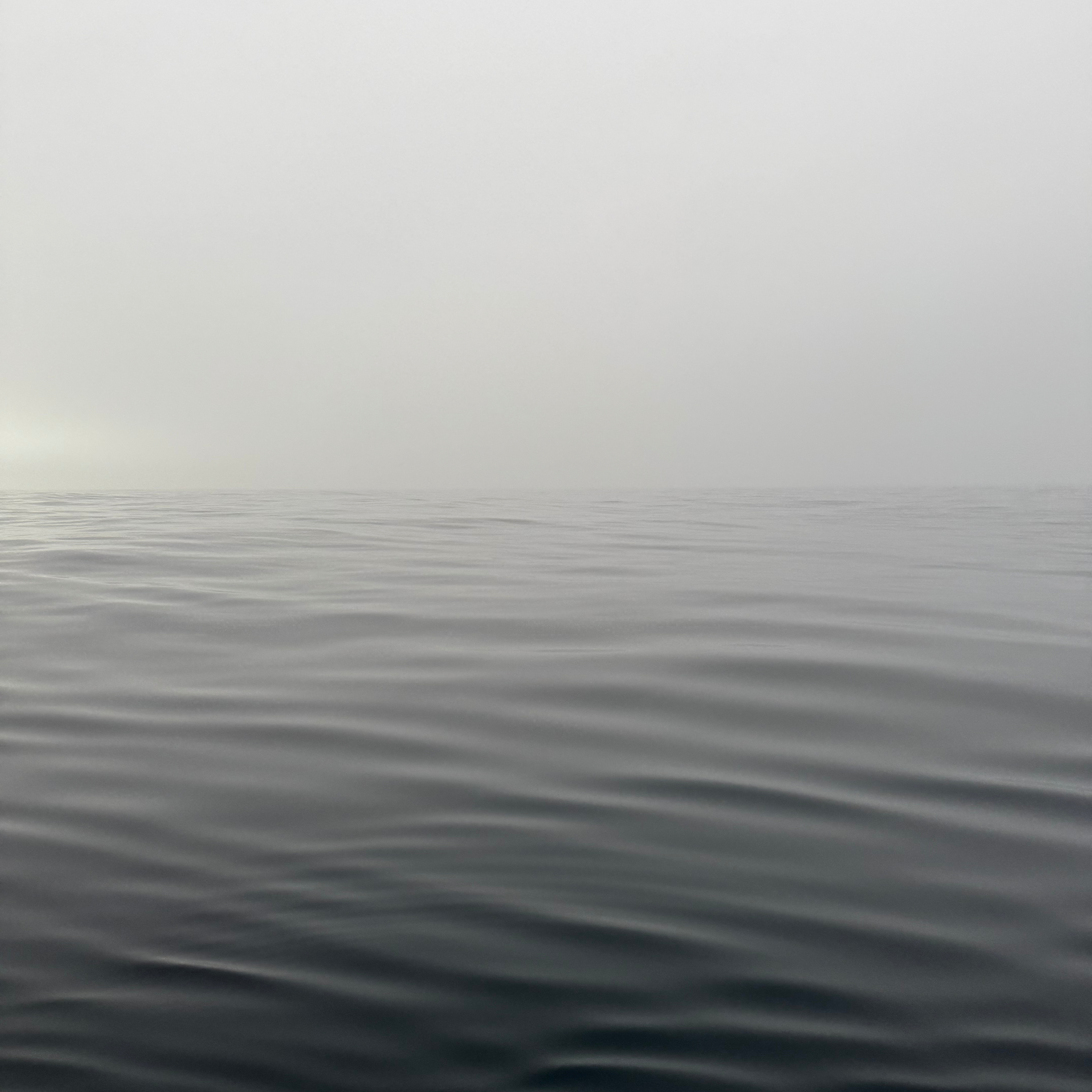
Sometimes the waves would be chaotic and huge. Other times they’d be gently rolling. Sometimes there’d be dolphins. Oftentimes several days we saw many whales, many humpbacks and presumably some gray whales and some other types of whales I may not even know. And that was a beautiful thing. There was one dusk Where the ocean was extremely flat and we were half in fog and half in the soft sun coming through a light mist. Everything felt otherworldly, surreal, creamy. It just felt like it didn’t even feel like the same place. And obviously as one is making connections to climate change for this, There’s science involved.
There’s appreciation for the natural world. Charismatic megafauna makes several appearances. All things that are important to keep in mind. But I think the thing that is potentially most important and most lacking from a lot of climate, or at least the people who work in climate or things adjacent to it, It’s an ability to be really present. And what this trip was best for was truly a time of detox, of getting rid of one’s phone. The only things I could do with my phone, I took pictures, video, and I watched some movies I downloaded ahead of time in my hammock.
It wasn’t like I was gowering LinkedIn or responding to emails. I was just there, which meant I spent a lot of time with people that maybe My phone would occupy my time rather than speak with them. Maybe I’d get sucked into something that didn’t concern me. But the world was waiting. Nothing happened that couldn’t be put off. And I’m glad I was able to stare at the ocean for so many long hours to think thoughts that were not disrupted by digital technology. I was able to have good focused conversations with many people that I would not otherwise have a chance to.
And being able to experience the immediacy, the presentness of a dynamic environment like the ocean was a really healthy thing. And it made me appreciate both how indifferent the ocean is to us and what it did to us. It made me appreciate how dangerous it can be and how angry. It was also stunningly beautiful. It was also something entirely its own and inscrutable to me. But it also felt warm and inviting. And thoughtful in its own way. I don’t want to anthropomorphize it too much, but it had so much personality and so much variability to it.
And just being able to watch it and see how it would change. I feel like I connected with the natural world in some way that is a little bit different from climbing a mountain and sitting up there. Related, but different. It was a different channel, a different experience. It made me appreciate the people who work on the ocean, both historically and presently, as well as the people who were kind, even though they were suffering themselves. The final morning, I came into the San Francisco Bay underneath the Golden Gate Bridge. And that morning, I saw so many whales.
I saw one of them spy hop. I saw one of them fluke. I saw lots and lots of blow spouts. It was a really incredible sight to behold right outside of the bay. And seeing the Golden Gate Bridge from that angle is truly how San Francisco was meant to be experienced, and it was beautiful as a result. Returning to land was a welcome experience. I think many of us, though we weren’t desperate to get off the ship, felt like we had had enough time at that point to move on to something else, and that was fine with me as well.
I made a number of friends on board the ship. It was a beautiful experience. I’m grateful to Maritime Blue and everyone who decided to go on Vistas Radlemkeul from Seattle to San Francisco. What a mix of emotions. What a great way to experience something that we basically can ignore unless we choose to go out on it. The ocean is something that we fly over now rather than sail across. And while it may be more convenient to fly, and it certainly is. I flew home, I think in like 90 minutes or two hours or something like that from San Francisco to Seattle.
It took a week to sail. So certainly more convenient. But not everything in life should be convenient. I like it when things are a little bit clunky, as I said in the first show that I did about this trip. I’m not trying to maximize for efficiency. I don’t think everything in life should be strictly easy. I like the texture. I like the difficulty. I like the things that it makes me think about. I like that it makes me more present in my body. It makes me notice the world around me in ways that I think are important.
It gets us away from endless abstraction, digitization, trying to make clean rectilinear forms rather than bizarre organic rounded ones. I think it’s important to remember that not everything is meant to be easy, simple. It’s good to find a new way to connect with others, to connect with the earth, to connect with the great strangeness that is the ocean, that is the earth, that is us. I’m going to be processing this for a long time. I don’t think I finished it. It took me about a month after this trip to even make this show, at least partially, because I don’t even know what happened in some ways.
One of those things I’m going to be dealing with for a long time in the best kind of way. I hope you enjoyed this show. Thanks for listening. If you feel inclined, get out on the ocean sometime. It might teach you something. I can’t say that there’s been anything else like it that I’ve done. And I’m so grateful for the experience. Have a lovely day.