


On my recent sailing trip aboard the Statsraad Lehmkuhl from Seattle to San Francisco, I kept coming back to this beloved chapter of Herman Melville’s Moby-Dick; Or, The Whale. It so perfectly captures the matter-of-fact universality of consumption, the presumption of humans to mastery, and the inscrutability of so much of the world’s phenomena. It also so closely links beauty and terror in a way that reminds me of Biblical angels showing up in fantastical guise and counseling, “be not afraid.”
You can listen to me read this chapter at the very top of this post, or in any of the podcast apps where it’s in the normal feed.
Here’s the full chapter so you can read along with me:
Steering north-eastward from the Crozetts, we fell in with vast meadows of brit, the minute, yellow substance, upon which the Right Whale largely feeds. For leagues and leagues undulated round us, so that we seemed to be sailing through boundless fields of ripe and golden wheat.
On the second day, numbers of Right Whales were seen, who, secure from the attack of a Sperm-Whaler like the Pequod, with open jaws sluggishly swam through the brit, which, adhering to the fringing fibres of that wondrous Venetian blind in their mouths, was in that manner separated from the water that escaped at the lips.
As morning mowers, who side by side slowly and seethingly advance their scythes through the long wet grass of marshy meads; even so these monsters swam, making a strange, grassy, cutting sound; and leaving behind them endless swaths of blue upon the yellow sea.
That part of the sea known among whalemen as the “Brazil Banks” does not bear that name as the Banks of Newfoundland do, because of there being shallows and soundings there, but because of this remarkable meadow-like appearance, caused by the vast drifts of brit continually floating in those latitudes, where the Right Whale is often chased.
But it was only the sound they made as they parted the brit which at all reminded one of mowers. Seen from the mast-heads, especially when they paused and were stationary for a while, their vast black forms looked more like lifeless masses of rock than anything else. And as in the great hunting countries of India, the stranger at a distance will sometimes pass on the plains recumbent elephants without knowing them to be such, taking them for bare, blackened elevations of the soil; even so, often, with him, who for the first time beholds this species of the leviathans of the sea. And even when recognized at last, their immense magnitude renders it very hard really to believe that such bulky masses of overgrowth can possibly be instinct, in all parts, with the same sort of life that lives in a dog or a horse.
Indeed. in other respects, you can hardly regard any creatures of the deep with the same feeling that you do those of the shore. For though some old naturalists have maintained that all creatures of the land are of their kind in the sea; and though taking a broad general view of the thing, this may very well be; yet coming to specialties, where, for example, does the ocean furnish any fish that in disposition answers to the sagacious kindness of the dog? The accursed shark alone can in any generic respect be said to bear comparative analogy to him.
But though, to landsmen in general, the native inhabitants of the seas have ever regarded with emotions unspeakably unsocial and repelling; though we know the sea to be an everlasting terra incognita, so that Columbus sailed over numberless unknown worlds to discover his one superficial western one; though, by vast odds, the most terrific of all mortal disasters have immemorially and indiscriminately befallen tens and hundreds of thousands of those who have gone upon the waters; though but a moment’s consideration will teach that, however baby man may brag of his science and skill, and however much, in a flattering future, that science and skill may augment; yet for ever and for ever, to the crack of doom, the sea will insult and murder him, and pulverize the stateliest, stiffest frigate he can make; nevertheless, by the continual repetition of these very impressions, man has lost that sense of the full awfulness of the sea which aboriginally belongs to it.
The first boat we read of, floated on an ocean, that with Portuguese vengeance had whelmed a whole world without leaving so much as a widow. That same ocean rolls now; that same ocean destroyed the wrecked ships of last year. Yea, foolish mortals, Noah’s flood is not yet subsided; two thirds of the fair world it yet covers.
Wherein differ the sea and the land, that a miracle upon one is not a miracle upon the other? Preternatural terrors rested upon the Hebrews, when under the feet of Korah and his company the live ground opened and swallowed them up for ever; yet not a modern sun ever sets, but in precisely the same manner the live sea swallows up ships and crews.
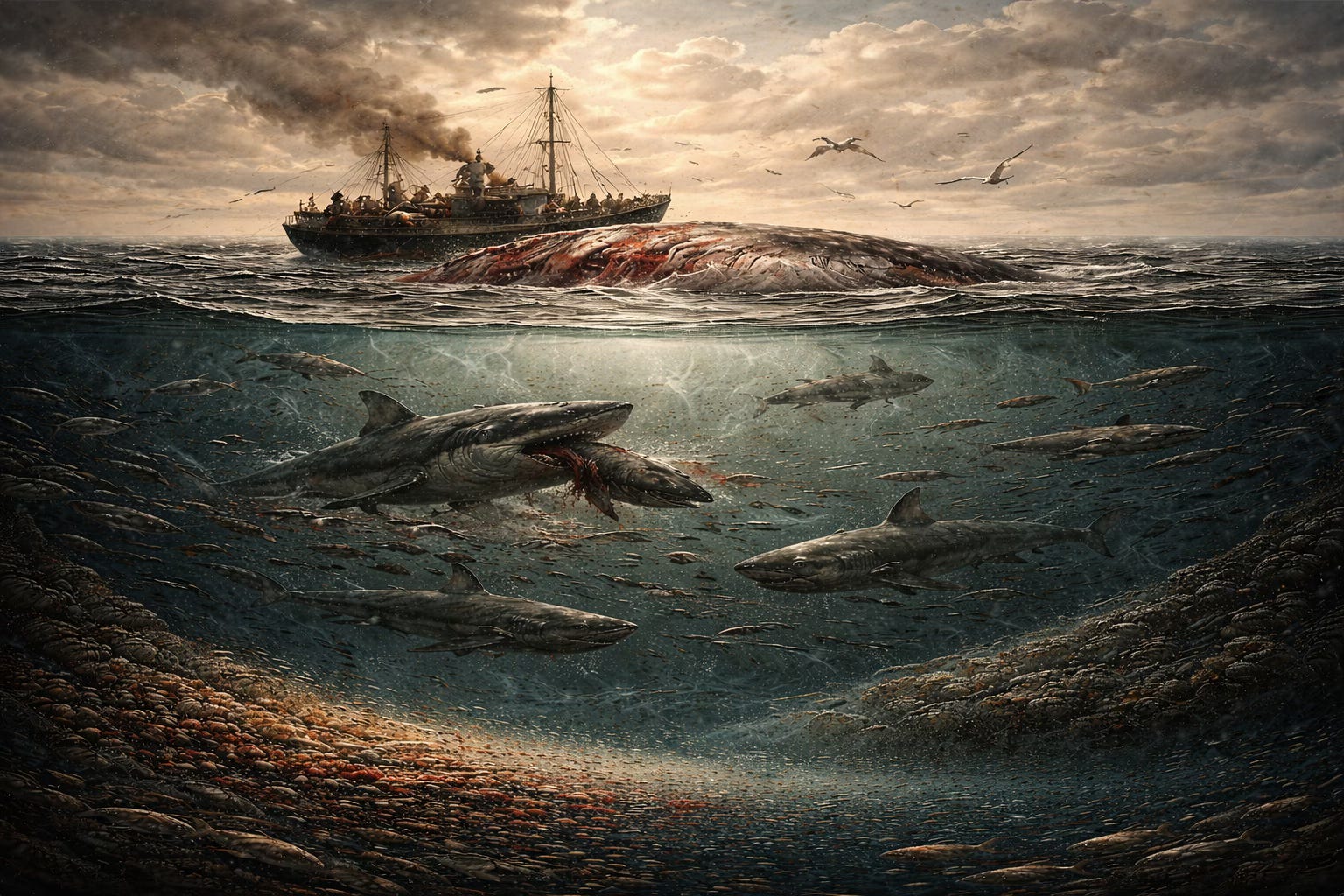
But not only is the sea such a foe to man who is an alien to it, but it is also a fiend to its own off-spring; worse than the Persian host who murdered his own guests; sparing not the creatures which itself hath spawned. Like a savage tigress that tossing in the jungle overlays her own cubs, so the sea dashes even the mightiest whales against the rocks, and leaves them there side by side with the split wrecks of ships. No mercy, no power but its own controls it. Panting and snorting like a mad battle steed that has lost its rider, the masterless ocean overruns the globe.
Consider the subtleness of the sea; how its most dreaded creatures glide under water, unapparent for the most part, and treacherously hidden beneath the loveliest tints of azure. Consider also the devilish brilliance and beauty of many of its most remorseless tribes, as the dainty embellished shape of many species of sharks. Consider once more, the universal cannibalism of the sea; all whose creatures prey upon each other, carrying on eternal war since the world began.
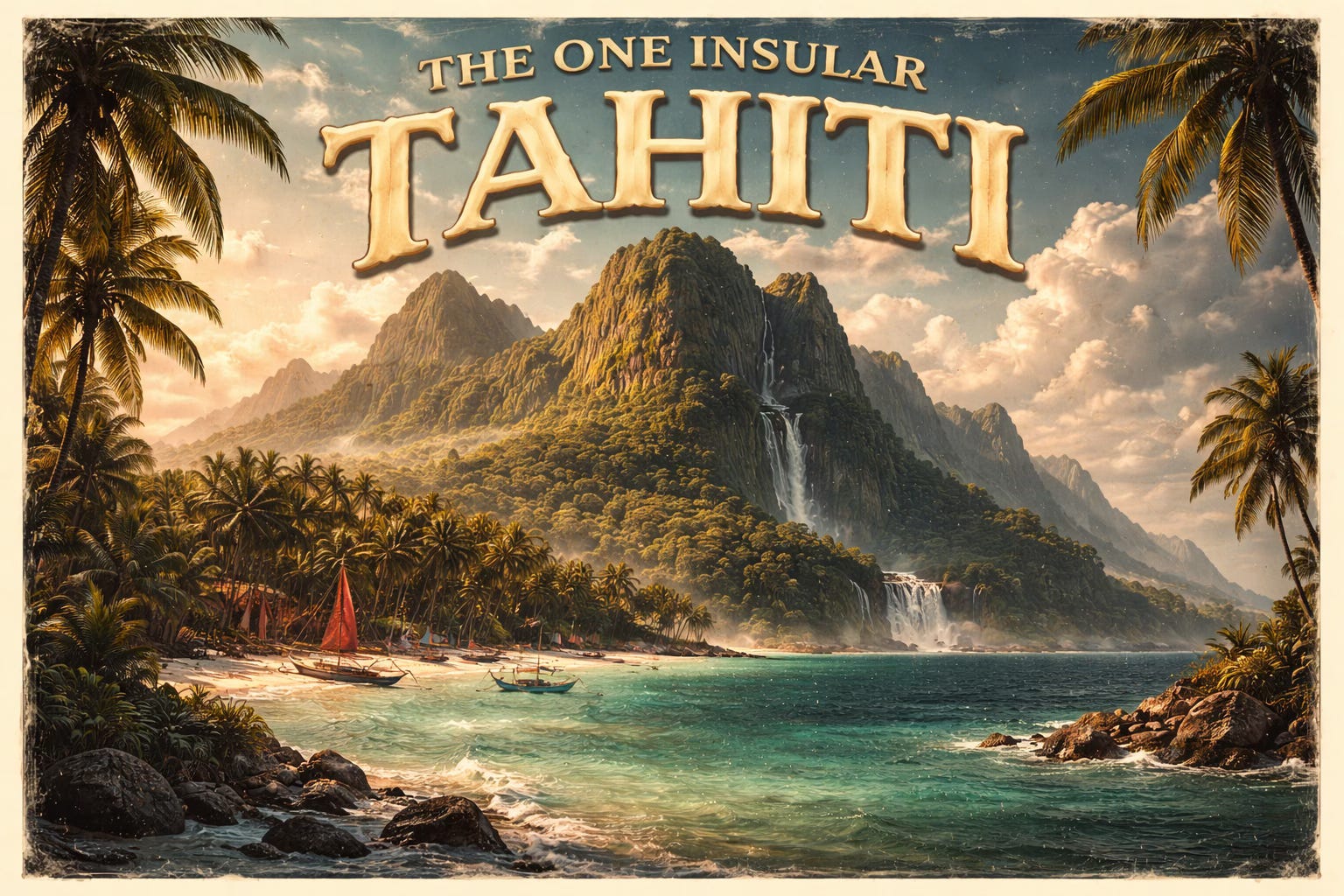
Consider all this; and then turn to this green, gentle, and most docile earth; consider them both, the sea and the land; and do you not find a strange analogy to something in yourself? For as this appalling ocean surrounds the verdant land, so in the soul of man there lies one insular Tahiti, full of peace and joy, but encompassed by all the horrors of the half known life. God keep thee! Push not off from that isle, thou canst never return!
Connect with Ross
Subscribe to the show on Substack @ rosskenyon.com/subscribe.
I also write Carbon Removal Memes and curate Climate Workers Anonymous.
With a matchup like that, who would win?
I love this chapter from Moby-Dick. It so perfectly contrasts sublime beauty of the world and the raw horror of life. I was thinking of it often while on my recent sailing trip aboard the Statsraad Lehmkuhl from Seattle to San Francisco.
Sit back and let me read the chapter for you, and may it inspire you to crack open some Herman Melville.
Chapter 58: Brit, from Herman Melville's Moby-Dick; or The Whale
"377: One Week Before the Mast—A Climate Sailing Travelogue from Seattle to San Francisco"
"ASMR: Your one-hundred year-old Norwegian tall ship is sailing in the middle of the Pacific Ocean"
Full Transcript
Ross Kenyon: When I was on the sailing trip on the Statsrad Lempfjell, sailing on a Norwegian tall ship from Seattle to San Francisco for a week, I kept coming back to my favorite chapter of Moby Dick. I’ve been referencing this thing since I first read it. I think I read it in 2012 or 2013, somewhere around there, I think 2012. And I’ve loved this chapter ever since. I think it so beautifully captures so many different feelings about beauty and terror and their overlap. It communicates so much about nature and its fundamental inscrutability.
It has a conservative feeling about the nature of knowledge and to what degree should we be trying to understand all and are actually some things not meant for us to understand that are scary and for good reason and that we should respect limits. So I’ve always loved this chapter. It’s chapter 58 in Moby Dick by Herman Melville. The chapter is called Brit and I’m going to read it in its entirety. You know, not to do the full like Andy Kaufman, read the entire Great Gatsby in one sitting as performance art, mostly just as a nerd who likes literature and needs the world to know what a beautiful little nugget this is.
Steering northeastward from the crozettes, we fell in with vast meadows of Brit, the minute yellow substance upon which the right whale largely feeds. For leagues and leagues it undulated round us, so that we seemed to be sailing through boundless fields of ripened golden wheat. On the second day, numbers of right whales were seen, who secure from the attack of a sperm whaler like the Pequod, with open jaws sluggishly swam through the Brit, which adhering to the fringing fibers of that wondrous Phoenician blind in their mouths, was in that manner separated from the water that escaped at the lip.
As morning mowers, who side by side slowly and seethingly advanced their sides through the long wet grass of marshy meads, even so these monsters swam, making a strange grassy cutting sound and leaving behind them endless swaths of blue upon the yellow sea. But it was only the sound they made as they parted the Brit which had all reminded one of mowers. Seen from the mastheads, especially when they paused and were stationary for a while, their vast black forms looked more like lifeless masses of rock than anything else.
And as in the great hunting countries of India, the stranger at a distance will sometimes pass on the plains recumbent elephants without knowing them to be such, taking them for bare blackened elevations of the soil, even so often with him who for the first time beholds the species of the leviathans of the sea. And even when recognized at last, their immense magnitude renders it very hard really to believe that such bulky masses of overgrowth can possibly be instinct in all parts with the same sort of life that lives in a dog or a horse.
Indeed, in other respects, you can hardly regard any creatures of the deep with the same feelings that you do those of the shore. For though some old naturalists have maintained that all creatures of the land are of their kind in the sea, and though taking a broad general view of the thing, this very well may be, yet coming to specialties where, for example, does the ocean furnish any fish that in disposition answers to the sagacious kindness of the dog, the accursed shark alone can in any general respect be said to bear comparative analogy to him.
But though to landsmen in general, the native inhabitants of the seas have ever been regarded with emotions unspeakably unsocial and repelling, though we know the sea to be an everlasting terra incognita, so that Columbus sailed over numberless unknown worlds to discover his one superficial western one, though by vast odds the most terrific of all mortal disasters have immemorially and indiscriminately befallen tens and hundreds of thousands of those who have gone upon the waters. though but a moment’s consideration will teach that however baby man may brag of his science and skill and however much in a flattering future that science and skill may augment yet forever and forever to the crack of doom the sea will insult and murder him and pulverize the stateliest stiffest frigate he can make nevertheless by the continual repetition of these very impressions man has lost that sense of the full awfulness of the sea which aboriginally belongs to it The first boat we read of floated on an ocean that with Portuguese vengeance had whelmed the whole world without leaving so much as a widow.
That same ocean rolls now. That same ocean destroyed the wrecked ships of last year. Yea, foolish mortals, Noah’s flood is not yet subsided. Two-thirds of the fair world it yet covers. wherein differ the sea and the land, that a miracle upon one is not a miracle upon the other. Preternatural terrors rested upon the Hebrews, when under the feet of Korah and his company the live ground opened and swallowed them up forever. Yet not a modern sun ever sets, but in precisely the same manner the live sea swallows up ships and crews.
But not only is the sea such a foe to man who is an alien to it, But it is also a fiend to its own offspring, worse than the Persian host who murdered his own guests, sparing not the creatures which itself hath spawned. Like a savage tigress that tossing in the jungle overlays her own cubs, so the sea dashes even the mightiest whales against the rocks and leaves them there side by side with the split wrecks of ships. No mercy, no power but its own controls it. Panting and snorting like a mad battle steed that has lost its rider, the masterless ocean overruns the globe.
Consider the subtleness of the sea, how its most dreaded creatures glide underwater, unapparent for the most part, and treacherously hidden beneath the loveliest tints of azure. Consider also the devilish brilliance and beauty of its most remorseless tribes, as the dainty embellished shape of many species of sharks. Consider once more the universal cannibalism of the sea, all whose creatures prey upon one another, carrying on eternal war since the world began. Consider all this, and then turn to this green, gentle, and most docile earth. Consider them both, the sea and the land.
And do you not find a strange analogy to something in yourself? For as this appalling ocean surrounds the verdant land, so in the soul of man there lies one insular Tahiti, full of peace and joy, but encompassed by all the horrors of the half-known life. God keep thee, push not off from the isle, thou canst never return. I have never been less thrilled than reading that in probably all of literature. What a beautiful, beautiful. What else can I even say? I can’t improve upon it.
You either connect with that or maybe you don’t, but it’s wonderful. I originally said this was going to be bonus content. I released something else’s bonus content in its place, which was a live recording that I did from the Stotts Road Lemkul, but I didn’t want to paywall this. That’s the thing about paywalling materials, that the good stuff, You like really want the world to hear it because it’s good. So I decided just to release this. I’ll put a link to the text if you’d like to read along in the show notes.
Go read Moby Dick. Go listen to the sailing show that I did if you haven’t already. Thank you so much for letting me read to you. It’s super fun. I think I should do more things like this. Let me know if you like it when I read you literature that I love. Have a wonderful day. Thanks for taking a flyer on an old musty book that is somehow still very much worth your time. Until next time.


