

Listen on Spotify, Apple Podcasts or YouTube.
In the new community economy, many content creators have moved beyond simply sharing ideas with an audience. For many the goal is to facilitate connection among their followers and foster a sense of belonging. So, how can businesses and organizations in the climate space leverage community to shape the low-carbon future we need?
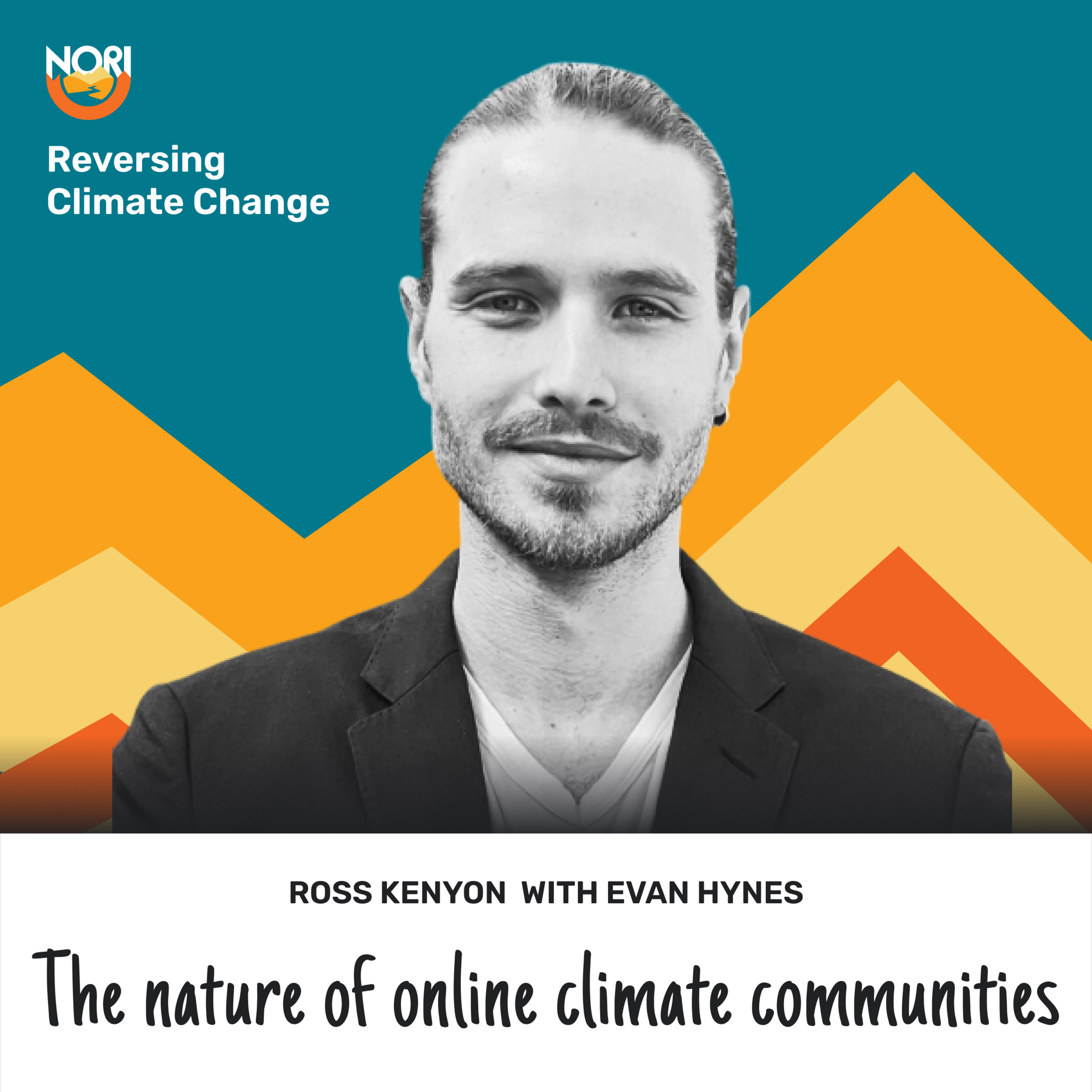
Evan Hynes is a Cofounder at Climatebase, a platform that makes it easy to discover jobs, people, and organizations working to solve the climate crisis. On this bonus episode of the podcast, Evan joins Ross to discuss how Climatebase has evolved into a professional network for the climate space, sharing his team’s mission to build a one-stop shop for climate opportunities.
Evan explores the sense of belonging that comes from being a part of a few small, unique climate communities and challenges content creators to complement each other rather than compete for attention. Listen in for Evan’s insight on following a healthy ‘information diet’ and learn how you can contribute to the next iteration of the Climatebase community.
Connect with Ross
Subscribe to the show on Substack @ rosskenyon.com/subscribe.
I also write Carbon Removal Memes and curate Climate Workers Anonymous.
Our other podcast, Carbon Removal Newsroom
Resources
Climatebase Fellowship Program Application
Nori’s Job Opening on Climatebase
Evan Hynes on Reversing Climate Change in May 2020
The Business of Belonging: How to Make Community Your Competitive Advantage by David Spinks
‘Dunder Mifflin Infinity’ on The Office
Full Transcript
Ross Kenyon: Hello and welcome to the Reversing Climate Change podcast. I’m Ross Kenyon. I am the creative editor at Nori’s Carbon Removal Marketplace. I am welcoming back Evan Hines, co-founder of ClimateBase. Hey, Evan. Hello. Hello. A lot of new stuff happening at ClimateBase. Nori has a featured job listed on your site right now. And then also you and I have been talking about the nature of communities, which sounds sort of generic and vague, but is actually relevant. Remarkably fascinating and watching all these new communities start up on Slack, on Clubhouse, other places where people are connecting in new ways.
There’s a lot to talk about. I feel like we’re barely going to scratch the surface, but maybe we should just dive in and start talking about what’s new with ClimateBase.
Evan Hynes: Yeah, I mean, big updates on climate base would be chiefly that we have gone from a job board and sort of a directory of organizations, which, you know, initially we built out because there was no good solution out there for finding jobs at organizations focused on climate. What we’ve evolved from since then is that we have now launched user profiles for the people using Climatebase. That includes people who are searching for jobs or just curious explorers who are sort of seeing what’s out there and looking to tap in and connect with others in the space.
But it also includes folks like, in fact, like your CEO who just created a profile and, you know, we put a spotlight on him in our newsletter. He’s not looking for other work, is he? You know, I don’t know. You better check with him because he’s on ClimateBase. No, no, he’s not. And, you know, that’s what we really want to do. I think our big next step will be connecting people’s profiles to the organizations that they work at on ClimateBase. So going from...
What organizations are working on climate, which was our sort of starting point to, you know, which then evolved quickly into what jobs are they looking to fill? And now going one step further and saying, and what people are working at those organizations? And also, of course, you know, who are the people that are on climate base? So increasingly becoming more of a specialized professional network for the climate space.
Ross Kenyon: That’s great to hear. And if you’re listening, we should still be taking applications. This episode will come out pretty quickly. But we have a senior software engineer role listed up there with quite a lot of details of what it’s like to work in Nori, what we’re looking for. So if you are looking for a job and you could see yourself as a senior software engineer and you like what we do at Nori, you want to work on carbon removal and building a carbon removal marketplace. I think Evan would personally thank you for doing it through his site, right?
Evan, that’s just a great market validation for you.
Evan Hynes: Yeah. I mean, you know, that would be awesome. And I’m proud to say that since we’ve last spoken, I think well over a hundred organizations have successfully hired through our platform. Wow. That’s great. Thank you. Yeah, I’m pretty stoked on it. I know that they are too. And I’m hoping that NORI will be one of the organizations that we can support. We’re huge fans of the work that you folks are doing in advancing sort of the regenerative agriculture space, particularly around creating verified credits for carbon removal.
I just think it’s such important work and the kind of work that I would really hope that a lot of our members, our users at ClimateBase would be excited to get involved with. Yeah.
Ross Kenyon: I think so too. I see this as occupying similar roles in the carbon removal community or just climate tech in general, trying to be boosters, trying to get people into this space who want to be, trying to create fun, novel ways of talking about this that isn’t hard to understand necessarily, that’s friendly, that’s fun. This is a big part of how you think about your job, I imagine too, right? Or am I just imposing my own mental map upon you?
Evan Hynes: No, yeah, absolutely. Like we’re, you know, we’re trying to sort of flip the script. And I think that this is like part of the broader change that has happened in the past, I would say like year and a half is the narrative around climate change, around the climate crisis has been that of, you know, despair and gloom and doom. And our mission is to not to like downplay how severe the situation is. It’s terrifying, but to also show that there are opportunities And as a platform, thinking very long-term about what we want climate-based to be, we really want it to be almost like a community-powered one-stop shop for climate opportunity.
We’re starting with employment, and there’s a lot of work to be done just on that, but we have greater ambitions to go even beyond that. So we’re part of the movement of people that are saying, and organizations that are saying, hey, look, Yeah, things are bad, but fixing it, you know, whenever you fix a problem, there is inherently an opportunity there. And, you know, let’s celebrate those opportunities.
Ross Kenyon: Okay. Yeah, that’s good. I understand. When I think about communities, the partition I have between the two, like broad ways of going is something that is a one-stop shop. If you care about climate, this is the Slack community you join. So something like My Climate Journey might be something like that as far as Slacks go. So that has multiple channels for your interest. If you want environmental justice or carbon removal or something like that, that all exists there. But if you really wanted to focus on carbon removal exclusively, I would probably go hang out at air miners and there are trade-offs to either of these approaches.
They both have strengths and they both have weaknesses and either being too broad or being too specific, but are they competing against each other in some way or are they complimentary? How should we be understanding these communities?
Evan Hynes: You know, I think that’s like, so the community space right now is exploding. And prior to getting in climate, that’s where I built my career. Granted, a lot of my community work was, you know, largely in person, but you know, there’s always online elements. I mean, we were using Slack to support everything that we were doing in person. And then with our alumni community at Make School, my previous employer, you know, like all of that was happening on Slack, on a Facebook group. Now, The community space with COVID having, you know, hit the world has exploded because everyone’s looking for belonging.
You know, one of my favorite sort of thinkers in this space is writing a book right now called The Business of Belonging. I think that organizations are increasingly becoming aware that businesses, all businesses are communities in various ways. But like these community powered platforms and like businesses that are not just Community as an add-on, but the product itself, the experience itself is that of a community. I think that this is like a really, really new space. And a lot of these different Slack communities and communities that live in other platforms may think of themselves as being competitors.
But I think that would be a mistake. And the analogy that I like to draw upon is like, you know, Ross, like you... You have probably many different friends and they’re part of different groups, right? Like you have some friends that are like in the climate world and then you have like some other friends that are like, I don’t know, like into whatever your other interests are. Are those different groups of friends, like are the leaders of those groups of friends, like all competing over Ross’s attention?
Like probably not. I mean, I don’t know, maybe for you, they are, I don’t know. You can be a really popular guy. I got, I don’t know, but. Are we talking about friends or supplicants? I think that’s the distinction. Supplicants.
Ross Kenyon: Oh, sorry. Old Diction Dan over here. That’s someone who asks something of a king, who goes before a king and kneels and asks for a favor. Yeah. I understand what you’re saying. Yes.
Evan Hynes: You know, maybe like celebrities have that issue, but like for the average person, like, I think we’re all part of multiple different groups of friends, multiple different communities. Even if there is a community doing something in the space that you want to Start a community and let’s say that shouldn’t be a reason to dissuade you from doing your own thing. And therefore, I don’t think that communities are or should be competing with each other. It’s not really the right way to think about it. There’s always something unique that each community can bring to the table.
Ross Kenyon: I feel that pretty strongly too. And I have a lot of people email me about starting their own climate podcast. And there’s a world in which I’m a big jerk about it. I always try to be supportive. I’m glad we need more content out there. And because podcasting seems at least partially, I think it’s the major component, it’s personality driven, right? I could interview someone, You could interview someone, someone else could interview the same person, and it would be three different shows because so much of it is about what you’re bringing, how you see things, the sort of humor, the vibe that you have.
And what I do is not write for everyone. I don’t think of myself as being like the one climate podcast to rule them all. I think if I did think that I would be put into a position of being competitive with people that like the goal is to reverse climate change. The goal is not to be the best climate podcast or the most popular climate podcast. Does that make sense?
Evan Hynes: Totally. And I think you’re thinking about it the right way. I think that for any creator in this space or any space, like if you’re trying to Build a, you know, content and build maybe a business or a side hustle or just a hobby or a brand or build your personal brand around content creation podcasts. Or if you’re trying to launch a community, like your goal should not be to take attention away from other communities or other content creators. It should just be to try to do the best that you can do.
That’s really it because that’s all that’s gonna get you listeners and members. It’s really just about being the best that you can be and not really being competitive with others that are out there.
Ross Kenyon: Yeah, I think so. I think some of the offerings too are relatively specific. So if you compare what we like to podcast about versus other shows, I tend to focus a lot on authors. I like literary episodes. If you join our Patreon, Yeah. Yeah. Could that even scale? Should I be trying to get that to 100 people or 1,000 people? I think if it did that, it would be unwieldy and weird. Part of the charm is just having a small group of friends.
We’re actually fairly chummy and we’re genuinely friends and like spending time together. And I don’t know that scales. Is it supposed to? Does everything have to scale in the world of tech? I just nested seven questions at you. Yeah.
Evan Hynes: No, no, no. Yeah, I mean, so I think that it depends on what your goals are. Like if your goal is to provide a little bit of value to a lot of people, then scale might be the right way to do it. And, you know, if you’re also, I mean, also doing that, by the way, like it’s a completely different strategy from a community management perspective, from a content delivery perspective, than if your goal is perhaps to provide a ton of value to less people. So it really depends on like, what are your long-term goals?
I would say like, if you’re trying to build a business based on content, so not like, again, like not looking at like content as an add-on, right? Like Nori, your content isn’t your business. Your content is like an add-on. It’s like, it’s a great stuff that keeps people engaged with your brand, but like your team is not, you know, you’re not hiring a software engineer on Climatebase right now to work on your podcast, I would hope. Not yet, not yet. I have some thoughts on that, but continue.
Nice. So I think it really depends on what your goal is. Just thinking solely about community. If your goal is to scale community, then that should align with, I mean, there has to be like a real reason for that. Because I actually think that some of the most valuable communities out there are the ones that are not fully, fully scaled. I think that people want a sense of belonging and oftentimes intimacy drives that sense of belonging. And so I’ve seen a handful of amazing people Climate focused communities out there that are, I think, trying to scale.
But what they already have is like magic. Like they already have the leaders and the experts all in a space. And they’re intimate and they’re talking with each other and amazing things are coming out of it. Projects are coming out of it. I don’t know, like, don’t fix a wheel if it’s, or, you know, what’s the expression? Don’t fix a wheel if it’s not broken. I’m probably messing that up. But, like, yeah, don’t, like, there’s already something special happening there. And so, you know, like, you don’t need to scale that out.
Plus, like, Depending on your audience type, maybe what made that community amazing are the hard-to-get people that you got to join your community. And maybe when there’s 10,000 more people in there, that person that made the place so special in the first place won’t really want to participate that much. So I think that whether you scale our community or not, it really just depends on what are the real goals in the first place.
Ross Kenyon: Yeah, that’s a good point. I want to push back a tiny bit. I swear, we’ll talk about climate-based and your insights for what you’re going to move ahead. And this is all relevant to what will come. But I’ve been thinking a lot about fan culture. And a lot of what we do is giving people a chance to follow along with Nori. So we do a lot of episodes kind of like this one that are somewhat internally facing that talk about how we’re developing, what we’re doing, us as people.
And I think that allows a fair amount of trust. And hopefully if you listen to this show, it’s because you either, this is weird to say, you either like me or you like my company, you like Nori, you want to be a part of the journey together. And that’s why you’re still here. Or we just appeal to your unique, you want to read books and talk with authors and that’s fun. For the example I always come back to is if I want to buy a pair of shoes, the first place I’m going to look is Allbirds because I’m an Allbirds fan.
I like what they do. I think their shoes are super comfortable. I’m like, I’m bought into the aesthetic and I am a fan. And I think businesses in general realize that they, if they can create something like that, they should. Then again, the counter example, we did, we talked about this last time is the Dunder Mifflin finity that on the office where Ryan tries to create a social media site for like the paper ordering paper. And you’re like, that’s a fan culture that does not need to exist.
And that’s a whole community that doesn’t.
Evan Hynes: You know, that might need to exist. I mean, I think the last time we were chatting, I literally said, like, oh, yeah, I don’t think people want a social network for climate. Because you had asked me. Oh, yeah, that’s right. You had asked me, is that what we’re building out? And I didn’t really think that was what we were building out at the time. You know, we have been and, you know, and I would say emerging from sort of a lab state, you know, where we’ve been testing things.
I think what we’re seeing is that actually people do want niche communities for pretty much every single interest that they care about. So maybe there is like a hardcore paper enthusiast community out there. In fact, I guarantee there is. I bet there’s like a handmade paper Reddit subforum. Actually, I’m sure of it. I bet you if we looked it up right now, it would be there. It’s like the technology for like grow your own papyrus and make paper from scratch. Someone’s doing it for sure.
For sure. I mean, I was just talking to a community builder the other day on Clubhouse and she has an entire community and cohort based course just focused on calligraphy. Wow. I mean, so, you know, there’s probably someone making the paper too.
Ross Kenyon: Absolutely. So you’re now going back on what you told me last time, and now you want a social media for climate professionals or aspirational professionals. Is that right?
Evan Hynes: I think that’s right. Yeah. I mean, we thought of that as one path that we could pursue, but... I think we were just like, maybe not seen. I think we just weren’t listening to our users enough, quite frankly. And I’m kind of embarrassed to say that, but like in reality, it’s pretty clear that our audience wants to connect with each other. And that’s why we’ve launched public profiles of our users so that they can not only just like, you know, have an identity on our platform, but really be able to connect with each other.
Now, right now, the extent of this product is just that they can DM each other, which is useful, I think. But what we really want to do long term is actually build out more of a real community component to the platform. We’re still certainly a few months away from that. And we have, I think, some exciting plans for how we’re going to be doing that. But another thing that we’ve been talking about outside of having our own platform is the idea of, and this goes back to what we were just talking about earlier regarding other communities and competing communities.
There are so many great climate communities out there. And I don’t think ClimateBase will be, or certainly not is right now, but I don’t think there’s ever going to be one community for anything. That’s just not how it works. People will always start new iterations of communities for similar topics. I want to be able to support all of these communities and kind of be like almost a meta network where I can look up on ClimateBase, like, oh, I’m going to look up Nori and see that, oh, look, like Ross works at Nori and then I can see, like I can click into Ross’s profile and I can look at all the different communities that Ross is part of, like all these different climate communities that we partner with on ClimateBase.
And let’s say he’s in Air Miners and that’s the community that I’m already in. And I’m like, oh, great. Like, I’m just going to message him through Air Miners then. And I can click the Air Miners community tab and Launch my Slack, launch the Airminer Slack and just shoot him a message through there. Or I can message him through Climatebase if I would rather do that. But the reality is like some people are, many people are part of many communities as this space is so closely networked.
And we think that we have an opportunity to kind of like de-silo and then shine a light on sort of like who’s in this space and what are the subspaces that they’re a part of. That’s intriguing. But this is all just idea, you know, like, I mean, this is, who knows?
Ross Kenyon: Yeah, you’re a very iterative person. Every time I talk to you, you’re just like, these ideas, run into some experiments, seeing what people like, we’ll see what happens. Very startup-y.
Evan Hynes: I mean, well, we have to be, like, we don’t have product market fit. You know, we know one thing, though. A lot of people want to work in climate, and we built a pretty good solution that helps them get part of the way there, you know? And, I mean... For us, one of the best parts about cultivating an audience, and this is the case, of course, with anyone who’s actually cultivating a real community, too, not just an audience. There’s a distinction there. But whenever you have an audience, whether it’s unidirectional, like us at the moment, or a real community, It allows you to iterate a lot faster and get to product market faster because you can get feedback from these people in a much more seamless way than if you don’t actually have their email addresses or something like that.
So if you don’t actually have an audience, I think it can be really challenging to know what you should do next. But that audience, at least for us, has been really good about telling us what they want. Turns out the kind of people that want a climate job want a lot of different things when it comes to climate action. And that’s a great problem for us to have. We just have to be careful about which piece we chip away next.
Ross Kenyon: That’s great. You know, so many different ways you can go, which is, you know, the old adage, right? That startups don’t starve, they drown. Yeah. Yeah. So it sounds like maybe that’s a threat for you.
Evan Hynes: I think for us, it’s like, that’s again, why we have to be so careful about just picking the right things to invest our time in. We know, for instance, that a lot of our users want to learn more about what’s happening the political world when it comes to climate change, staying up to date on that. But it would be probably a really bad idea for me to spend a lot of my time Doing research or working with our communities and synthesizing this stuff and writing reports for our users.
Will that monetize? Will that allow us at ClimateBase to continue to do what we do and be a self-sustaining organization? No, it’s not. But there’s other things when it comes to climate action, other products, other features that we can build out on top of our existing platform that do monetize and also drive a tremendous amount of impact for our users. So that’s the question. It’s like of those things, which ones do we chip away at first?
Ross Kenyon: I’ve been a lot stricter about my... Well, I’ll say it this way, my information diet, I guess you could say, but I’m still in a bunch of the Slack groups on my phone, but on my computer, it’s just minority ones, the podcast, Patreon, and our main work one. It’s good. I feel less distracted because I’m not lit up all day long by notifications, but I’m also less engaged, but I also... Like the withdrawal of it. Also, like people have been trying to get me on Clubhouse and I’ve been resistant.
Like I’m more likely to quit something than I am to add something else or add another community, another thing. How much of this can we take? Or another example, how many streaming services are you expected to get? How much am I supposed, this is like every single channel ever. I’m supposed to subscribe to 10 sub stacks for like 10 bucks a month. Like surely there’s a limit to where this is no longer efficient.
Evan Hynes: I think you’re absolutely correct. And like I’ve experienced that myself too. I did like a full digital detox. I’m still getting caught up on emails from like weeks and I’m embarrassed to say even like months ago. But like particularly with Slack, I’m part of maybe like seven or eight different Slack communities that are all about climate or regeneration or, you know, various spins on the same stuff. And I just like I had to turn off my notifications. I just can’t afford to keep checking that.
So I do think that there is like it’s not like that communities. So, you know, maybe this line of thinking would lead one to believe like, oh, yeah, well, then you do need to be the best climate community if you really want to like not have people not active in your community. Right. Like, but, you know, that’s I don’t know, like, again, like I think the solution there is not being competitive, but really just, again, being the best that you can be as a community leader or as a content producer and really figuring out what is that unique thing that you can provide people as opposed to maybe doing it all in your community or doing it all in your newsletter.
What’s the one thing that you’re going to really carve out that will keep people engaged? Maybe you want to attract the biggest audience, but the audience you will attract, they’re not going to turn off your notifications or start marking your Substack newsletters as spam.
Ross Kenyon: Yeah. So do you know about strong and weak ties? Have you ever heard these terms before? In what context? It often comes up in sociology and in social capital theory. Strong ties being close friends, family. Weak ties tend to be people from your street or in the Elks Lodge or something like that. And weak ties are where you get jobs from a lot of times. There are strengths and weaknesses to both of these networks really strongly. But I’ve almost been withdrawing from a lot more of those weak tie networks during this.
If someone writes me an email, I will usually, with some exceptions, but if I have time, I will always try to write. If they write me a thoughtful email, I will respond. On a one-on-one basis, I’m more likely to participate in that. But if someone tagged me on something on a Slack group I’m a part of, it’s like, what do you think, Ross? I’m like, I’m busy and I have a public response to something. I don’t know that I want to do that. I don’t use Twitter.
I don’t know that it’s good for us. I sort of want to withdraw into things that do not scale well. But then again, I also talk on the internet. That’s at least a big part of my job too. So I’m a man of contradictions, but I still haven’t been able to figure out like how much I am at comfort with the digital age and the increasing like connectivity of everything. What should I do with that?
Evan Hynes: I mean, I would say it’s, you know, this is all just personal choices. Like since we last spoke a couple months back, I got on Twitter and honestly, like I found Twitter to be magical. Like, honestly, like I was, I was like literally just talking with like Chris Saka, like earlier this morning. And I mean, like nothing important, like, you know, like silly stuff. I was, I was happy. I was like teaching him how to do a kickflip, literally. But like, this is not important, right?
Like, this is not an important conversation. That’s like the weakest of ties. But hey, it’s an intro, right? It’s like the door opening partially there. And maybe that door will open and maybe we’ll have a stronger conversation. Maybe that’s where that leads to. But regardless, I think that it’s more about just, honestly, just having moderation. And you can be a part of all these platforms, but just don’t burn yourself out on them.
Ross Kenyon: Well, thanks, Evan, for counseling me on my social media usage and why I am an old man and haven’t come to terms with it yet. Where can people learn more? How can people get involved with climate-based, follow what you’re thinking about? What can they do?
Evan Hynes: Well, I mean, again, we recently, just a couple of weeks back, we launched Public Profiles. And we think that’s going to be a really valuable way for people who want to work in this space to get discovered by the employers on our platform. If you’re an employer in the climate space, by all means, use that component of our platform to source talent. I mean, these are mostly people that are on the job hunt, and there’s a lot of really talented, mission-driven folks there. Also, each week now in our newsletter, we are highlighting a handful of members of our community.
And so when you’re creating a profile, if you want to sort of put yourself out there to, I mean, gosh, 20,000 of our email subscribers now, So that could be a great way to get discovered. Or even if you’re hiring, we can highlight your personal profile and mention the jobs that you’re hiring for. So yeah, we’re really just, we invite you to join Climate Peace and create a profile and get involved.
Ross Kenyon: I’m so curious to see how you guys keep developing. I know you’ve been shoestringing it for a while and doing quite a lot given the various iterations that you have. I always like catching up with you and seeing what you’re doing. Nori uses ClimateBase. We’re trying to hire a senior software engineer off of there, as I mentioned. So if that person’s you, you should go check out the ad in the show notes. Links to everything we talked about also in the show notes.
Evan Hynes: So for those of you who are like really eager to sort of fast track, accelerate your climate career, if you’ve been thinking about getting the space and you’re not sure where to start or you’re kind of intimidated by transitioning into a new field. We did recently a few months back announced our climate based fellowship program. We already have nearly 100 organizations and founders and speakers, experts who have requested to be a part of the program to share their knowledge with our audience of fellows throughout this program. So you can kind of think about this as like an extended climate conference meets like extended hackathon with a really rich online community to support that whole process.
Yeah. Feel free to go to climatebased.org slash fellowship and apply. We are going to be launching this program ideally mid-year, but it certainly wouldn’t hurt to get your application in now.
Ross Kenyon: Cool. Link to that fellowship opportunity is in the show notes as well. And thanks for sharing all that with us, Evan. Hey, thanks for having me. Really appreciate it. My pleasure. Well, thank you so much for listening. If you like the show, please rate and review it in Apple Podcasts and or Stitcher. It really helps us a lot to get this content to a wider audience. If you think what we’re doing is useful, interesting, fun, hopefully all three, we’d certainly appreciate your rating and review.
[Nori promotion cut from the transcript. It's still in the audio, but it no longer applies.] And thank you so much for your support.


