


Adolf Hitler as chancellor of Germany was a nightmare; Adolf Hitler at a town meeting would just be an asshole.
Listen on Spotify, Apple Podcasts or YouTube.
Wendell Berry died on August 31st, 2026. A listener once made a Reversing Climate Change bingo card and one of the squares was just "someone mentions Wendell Berry," which turned out to be a rigged square. So rather than write another appreciation, I have pulled the conversation I had with his daughter in 2020 and recorded a new introduction to sit in front of it. The episode I made the week he died is here.
Mary Berry runs The Berry Center in New Castle, Kentucky, founded in 2011 after a lifetime of farming. She started it because a forty-year local food movement had produced some very good farmers' markets and almost no change to the culture of farming, and because the best agricultural program her state ever had was being forgotten inside that very state.
Listen in to hear more about why the local food movement concentrated on food and skipped land use and the economic lives of farmers, and what you do about any of this if you have no Henry County of your own to go back to.
My new introduction is about that last part, and about whether those of who without such roots are like locusts, but somehow worse? What a grim sentence to pen, and there's a lot more coming on this topic soon...
How to "think little"—w/ Mary Berry, Executive Director of The Berry Center

The original 2020 release, if you would rather have the conversation without the new introduction.
Removals, avoidances, and what Wendell Berry thought of making tonnes fungible

The episode I made the week Wendell Berry died.
This Episode's Sponsor
How to fire a carbon market consultant, and how to know when you should

David LaGreca shares his expertise from countless carbon projects during his time at EcoEngineers and beyond
2026 EcoForums Training Series: Navigating Global Carbon and Fuel Regulations, Market Mechanisms, and Life-Cycle Analysis Fundamentals
Resources
Subscribe to the Reversing Climate Change Substack
Become a paid subscriber for bonus content and ad-free episodes
Check out my new show, Climate Workers Anonymous
The Berry Center, and Our Home Place Meat, and the shop
The Berry Center Farm and Forest Institute: the education program Mary describes as the Wendell Berry Farming Program of Sterling College, now run by the Berry Center itself
The Agrarian Culture Center and the Archive of The Berry Center, which holds her grandfather's and uncle's papers from the Burley Tobacco Program
The Land Institute, and Wes Jackson's Becoming Native to This Place
Removals, avoidances, and what Wendell Berry thought of making tonnes fungible
Wendell Berry, Jayber Crow and the Port William novels, and The World-Ending Fire
Organic Valley, founded on what its founder knew about the Burley Tobacco Program
Four Arguments for the Elimination of Television by Jerry Mander
Bowling Alone: The Collapse and Revival of American Community by Robert D. Putnam
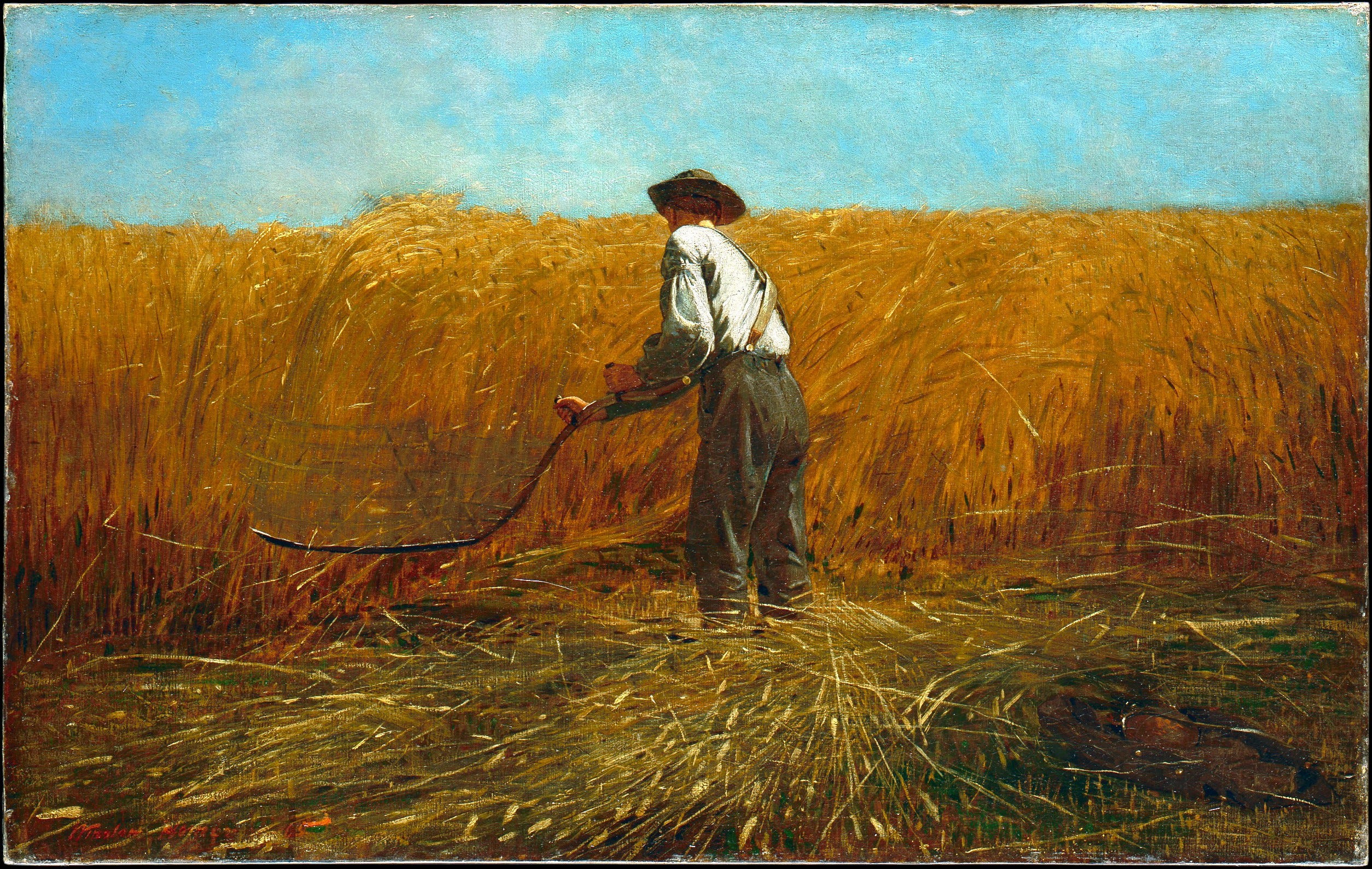
The episode art is Winslow Homer's The Veteran in a New Field, 1865, oil on canvas. The Metropolitan Museum of Art, Bequest of Miss Adelaide Milton de Groot (1876–1967), 1967, accession number 67.187.131. Public domain, via The Met's Open Access program.
Originally released in September 2020 as season 2, episode 30. Re-released September 2026 as episode 416, with a new introduction.
Full Transcript
Part one: the new introduction
Mary Berry: I think that history teaches over and over and over again that people who think that they know what's good for everybody else, generally speaking, are not. Well, they may get some things done, but they're not always the right things.
Ross Kenyon: You just heard Mary Berry, the daughter of Wendell and Tanya Berry. Mary was on Reversing Climate Change, thank goodness, a long time ago. Here I am looking this up. When even was this show? Wow. Almost to the day six years ago.
If you like this show, it is probably not a surprise to you that Wendell Berry, novelist, essayist, poet, activist, mythologizer, in a good way, and preserver of small town, agrarian, rural life. He likes things slow. He likes things local. He wants you to know your neighbors. The Berry Center exists to carry on his legacy and that of his family's. Mary Berry is the executive director there.
My name is Ross Kenyon. This is my podcast, Reversing Climate Change. Thank you for listening. If you're a longtime listener, maybe you remember this show, but it is six years old. That's a long time. In, in podcasting memory, goodness. That's a, that's deep in the catalog, let's say it that way.
And I was really sorry to hear about Wendell's death. My sympathy goes out to Mary and her family. If you didn't hear the episode that I did about his death last week, it has more details in there. I've had some additional thoughts since I recorded last week's show.
Wendell's work, his family's example, Mary's leadership at the Berry Center, they all point towards eudaimonia, Greek for the good life. How are we meant to be here? There's a line that comes from one of Wendell's good friends and collaborators, Wes Jackson from the Land Institute. Wes has a book called Becoming Native to This Place. What does it mean? I think that present progressive think is really doing a lot of work in that sentiment.
It's about how Americans, especially European Americans, have become detached from their roots. They no longer have their ancestral grounds where their families were living for a long time that they were deeply connected to. And now what is it like to recover some amount of indigeneity, even if it's synthetic, even if it's something that we have to dream up, even if we have to create a new way of becoming again a species that doesn't feel like we are here to extract and then to leave without caring for this place.
I don't know if you have any ideas in your life that you are not very successful at implementing, but I often have this where intellectually I can know something that is very true. It makes intuitive sense to me. Can my body feel it always? No. Can I enact it in reality? No. I can try. I certainly do. That's often how I feel about the work of Mary and Wendell and Tanya and the entire Berry family. Of becoming native to some place, of putting down roots in a way that's meaningful.
My family moved for my dad's job when I was a kid. We moved for economic advancement. And that often meant that I don't have the sense of roots that others have here, like the Berrys do in Henry County, Kentucky.
One funny thing about this is that I was born in Houston, Texas, and sometimes I'll meet a Texan and I'll tell them that, and they'll say, "Oh, you're a Texan." I'll be like, "I guess, but I left when I was pretty young. I don't know if you really wanna bestow that honorific on me." And sometimes, and it's more often than not, they will look at me and say something like, "No, you are a Texan." It always feels they're scolding me, but they're claiming me as well. I'm one of them.
And that experience is always really interesting for me because so much of how I've conceptualized my identity is a sort of pure American one, generically white, move around depending upon opportunity, not rooted in a discernible way.
Gosh, I didn't even mean to put it in exactly that way, but the image of a locust pops into my head. Is that not the ideology of the locust? You just move wherever the opportunity is. I guess that's true of pretty much any animal that moves seasonally, and Indigenous people who followed the patterns of animals and seasons of which types of food can be gathered at a given time.
So there's a good version of that, but I don't feel like the version I'm doing of that is rooted in ritual, in place, in reverence. I think it's rooted in individual and familial acquisition, and there's something about it that doesn't feel sacred. I think what I love about the Berry Center and Wendell's writing in particular is he has an ability to imbue with sacredness, or maybe even just recognize the inherent sacredness or sacrality of the ordinary.
A small life can have dignity. And in fact, I chose to start off this show by clipping this line from Mary because the people who think the biggest oftentimes are causing so many problems. Why do they do those things? Why do they need this amount of praise? Why do they need this amount of money? All of it just seems incorrect. And once you have the ability to impact so many with your words and with your money, I think there's some real risks there.
And I've had a hard time operationalizing Wendell's advice here of going back to your hometown because I don't necessarily have that. The closest place I have to that is I grew up and spent a lot of time in California and Arizona. I usually tell people I'm from Arizona. It makes the most sense.
Both sides of my family are, if you go back far enough, very rooted in Pittsburgh. But also even if you go back far enough before that, they're in the old country or they're in different parts of the United States. There's not like a family homestead and estate to return to in the same way that Wendell has. So there's some part of it that would require creating it. But I think if you don't have something like that, there is a sense of churn that maybe exists for you. I know it at least exists in me, of noticing, "Okay, I don't have this thing, but something better might come along soon."
And if the right opportunity comes around soon, then I should be ready to jump at it so I can go and create a new life there where there's greater opportunity. And that can be a good thing, and my ancestors benefited from it. I think if your ancestors came to the US, or you did recently or far enough back, it's because it's safer, more comfortable. Ideally, there's a chance to have some security that maybe you didn't have previously. So I can respect that.
But also this loss of connection, this willingness to trade what is familiar for the next best thing whenever it comes around. There's not a lot of loyalty to it. Because it's removed from seasonality and ritual and rhythm, it's mostly just based around the economy and opportunity. It doesn't even have the benefit of thinking like, "Okay, um, spruce tips are in season right now, so this is where our tribe goes to gather these," or, "This is when we go set up our salmon weirs." A lot of it just feels, it's atemporal and it's aspatial at the same time. There's no rhythm to it. And I know all of this, but yet I'm trying to survive in this world in the same kind of way.
For instance, I just moved my entire podcasting catalog over to Substack. I've been spending a lot of time optimizing basically a decade of podcasting so that there's transcripts and everything is searchable. So if you're on Substack, you can find episodes, and it has a life on the internet that's less ephemeral so that what I'm doing doesn't just vanish into oblivion. There's some place where it lives, some place where people can find it, benefit from it. Maybe that helps my career in some way.
I also just really don't like Marc Andreessen, and a16z is a major investor in Substack, and it's like, oh gosh, it's just, it's just tainted in this way, I feel like. In order to get my work discovered by new people and to have economic viability to it, I have to exist inside of this economic system that the people who own and control so much of it could opt out of literally everything that they touch, but it's so much. How could you possibly do it?
Wendell was hardcore like that. I feel like he was someone who just said, "I'm not gonna have a computer," you know? Just never gonna do it. Going to just live the way of life that I think is best and come what may. And he was able to make that work. And I have not experienced that same sense of security of being able to give up this way of life. I mean, crap, even the locust has a sense of seasonality. They don't just do it all the time. You know, they're hibernating and whatnot at some points of the year. It's like worse than being a locust. There's something else that's just like, uh, you're like just pure entropy as a human that moves in this way, and yet I feel stuck into this system and unable to change it in a way that would likely be better for me.
I'd like to grow in my career. I'd like to be the kind of person that people call when they have a big strategic issue that they need to think through, and I can maybe bring in a special panache to find something creative and new, some new way to tell the story, to link these things together in a way that is going to be successful and improve the world in some way. And in order to do that, you have to be someone who is playing ball a little bit.
And I like these people who are just totally bizarre sticks in the mud. And that's what this podcast is about. The Berry Center is an attempt to stem the tide that is going so hard against the small family farmer, this sort of peasant ideal. If you're an American, you probably most strongly associate this idea with Jeffersonian democracy, where you have smallholder farmers who have little farms, and they're able to sustain themselves. They don't have a master that they work for. They are independent, and this is how they develop lowercase R republican virtue.
And you can rightly poke at Thomas Jefferson for all of the obvious reasons, but there's something there that having a sense of independence in this way, an ability to cultivate civic virtue because you are independently of sufficient means that you can spend some time studying, that you direct your affairs rather than someone else, is the way that we protect our country against tyranny. Again, this is framed in a Jeffersonian kind of way. One of the reasons I think we've seen such disintegration of our civic bonds is because people do not feel secure. People do not feel the masters of their own destiny, even in some small way.
And in many cases do not even feel loyalty to a particular place that it is their family heritage to protect. They're just disconnected people who are also experiencing economic precarity. Bad combination. It should come as no surprise that being in that position is not a happy one and does not lead to civic virtue.
I respect Wendell, his family, Mary Berry, for doing what they believe is right in a world that increasingly values speed, fungibility, bigness. And I love that they're just able to call to us from something that might actually serve us better if only we could will it to be so.
I hope you enjoyed this episode. It's always a little bit vulnerable to release an old episode. And then sometimes I'll listen to a newer show and think, "Wow, I nailed that. I did such a good job. I'm so proud of myself." Sometimes I'll record something even recently and listen back to it and think, "Wow, I barely speak English at all." But sometimes when you go back and listen, it can be both better or worse than maybe you expected.
Thanks for letting me re-release this show. I've been enjoying going back through the catalog. There's so many good episodes. This show's been going for 10 years. I've been able to hang out with so many impressive, important people, Mary included. So thanks so much for listening to this show. I hope you enjoy this walk, this stroll down memory lane. And here is this re-release episode with Mary Berry, daughter of Wendell and Tanya Berry, and executive director of the Berry Center. Here's your show.
Part two: the conversation (originally released 2020)
Ross Kenyon: Hello, and welcome to the Reversing Climate Change podcast. I'm Ross Kenyon. Today, I have with me Mary Berry, executive director of the Berry Center in Kentucky. Hi, Mary.
Mary Berry: Hi, Ross.
Ross Kenyon: Hey, uh, thanks so much for being here with me. I have been following your work at the center, and Wendell Berry is a running joke. Not, not he himself- ... but how often he comes up on this show. Uh-huh. I've told this story before, but we had a fan make a bingo card for the Reversing Climate Change podcast, and one of the squares was just someone mentions Wendell Berry. I think it's two-thirds of the episodes or something absurd gets mentioned, so, uh, it was about time that we, uh, spoke, and we highlighted your work and how you're carrying on, uh, Wendell's legacy. So thanks for being here.
Mary Berry: It's my pleasure. Those are all very kind things that you said.
Ross Kenyon: Oh, well, it's easy to say when it's true. So I, I do not mind.
Mary Berry: Well, thank
Ross Kenyon: you. Um, maybe we should start with your origin story, since we've hinted at it a little bit. But how did you become the executive director of the Berry Center? How did this become your life path?
Mary Berry: Uh, the only way I would have become the executive director of anything is to start the thing that I became the executive director of. I started, uh, the Berry Center in 2011 after a lifetime of farming. I farmed full time until 2011, and I came to start the Berry Center for a couple of reasons. The first being what I saw then and I see now is the failure of the local food movement to become cultural change. I think the local food movement has, h- has concentrated too much on food and not enough on land use and the economic lives of farmers and rural communities. We've got plenty of food in this country, so, um, as my father says, "When you have plenty of food, food is the last thing on people's minds.
When you don't have enough, it's the first thing." Um, I think that what we've managed to accomplish with the local food movement is some, some opportunity for some farmers, and I was one, and I am... That benefited from the local food movement, and I am duly grateful. But it hasn't changed the culture of farming in this country. So that was a realization that made me want to do something The second was my family's history with one of the most successful agricultural co-ops in our history, which was the Burley Tobacco Growers' Cooperative. My grandfather was extremely instrumental in making that, uh, Depression-era program work. It worked very well here.
Um, let me say before I go on, this disclaimer, I speak now not on behalf of the tobacco product, but on behalf of the program that he and others put in place. The program protected highly diversified good farming in the eight-state Burley Belt for over 60 years. The program ended in 2004 because of maybe some things that we'll want to talk about. But for once and for a while, we had a good diversified agriculture. We had a stable farm population, meaning, of course, that we had stable soil. Soil was kept under cover. Um, and anyway, I, we, we might wanna talk more about the Burley Tobacco program.
The reason it inspired me to want to start something called the Berry Center was because even in Kentucky, it had been forgotten. It was ... I was going to meetings, um, when we were talking about the history of agriculture, we were talking about the future of agriculture, and the Burley Tobacco program never came up. I think it wasn't coming up partly because people forget quickly um, many things. But I think it also wasn't coming up because it flew in the face of the free market. It meant that farmers were fairly paid for what they could produce. And I think that it, it's not our free market model that Americans seem to like so much, and that has never worked for farmers So in 2011, I decided that I would just do something about it.
So I started the, the Berry Center with the ideas of, well, with the, the fact that we're desperate for farmers. We have three-quarters of 1% farming in this country. Fewer than 16, maybe 15% of us now live in rural places. All the talk that I'm sure, um, you know more about than I do about the problem of climate change. In fact, most of our problems in this country I believe are related to bad land use and a bad economy. So I went to work on saving the archival papers of my grandfather's about his, from his service to the Burley Tobacco Program, my uncle John Berry Jr.'s service to the same program, and of course a lot of my father's work that speaks about the program, but also speaks about, well, you know, good farming, agrarianism.
And, uh, what I knew about running a li- a nonprofit would fit in a s- in a thimble. If I had known all that I didn't know then, I might not have done it, but I've learned as I've gone along, just as you do. So, so here we are sitting at the Berry Center, uh, getting in 2021 will it be our 10-year anniversary.
Ross Kenyon: Wow, that's, that's quite a milestone.
Mary Berry: Mm-hmm, I think so. It's a miracle.
Ross Kenyon: It's a miracle, yeah. It seems like a, a lot of the work of your father and of the Berry Center is about, you know, keeping people on the land and putting more people on the land, and making it possible for agrarian lives to be lived. And it goes beyond just the economics of it, too. There's a strong focus on, uh, community, and also a very strong literary element to it as well. I know you have things like the Agrarian Culture Center and your work at, uh ... I was looking at the, the course listing at the Wendell Berry Farming Program of Sterling College. So it does seem to be like a, almost like an old school humanities focus to it as well.
Is that an okay way of summing up
Mary Berry: Yeah.
Ross Kenyon: partially what you're trying to do?
Mary Berry: Yes, I think it is. It would be a mistake to think that the problems of agriculture are simply agricultural. The problem, the, our problem in this country is cultural. Everything that, that we're worried about, I think right now, um, stems from our cultural problem We don't value what we ought to value. We haven't held on to the knowledge that we should have held on to. In the history of our country, there have been times that farm people, country people, um, were beginning to take some hold and to, uh, establish themselves and their good practices in particular places, and we should have, looking back, we certainly should have strengthened that and encouraged it.
And instead, we've mostly wiped it out. So yes, when I went to work at the Berry Center, I started with really the idea of taking an inventory. I'm not sure I thought about it that way then, but I certainly do now. I thought then about what we still have in this particular place to work with, and we have a lot. We have some remnants of a pretty good agricultural community, pretty good agricultural practices. We have a well-watered landscape. We have, uh, good soil. We have some people who still know how to farm without destroying the land that they're using. So I just set about to find out what was still here and to, to get to work to strengthen it.
That's why we're working with cattle farmers. That's why we're working with a little school called Sterling. They understood what we were trying to do. Uh, I couldn't find a big school that had the slightest idea what we were trying to do.
Ross Kenyon: Are you saying that the land-grant universities don't really like what you're up to?
Mary Berry: Well, yes, that's exactly what I'm saying, but let me, let me speak the truth about that. We are so far out on the margins that I don't think the land-grant universities have given us much thought. Occasionally, they do, when we-- I've been in enough arguments to know that sometimes they do. But, uh, the land-grant university, at least the big one in the uni- in Kentucky, gave up its mandate to serve the people of Kentucky a long time ago. About, I think, two years ago, uh, Extension celebrated its 100th anniversary, and I couldn't-- I passed the sign in front of the Extension office in Henry County every day on my way to work, and then of course passed it again on my way home.
And it congratulated, well, saying happy anniversary to Extension, and I was thinking, "What in the world do they have to celebrate?" We've been in a downward spiral ever since they started. So it doesn't have to be that way. It doesn't mean that there are not good people working in Extension, because I've known some, and they are good. But their focus has been industrial, and the result has been to run farmers off the land while very efficiently funneling money to agro-industrial companies. So yeah- Hmm ... I don't think that the University of Kentucky is even interested in what we're doing
Ross Kenyon: Much of what I pick up in following, um, your work there is a focus on scale and how important it is for smaller scale communities, this drive towards urbanization that we all do as being not really the best way for us to live our lives. And so I think it kinda makes sense. It seems like much of what you're doing is focused on Henry County, is focused on a small number of farmers, and intimate relationships, and things that are actually quite difficult to scale, and may be inappropriate to try to scale. Like, if you had a national center for local community- would that even make sense?
Do you need to have some DC based nonprofit to do that? But it seems like you are trying to focus very tightly in this geographical area, except for the fact that Sterling College is in Vermont. But it does seem to be that there is some Kentucky overlap there, too. Is your vision so focused actually on this one county?
Mary Berry: Um, first of all, the, the Sterling, the Wendell Berry Farming Program of Sterling College is located in Henry County.
Ross Kenyon: Mm.
Mary Berry: So the students and the professors are in Henry County, Kentucky. the program as it is taught in Henry County doesn't exist on the campus, uh, in Vermont. It couldn't, because we're teaching a kind of farming in the middle that exists in Kentucky, that doesn't exist in Vermont. So there's that. We are desperate for good examples, for examples of how something might work for farmers and for farming communities. My friend Wes Jackson once said, "If you wanna help a farmer, you need to help their community." This doesn't mean, you know, doling out cash or programs. It means, you know, thinking of the whole, not just pieces.
So I think what we're working on here, and I think our programs are beginning to get enough... They've been around long enough to begin to be examples for other people to use, and other people are using them. Other places, you know, we, we talk and are glad to share what we know with other people in other parts of this country, trying to do something like we're doing for their own places. But the thing that I think we need to think about is the value of small solutions, and it's been difficult in this country- For a while now to get people to think about small solutions.
I mean, even people who are worried about climate change aren't interested in small solutions. They're interested in big solutions. While some big solutions may be useful, I'm not gonna say that they're not. I don't have the expertise to say that they're not. But I know that inherent in these small solutions is the answer to the problem of climate change. We have to change the way we live. We have to change the way we get food, shelter, and clothing that we must have. Um, and we've just got to get started somewhere. I mean, I've always liked my life here in Henry County. I'm, uh, I'm from here, and have l- always loved it here and never wanted to live anywhere else.
But in 2011, I was pretty worried, I would say depressed, by, um, the fact that things were just, in spite of a 40-year local food movement, just going to hell here. We were just losing so much so fast. When I started to work at the Berry Center, I began to see how the work that we had chosen to do, talking about parity pricing for farmers, production control, working with the culture here, working with young people who want to farm, and many other things that we do, I saw that the work began to break out into particularities. So you could go to work on particular things.
The work then begins to evolve into, uh, the questions and problems that you know how to solve. As long as I was thinking, I mean, I was farming, so I was solving problems on our, my own farm, but when I thought about the world, I mean, good lord, how do you go to work on the problems of the world? And how do you go to work on the problems of, of even just the state of Kentucky? But you can go to work on the problems of Henry County, Kentucky, and that tells you, I think, something about going to work in other places and how that might be done And so it's very hopeful and very helpful to have this work to do.
I would, uh, recommend it to other people.
Ross Kenyon: I'm really glad you took it that direction, Mary, because that is a question that I am very interested in because it seems a recurring theme on the show has been at smaller scales, some of the, the political fights between progressives and conservatives tend to fall away a bit. When you're more neighborly, these solutions look a lot different when you're fighting over the fate of an entire country. That being said, there are also climate change solutions that need to happen at scale in order to make the think little approach of, of, uh, Wendell Berry and, and others viable. We sort of need all of it, and I think there are good reasons to pursue those strategies.
But I also am with you that I find people who think that they know what's best for the entire world or country or even state, I find that to be somewhat of a dangerous attitude if it's not coupled with a sense of humility, and that humility should be grounded in a specific place. And I think that's kind of what you're getting at, or there's some glimmers of that that I'm catching. Am I imagining that or, or do you know
Mary Berry: what I'm trying to say here? No, I think you're exactly right. I, I think that history teaches over and over and over again that people who think that they know what's good for everybody else, generally speaking, are not, well, they may get some things done, but they're not always the right things. And, um, yeah, I don't, I don't think it's the correct way to go. I mean, it's really Shakespearean, isn't it? There may be all kinds of, or some big solutions that will help us in the situation we're in. Right now, um, as I said earlier, I don't know enough to say, to say that I trust that there are, and I don't know enough to say that there aren't.
But I also know that there are too many people waiting on those solutions. My husband said a couple years ago at a meeting at the Berry Center, my husband is a full-time farmer. He said, we were having a meeting of, of young farmers here, and he said at one point, "The cavalry ain't coming. We've got to save ourselves." And he meant that as a, as a community, as, um, as people who care about a particular place and about each other. So it's, and it's not separatist. It's not stepping out of the world in some way. It's, it's looking at what's going on and what you can do about it, and doing it.
I think that's, it's a big mistake to have people just waiting for the big solution.
Ross Kenyon: Oh, I think you're, you're certainly right there. I'm reminded of a Tolstoy quote. Um, I, I hope this isn't apocryphal, but it might be. It's attributed to him at least. "Everyone thinks of changing the world, but no one thinks of changing himself." And I moved out of an apartment into a house not long ago, granted still within Seattle, so it's not a huge amount of land for farming. But much of my time has been devoted to the care and maintenance of the house, and fixing up the yard, and making it productive and lovely, and trying to cultivate beauty on a regular basis, and I feel much more engaged relative to how I was prior in an apartment.
I, I feel like I, I notice things more. I'm more present. I enjoy things more by doing so, and I've been focused quite a bit. Um, listeners of the show will know that craft has come up quite a lot. One of the recent episodes, we were talking about another big Wendell fan, uh, Nick Offerman, and his work on woodworking, and trying to popularize that working with your hands, the meeting of the intellect with hands, and how important that is. I think people would be genuinely happier if they were doing that. It might not immediately change the world in the big sorts of ways that they imagine, but I think if many people were more grounded in that experience, we might see some of those results trickle out.
Um, although it's not nearly as flashy as if you vote for this one policy, we will all be saved. That seems like a much simpler way to go, but does it really get us where we need to go? I don't know.
Mary Berry: Uh, not at the moment. I think we're too, um, um, um, and I'm a believer in a lot of those, well, the, the program that I talked about earlier was a Depression-era program. But that, the work done during the Depression in this country was applied by and for people who knew how to live within their means, who were settled, who, um, knew how to, to take care of themselves and others to a great degree. We are so scattered, so mobile, that when I try to think of what exactly the policy would be that would help this particular place, I'm not quite sure what the policy is.
We're gonna have to dictate the policy. We're going to have to say, "We've got this going. This is what you can do to help us. Uh, we're not waiting for you to tell us what you're gonna do to help us. We know what we need." So more and more of us need to know what we need, not just as an individual, but as people belonging to particular places and to communities. The farming program comes directly out of conversations for years that my father and Wes Jackson had about the problem of mobility in this country, and Wes talked about the problem in a speech he gave in the late '90s when he said...
It was a commencement speech at a little school, I've forgotten the name. But anyway, uh, a commencement speech, and he said, "The dominant major in colleges and universities for the last 50 years has been upward mobility, and now it needs to be homecoming And that's, so we refer to our education program as an education for homecoming, and it's a liberal arts degree. What do people need to know to make theirsel- themselves at home in a place that they love, um, that they have some hope for passing on to people that they love? Uh, we don't have the slightest idea how to live in this country.
I mean, this word sustainable is overused, and I can't think of a word to replace it. But in this country, we have never settled. We have not settled America. We have colonized America. Now we've got to figure out, because we're k- reaching the end of the fertility that we've lived on, we're reaching the, the time that we're gonna have to figure out how to actually live here, as of course the people we replaced here knew. But, you know, we're here now. We, we're right here. How are we gonna go forward? The things that we're talking about, I believe, need to be on everybody's minds. Everybody needs to be an agrarian now.
Ross Kenyon: I have a question on this theme from one of our Patreon supporters. If you're listening and you would like to hang out with us and other fans of the show, we have a Nori Podcast Patreon. The link is in the show notes if you'd like to hang out with us. But I had mentioned that you and I were gonna speak today, Mary, and one of our patrons, she asks, "How can we reconcile our educated millennial tendency to be kind of transient, moving from city to city because we lead a lot of our lives online, and the need to belonging to the land?" And I would append onto that my own experience, which is I, I don't know that I have a home to do a homecoming to.
I moved around a lot. I most strongly affiliate with Arizona since I spent most of my teen and college years and beyond there. But I'm not sure that I have a, I don't know that I have a Henry County of my own. I, I imagine that the person asking this question may feel similarly. So what do we do that we don't have a membership that we can just go back to?
Mary Berry: Well, you don't have to go home. In my case, in my family's case, uh, there's something in us that, not all of us, not every member of the Berry family has stayed in Henry County. Uh, some have gone. I have a cousin who lives in the Bay Area in California, and he, when he l- went out to Northern California to go to school, he felt immediately at home there in the way I have always felt at home here. Uh, I'm not disparaging that, but I'm saying, as the poet Gary Snyder says, "You can make a home. Just stay somewhere and figure out how to live in a particular place." That's all.
I mean, you're talking about your move from an apartment to a house and what that's meant to you. That's speaking, I think that's coming out of some kind of need that m- that a lot of us have to be at home in a place that we love and that we imagine staying for a long time Um, so I don't think people have to go home, but I think it, we would be better off if people saw themselves as staying somewhere and making a home in a particular place. I mean, it is beyond, this moving around people do because they like the weather someplace else is beyond...
I don't understand it. I d- you know, it's, it's completely foreign to me. Um-
Ross Kenyon: Oh, you're not a snowbird? You don't get out of Florida in the winter?
Mary Berry: No, I don't. I like the things that they're, uh... I love Kentucky, but I'm, I really love Henry County, Kentucky. I, in one of Daddy's books c- uh, called Jayber Crow, Jayber says at some point that he thinks he would recognize his home by if he just saw the sky. That's how I feel here. Uh, there's, there's a, I mean, these are troubled times in rural Kentucky and rural everywhere. It's hard sometimes to live here, but it's, you know, I never wanna leave it, and I never will leave it. And I think, I don't... Listen, I don't want to ever be heard as saying that, that somehow I have reached some level of understanding that is special.
Most of what I know and feel has been passed on to me, and for some reason, it's, it stuck with me, and I wanted to s- to continue here. I do think it would be nice if there was more work coming from people who are from particular places. There's a sort of, well, the do-gooder attitude that you go into a place, and you tell people what they ought to do, and then you go on to another place, is just not, it, it doesn't work. You ha- I mean, i- if the Berry Center fails, if the, you know, it's non-profit, I've got to keep it funded, and who knows?
You don't, I don't know if I can keep it funded. I'm gonna do, give it my best shot. But if the Berry Center closes down, I will continue to work as hard as I can on the things that are important to me because it's just, it's just part of living here. So I, you know, I d- I do think, I think that in that, the Berry family, my father, his father, his sisters, his parent, um, his mother, I think we have been different in that way, is just different than some, is to say, here we are. We're gonna work as hard as we can. Uh, we're not responsible for the result.
We're just responsible for the effort And that seems to me to be talking in circles a lot. But you can do something about that.
Ross Kenyon: Yeah. I'm very interested in the role of social capital and, and relationships between people, and how important that is to sustain relationships and community life, and I'm thinking of books like Robert Putnam's Bowling Alone. And it seems like so much in the Port William novels that is done to keep the community healthy, a lot of it seems like just going and hanging out at Jayber Crow's barber shop. Is there ... I mean, they, they obviously help each other with farm chores, and during the harvest, and things like that. But a lot of it just seems to be showing up and being with one another.
Mary Berry: Showing up and being with a, with other people is certainly part of it, but it's all important. Daddy speaks of a time in Henry County in Kentucky that I saw the end of. It was an agrarian county. It still is to some degree, but much degraded. We were living by the same calendar, not just the day of the week, but the agricultural calendar. We were doing the same things at the same time, not always in exactly the same way. It was very interesting, the farming that was going on here at that time. People shared more than just good times, and just parties, and potlucks, and so on.
They shared the same fate in a lot of ways. I remember m- many years ago, uh, a preacher, uh, at one of our little churches in Henry County went to speak to Daddy about the problem of tobacco, and he was preaching from the pulpit. This was many years ago, probably 35 or 40. He was preaching against tobacco, and people in his congregation were objecting to it, upset by it. And, uh, he went to talk to Dad about it, and Daddy said, "Are you gonna stay here with these people? Tobacco's threatened. It's gonna end. Are you gonna stay here and be with them through whatever it is they have to go through to get to the other side of this?
And if you're not gonna stay here with them, then maybe you better be quiet about it." The community that Daddy writes about are, are people that were gonna hang together. They were gonna stay together, uh, stay in, in this particular place, and help each other through the good times and the bad times, and they had deep cultural ties to the place and to each other. So yeah, it was it was having the time, not sitting around in front of s- screens, but sitting in front of the hardware store or the drugstore in Port Royal and visiting in the evening. It was certainly that Plus the rest of it
Ross Kenyon: Yeah, there's some... I'm trying to remember the exact term. It's from The World-Ending Fire. There's an essay in there. It was like visiting until bedtime. Is that what it is? Yeah. Uh, that's a great tradition, just neighbors coming and hanging out and doing that for-
Mary Berry: Yeah, it used to be what people did in the evenings. And of course, uh, a lot of people saw the, saw the danger of screens way back. I'm thinking of Jerry Mander's book, Four Arguments for the Elimination of Television. That was back in the, gosh, that was published in the '60s or '70s. I was ver- I was young then, and I told Jerry Mander when I finally met him many years ago that he had helped ruin my young life. But because we didn't have a television, but we did have the book, Four Arguments for the Elimination of it, and I wanted a television
Ross Kenyon: Yeah. Well, I like to think that in hindsight you feel that you were made better off by that decision
Mary Berry: Of course, of course. But, um, I was just saying to somebody the other day, we were talking about w- uh, what young people go through and, you know, that they have to rebel against something. And I'll tell you, the burden of being Wendell and Tanya Berry's child was this: they were never wrong about anything. Except maybe my dating when I was 15.
Ross Kenyon: Oh,
Mary Berry: that, that was a conflict. But otherwise, there was nothing, there was nothing to rebel against except that.
Ross Kenyon: Yeah. Well, there's some rebellious people in the Port William novels. They usually just move to the big city and come back in fancy cars and pretend to care about being a hobby farmer, right? That's, like, the best way you could have rebelled, I think.
Mary Berry: Well, they fall victim to the siren song of limitlessness, of more, of ease, of something better.
Ross Kenyon: I know that treadmill effect of always seeking more doesn't, doesn't nec- that isn't necessarily an urban or rural thing. I'm sure you have neighbors who are just as much in that trap as anyone else is.
Mary Berry: Oh, of course. I mean, of course. Yeah. Nobody, nobody, and using Daddy as an example, nobody important to Daddy except his family here, no teacher ever said to him, "Stay home." They all said, "If you wanna be a writer, you've got to leave." And he believed it It grieved him, but he believed it, and he was gone for a while. And then, you know, he, he thought, "I wanna go home," and he did. But of course, I mean, the whole culture is pushing people to go somewhere else, and then to go somewhere else again, and again, and again. The whole culture. I'm not blaming people.
It's hard to resist. So certainly it's an urban and rural phenomenon.
Ross Kenyon: Yeah, it's a hard thing to resist. I've certainly moved for better economic opportunities. I've changed cities a number of times. I've traveled quite a bit, and I keep my eyes open for opportunities like that, and part of it is vanity. There's something interesting about someone who's been a lot of places, who's seen a lot of things, and experienced a lot. I'm not too big to say that part of that is definitely vanity. But there is also that is just di- direct pecuniary gains to be had from moving for... Like, I moved to Seattle for my company, Nori, uh, who produces this podcast, because it was, uh, my best opportunity, um, to do something I cared about and also have a better future for my, my family, and that's hard to say no to.
And I guess the problem is that maybe the Berry Center has seized upon is why is it so hard to stay home? Why are these other opportunities just so good? And to what extent is this something that has been unfairly encouraged by policy?
Mary Berry: Is that- Well, the problem, the problem is why has moving been the dominant theme? That's the problem. I think Wes Jackson would say it's probably highly dense carbon but why has that ruled the day? Why is it not fascinating to think that you might know a particular place Really well because it will take your lifetime and more than your lifetime. I'm not saying everybody should do the same thing. I'm not saying everybody should farm, for heaven's sake. I'm not saying that. I'm saying, uh, what is good? What is precious? What will lead to contentment? What will lead to happiness? I think we've been sold a bill of goods about that, and the bill of goods we've been sold has consolidated money in a few hands, and the rest of us The sad thing in this country is that so many people think that they, we need to stay out of the way of the 1% because with any luck, we'll be one of them.
Well, I don't think so. So, so I think it's just that, that, you know, to think. I mean, there are ... Just to think, to live an examined life, to understand why we're doing what we're doing, what motivates us, what o- you know, what means something to us. I'm not ... I, I sit in no judgment here. I'm talking about ... I'm not making a judgment about other people's particular lives, but I am making a judgment, I, about the economy that we're living in now and the dominant, the dominating themes of it. The dominant themes of it, I should say. Um, in this, in this time of such terrible social unrest, I think of this economy, and I think we will not have social justice.
It will not happen as long as our economy is destroying the land that we depend on and destroying the people that ought to belong to the land that we depend on It's not gonna happen.
Ross Kenyon: Seems like you're working on a number of different prongs related to this. Or not merely training future farmers and, um, inculcating this agrarian culture and mindset and giving them this humanities background. There's also the work that the Berry Center is doing with Our Home Place Meat, and there's also some policy initiatives. You're, like what you're referring to, you've referred to a couple times about imitating the, uh, Burley Tobacco Program from the Great Depression era. Um, could you tell us a little bit about both Our Home Place Meat and this, uh, program in, uh, that you have in mind?
Mary Berry: Sure. Um, the program was policy. It was a Depression-era program, and it was v- it was voted in to law. It had the power of law. The principles of the program that mean the most to me, and I think are the, and to many other people, and, uh, and why it's an example going forward of how we might build a stable farm population in this country, is the combination of supply management, keeping farmers protected from overproduction, and the idea of parity pricing, which means paying farmers... This is the simplest possible definition. It's much more complicated than this, but it's the idea that we might pay farmers a fair price, allowing farmers to get back cost of production and keep some profit Not a killing, but a fair profit.
So we've taken those principles, and we've applied it to the program that we call Our Home Place Meat at the Berry Center. We're working with mostly pretty young farmers in Henry County, producing, uh, a product called rose veal, which has no... It's a very different product than the traditional white veal. This is, this is processing calves w- raised on their mother. They're raised on grass and on mother's milk, and they're processed much younger, and it's delicious meat. I mentioned earlier that, um, I took an, uh, I set about to work at the Berry Center by thinking about an inventory. Well, one of the th- the good farming left in Kentucky is cattle farming or livestock farming.
Our marg- marginal countryside needs to be covered with grass, forage crops, hay crops. This is the perennial agriculture that my father, uh, and others called for in the 50-year farm bill, keeping the ground covered. So we don't have... Right now, we have an 80% annual versus 20% perennial agriculture. We need to reverse this. Um, back to your, your subject of climate change, we need to be 80% perennial and 20% annual. Far less ground plowed. Our Home Place Meat supports farmers who are farming the way we need them to farm. They're keeping carbon sequestered, and they're making a decent, they're making a, a fair price for their cattle.
They're out of the boom and bust cattle market, and it keeps the cattle out of the God-awful commodity beef industry, which is inhumane to people and to animals. And it's driving farmers into bankruptcy. So our program, I mean, I'd love to think that it had, you know, the power of law, but it doesn't. Uh, we don't have friends in high places. We don't have anybody that, uh, wants to work with what we're doing in Congress. I mean, I, w- who am I gonna call, Mitch McConnell? I mean, it, that's not gonna happen, so we've just gone to work on it. I also wanna say one more thing about this program.
It is a price support program, which means the price is locked in yearly so that the farmers know what they're gonna get for their cattle. It is not a subsidy. It, it is not a subsidy. It was never a subsidy under the tobacco co-op. I don't... I think subsidies are a mistake. It's a price support. Keeps the price steady.
Ross Kenyon: Hmm. Is the distinction that there's just a guaranteed buyer ahead of time who says, "I will pay this amount for it," and it's a price that farmers like enough to go for it, that's why it's not a subsidy, but a s- price support? Is that the difference?
Mary Berry: Price support is just to keep the price fair so that it doesn't suddenly too many cattle hit the market, and when too many cattle or too much anything hit a market, the price falls. This is the story of American agriculture for farmers. Um, so the price support just holds the price at the contracted price, which we've worked on here to know what the parity price is. You know, farmers are saying they're trading their right to gamble for a steady price
Ross Kenyon: Yeah, I'm, I'm curious about that, and especially this direct-to-consumer, uh, having a consumer-facing brand like Our Home Place Meat. Uh, it seems like a lot of people are going that direction. I know many, many farmers want to get in the direct-to-consumer business, and consumers want to buy that, and you can tell from the popularity of farmers markets. I sort of associate that with consumer behavior in a somewhat free market, but perhaps you contextualize it a bit differently. Do you not understand it that way?
Mary Berry: I don't. I unders- uh, I mean, we're not outside of the market we exist in. We're not outside of the world we exist in, of course. We have to think about the things that you talked about. But in American agriculture right now, we offer farmers pretty much two choices, and two choices only. They can either be large and industrial, or they can be small and entrepreneurial. There is almost nothing in the middle. We're working with farmers who have the census designation as farmers in the middle. It's a economic designation. Most of the farmers in Kentucky have historically been farmers in the middle. They're not small and industrial.
They're not... I mean, small and entrepreneurial. They're not huge and industrial. The average farm in Kentucky is about 100 acres. The average cattle herd in Kentucky is about 27 cows. This is small farming. What I think that our farmers need is something that works like the tobacco co-op worked and other co-ops work. And by the way, Organic Valley, the dairy co-op, was started based on knowledge that the founder of Organic Valley had of the Burley tobacco program. I mean, there's just a, an example of, of the fact that this can work. But what we're doing, the Berry Center is the entity in the middle that is moving product while setting price, moving product, working with farmers, working with the market to make this work for farmers.
So what the farmers need to do is produce the product We're marketing and selling the product
Ross Kenyon: Is that like a co- how co-ops typically work in farming? I'm sorry to interrupt. Is
Mary Berry: that- Uh, yeah. To some degree, yes. Mm-hmm. Um, but they're not, they're not very many co-ops. I mean, Organic Valley is a co-op, and it's working for farmers. And I say it's working for farmers because I know it is, because I know some farmers that it's working for. There have been a lot of co-ops... Uh, in fact, one of the things said about the Burley Tobacco program to this day is it, it was w- one of the only farm programs that ever worked for the life of the program for the people it was supposed to serve, the small family farmer. A lot of co-ops have served other interests other than the farmer If they even exist anymore.
Ross Kenyon: Yeah, I know. It's perhaps less common than it, than it used to be. Well, Mary, if someone wanted to support the work of the Berry Center, what's a good way for them to do so? I imagine there's multiple ways to do so.
Mary Berry: There are multiple ways, and I'm of, um, I, I think I spoke earlier of my draw- drawbacks as an executive director. Here's one. But anyway, they, um, uh, I, I think some of the wonderful people I work with could rattle these things off easier than I can. But we have a website called berrycenter.org. Um, it has all kinds of information about our programs and ways to get in touch with us, and I think that's probably the best way. We have a Facebook page, which I never, ever see. And of course, people can call the center directly. It's 502-845-9200. And we have now, before the COVID crisis, we had visitors from all over the country and really all over the world coming by fairly often.
We have a bookstore here. Um, we're selling books, um, of course, to people who come to the store, um, but also online. And so we, you know, we welcome visitors and are glad to h- see people. But right now, of course, that's... I wouldn't be heard recommending travel, not at this point.
Ross Kenyon: Fair enough. Uh, I probably wouldn't either. I was supposed to be in the area, too. I think I was supposed to be in the area in March. Ah, it, it was really terrible. I was so excited. I was like, "Yes, uh, Kentucky is within my grasp. I can go visit." And, uh, no. So at some point in the future, I would like to come and check out the Berry Center.
Mary Berry: I look forward to meeting you in person.
Ross Kenyon: Yeah, this digital thing is not, not fully doing it for me. I think it would be better in person. It typically is a bit more, um-
Mary Berry: Well, I think if we, if it ev- if we ever think that meeting digitally is better than meeting in person, we better check ourselves pretty seriously. But, you know, it's better than. I will say that Zoom meetings are better than conference calls, which I really hate.
Ross Kenyon: Oh, God, that's- the, the idea that someone would pr- prefer a Zoom call to in-person is very... I think the, the Berry Center either needs to expand dramatically or close up shop if that happens. I-
Mary Berry: Right. That, I, I agree with you.
Ross Kenyon: And then I guess another way someone might be able to support is to, if you are a, a meat eater, um, one can buy Our Home Place meat, uh, online, right?
Mary Berry: Yes. And our website will, uh, direct you to the page where Our Home Place meat can be purchased, and we ship all over the country.
Ross Kenyon: Great. Okay. Links are in the show notes for all of those things. Thank you for spending time with me, Mary.
Mary Berry: Well, it has been a pleasure, and thank you so much for thinking that you would like to talk to me about our work.
Ross Kenyon: Of course, of course. Uh, well, thanks for listening. If you like the show, please rate and review us on iTunes, Apple Podcasts, or Stitcher. Uh, writing us a review on Apple Podcasts really helps a lot if you can take a couple minutes to do so. [Nori promotion cut from the transcript. It's still in the audio, but it no longer applies.] Having patron-submitted questions that may air, um, with our guests is a thing that we're gonna be doing from now on too. So if you'd like to be a part of that, you should join up. Link is in the show notes, and thank you so much for listening


