

Listen on Spotify, Apple Podcasts or YouTube.
The climate crisis will be on the world stage once again in November 2021, as the UN Climate Change Conference of the Parties known as COP26 convenes in Glasgow. The summit brings together 200-plus countries to tackle climate change, and it is billed as the most significant climate event since the Paris Agreement was adopted in 2015 at COP21.
So, how can you learn more about what’s happening at COP26 and why it’s important?
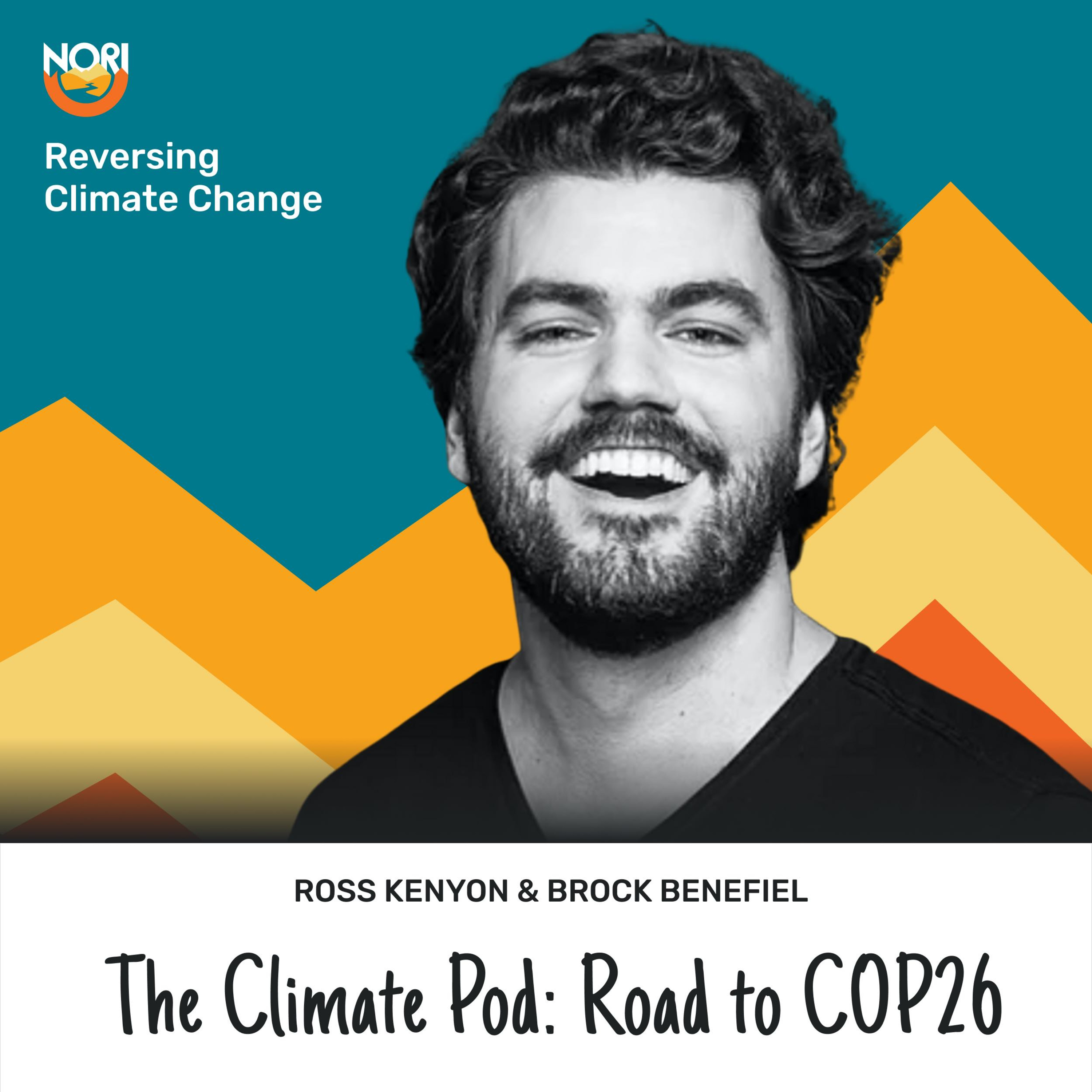
Brock Benefiel is the cohost of The Climate Pod, a podcast that covers the latest news on the climate crisis. On this bonus episode of Reversing Climate Change, Brock joins Ross to discuss the special focus of the show’s new series, Road to COP26, giving us a preview of the scientists, policymakers, and activists Brock and his brother Ty are highlighting in the weeks to come.
Brock offers insight into what we need to accomplish at COP26, describing what success looks like and why achieving it is such a monumental challenge. Listen in as Brock shares some of his favorite episodes of The Climate Pod to date and find out why it’s crucial to engage in meaningful conversations about the climate crisis.
This episode is part of a partnership with The Climate Pod.
More from the show
Ad-free episodes and other benefits come with a paid subscription.
Carbon Removal Newsroom, the news show that ran alongside this one, is over. Its episodes are still up, on the feed Climate Workers Anonymous now uses.
Carbon Removal Memes is still going.
Resources
The IPCC Sixth Assessment Report
Greta Thunberg’s 2019 Speech to the UN
UK MP David Lammy on The Climate Pod
Dr. Ed Hawkins on The Climate Pod
David Wallace-Wells on The Climate Pod
Governor Jay Inslee on The Climate Pod
Full Transcript
Ross Kenyon: Hello and welcome to the Reversing Climate Change podcast. I’m Ross Kenyon. I’m the creative editor at Nori’s Carbon Removal Marketplace. Today, I have a guest from the Fraternal Order of Climate Podcasters, Brock Benefiel. Hello. Ross, great to be here. Great to have you. You co-host alongside your brother, The Climate Pod, which I can tell you have a digital marketing background because that is some excellent SEO. Is my interpretation correct? That’s why we do it. We do it for the search engines, right?
Yeah. Someone just searched climate podcast. Climate Pod seems high up there. I saw a thread on Twitter a while back of people complaining that all the good climate podcast names were already taken. All that real estate was claimed. I don’t know if that was your experience too, but... You know, I think what we lean on more than anything is our ability to be creative. So with the Climate Pod, really just sneaking outside of the box. Cool. Well, we are having you on today, Brock, because you have a new series that you’re doing in addition to your normal podcasting.
Let’s start with what the Climate Pod covers. And then what is this new series you’re working on?
Brock Benefiel: The purpose of the climate pod is to have kind of a wide ranging conversation on the climate crisis, right? So we’re thinking about economics, science, activism, culture, the politics, you name it. We’re trying to have the broadest possible conversation. So for this new series, which is called The Road to COP26, presented by Octopus Energy, which is our nice sponsor for the series, with this series. Series, what we’re trying to do is attach, you know, take that lens, the sort of wide-ranging conversation, and apply it to the international conversation on climate change and what’s at stake in 2021 when it comes to the climate crisis.
Because as you well know, doing this podcast, there’s so much at stake this year.
Ross Kenyon: There’s a ton going on. This report is super fresh. Was it yesterday morning or was it today that it came out?
Brock Benefiel: It just came out, yeah. It was like... I want to say like four in the morning, Eastern time. I’m on Eastern time here in the United States. So four in the morning, Eastern time. And yeah, right in the morning in British summertime.
Ross Kenyon: That’s right. I woke up to Euro Twitter, all of Twitter, I guess you could say. Yeah. Monday, August 9th. What exactly is happening at COP26? For someone listening, they probably know, but I imagine there are just too many initialisms and acronyms out there. Why don’t we break down why it’s important?
Brock Benefiel: Yeah, let me take a step back here because, you know, COP26, Conference of the Parties, there’s kind of, the way I see it, there’s kind of a literal COP and then there’s like a figurative COP. What is going to take place? So, you know, why COP is important is that this is the biggest, this is the biggest wave. So this is the big world climate change conference every year. So this is not like your G7 summit, right? Or, you know, like name your regional or elite summit.
This is more than 200 countries participating, right? They’re creating formal agreements, proposals, their speeches on a variety aspects of the climate crisis in actual things have to get done. There’s this thing that was in the Paris Agreement called these nationally And that’s like the national targets for that country set for reducing their greenhouse gas emissions and getting to net zero by 2025 or 2030. And that has to be reviewed everywhere. We’re talking to climate scientists, I’m sure you know, if you look at the way, you know, the path that nations are headed on, they’re nowhere near the targets we need to hit the Paris Agreement.
And then again, there’s like literal things that have to get done. They have to create these carbon market mechanisms, which was a centerpiece of what COP25 was going to be. And it was a complete failure. Nations like there was no formal agreement. There’s no agreement on establishing these carbon markets, understanding a price on carbon and nations that are not getting it done, what they have to do as a result. There’s funding for damage and loss. What do they owe nations that are the least responsible but the most impacted?
Those are the kind of things that need to get done. That’s like what literal COP is. But I feel like what figurative COP is, is like we’ve gone through this pandemic. We have seen what happens when we don’t take the threats to our natural world very seriously. Like what happens when we don’t listen to science. And as you know, like through the past couple of years, especially the incidents of extreme weather, the impacts of the climate crisis could not be more visible. They’re in our news, our headlines all the time.
So when you look back at that, How are our world leaders going to act? It’s a massive question. I feel like a lot is going to be hammered out at this year’s COP26 event. In general, you’re optimistic about it. Well, optimism is such a relative term in this, you know what I mean? Because I feel like if you’re- If you’re going to define what success would look like for COP26, actual success, I feel like it’s automatically going to be a failure. What we need to do with the climate crisis is to stop.
Make a dramatic shift to decarbonization, adaptation, and move toward a more sustainable planet. When it comes to these kind of massive global agreements, when you think about 200 countries participating with all of the fossil fuel interests that are entangled and all of the competing interests, I just don’t think we’re going to decarbonize at the pace that we need to. You do see many pledges, right, from leaders around the world, especially in recent years, that are relatively aggressive. So am I optimistic that we’re going to do everything we can do to fight the climate crisis?
Absolutely not. But do I think that there isn’t the opportunity, especially with the IPCC report that came out today, and is there the opportunity for more pressure on policymakers as they meet to make really important decisions? I do think that’s at least possible, so we want to cover that as we go along.
Ross Kenyon: I think it’s a measured response and a wise one. What do you think Greta’s going to do? I think with her how dare you speech, the pitch is already turned all the way up. I think she’s surely going to try to top herself. This is almost gossipy speculation, but what do you think?
Brock Benefiel: Well, I think the really cool part of Greta’s speeches, especially in front of the United Nations, is she’s never going to have that kind of like relative definition of success I talked about. She’s just going to play it straight. Right. She is going to cite the facts and show where there are shortcomings. Right. She’s not going to say, well, you know, I understand that this is really hard and you have to bring a couple of hundred countries together and you have to play nice with fossil fuel interests.
She’s just going to cut right through the bullshit and say what’s going on.
Ross Kenyon: Yeah, she’s not going to say, well, the risk to capital markets of a loss of GDP. That’s I don’t think she’s going to give some sort of weighted response like that. That’s not her rhetorical style, one might say. Absolutely. What kinds of shows are you producing? I imagine you’re trying to get some in the can now. What are you looking out for? If someone wants to tune in, what should they have to look forward to?
Brock Benefiel: Yeah, we’ve had a couple of we’ve done already. We had David Lammy, who’s a representative in the... Yeah, he’s a member of parliament in the UK, focus, he’s the shadow secretary, state of justice. We talked to him about, you know, as we know, in the United States, but all around the world, the centering of racial justice within the climate fight could He was talking to us about how he’s going to bring that to COP26 and what actually needs to get done at COP26 to center justice in the fight.
Earlier this morning, we’re talking on Monday, August 9th. As I mentioned, the IPCC released a report. We talked to Ed Hawkins, one of the lead authors, and I think most people in climate know him as the Climate Stripes guy. We had him on to talk about the report, its implications, and what that should mean for policymakers. We’re going to talk to scientists, policymakers, and activists, especially people who are going to be at COP26, who have initiatives and messages that they want to get across, policy aims, things that they actually want to get accomplished at COP26.
I’d love it if we could talk to you. Several people from every nation. We just don’t have the time for that. But we are going to get a sampling of people all across the globe in many different countries looking, again, at these broader implications, these big issues that have to not only be solved at COP26, but then individually in each of these countries leading up to the event and after the event itself.
Ross Kenyon: Well, we’re going on season break right now. So if you’re listening and you’re looking for something timely, something that’s happening, you still can’t get enough climate podcasting. The Climate Pod has you covered in the meantime. Also, your catalog is very impressive. There’s a number of great episodes with some top tier guests.
Brock Benefiel: Oh man, I really loved our conversation with David Wallace-Wells. I think a lot of people in climate will know him as the author of The Uninhabitable Earth. We’ve seen so much off the charts, whether we talked to David Wallace-Wells about what that means and honestly what scares him. We had a great conversation with Dr. Andrew Dessler recently. He was talking about what about 2021 has surprised him as a climate scientist. As you know, climate scientists have seen things this year that like We did not expect that.
And I’m a big political nerd. So we had Jay Inslee on, the governor of Washington recently, really excited to have him on. We talked about like, you know, because he’s in the fight and like a day to day fight, right? He’s running a state. So he has done a great job handling the COVID-19 pandemic. So he talked to us about not only what Washington’s facing with the climate crisis, but what he’s learned during the COVID-19 pandemic that he’s been able to apply. You’re not even going to name drop all the famous comedians and actors that are going to focus on serious stuff.
We’ve had Ted Danson, Rainn Wilson, Bill Nye, which is like a 90s millennial nerd like Bill Nye could not like I couldn’t be more of a Bill Nye fanboy. So that was a phenomenal one. So if you want to go back to some of the old episodes, got some good ones and some more lighthearted ones as well.
Ross Kenyon: If someone’s listening and they want to support you, obviously the way to do so is to go look up the Climate Pod and their podcast app of choice and listen. Is there anything else that they can do to be a part of what you’re working on?
Brock Benefiel: No, just subscribe. Check us out at the ClimatePod on every podcast app. We’ve been posting more to YouTube lately, and it seems like people are starting to watch those videos. So if you want to see what a face for podcasting looks like, you can check out our YouTube.
Ross Kenyon: Different people find our podcasts on YouTube for different reasons, too. The ones that are popular there versus elsewhere, endlessly. It’s wild. I know. Do you notice that, too? Yeah. Yeah. It is wild,
Brock Benefiel: but yeah, just check us out. You know, I think like, you know, and like, this is what it’s so cool to talk to you about this stuff is like, the more people are actually talking and engaging with this stuff, the better our outcomes are going to be, right? This is what Catherine Hale talks about all the time, like just talk to people about climate change. So it’s so cool what you are doing, the whole like, The audience and movement that you guys are building and it’s just so cool that we can reach your listeners and we love it.
People checked out some of those episodes because again, like as I said in the beginning, this could not be a more critical year. We always talk about that in climate change and people are some sort of like wary of those kinds of terms, but it’s true. Like what is going to happen this year, our understanding of it and what we actually do about it is going to, it’s going to shape so much of our future.
Ross Kenyon: Well, links to all of those things are in the show notes. Thanks for the kind words too, by the way. Nice of you to say. Brock, thanks for being here. Ross, thank you so much for having me. It’s been my pleasure. And if you like this show, please rate and review us on iTunes slash Apple Podcasts. It means a lot to us. It helps us get our content out to more people. And thank you so much for listening. Well, thank you so much for listening.
If you like the show, please rate and review it in Apple Podcasts and or Stitcher. It really helps us a lot to get this content to a wider audience. If you think what we’re doing is useful, interesting, fun, hopefully all three, we’d certainly appreciate your rating and review. [Nori promotion cut from the transcript. It's still in the audio, but it no longer applies.]
And thank you so much for your support.


