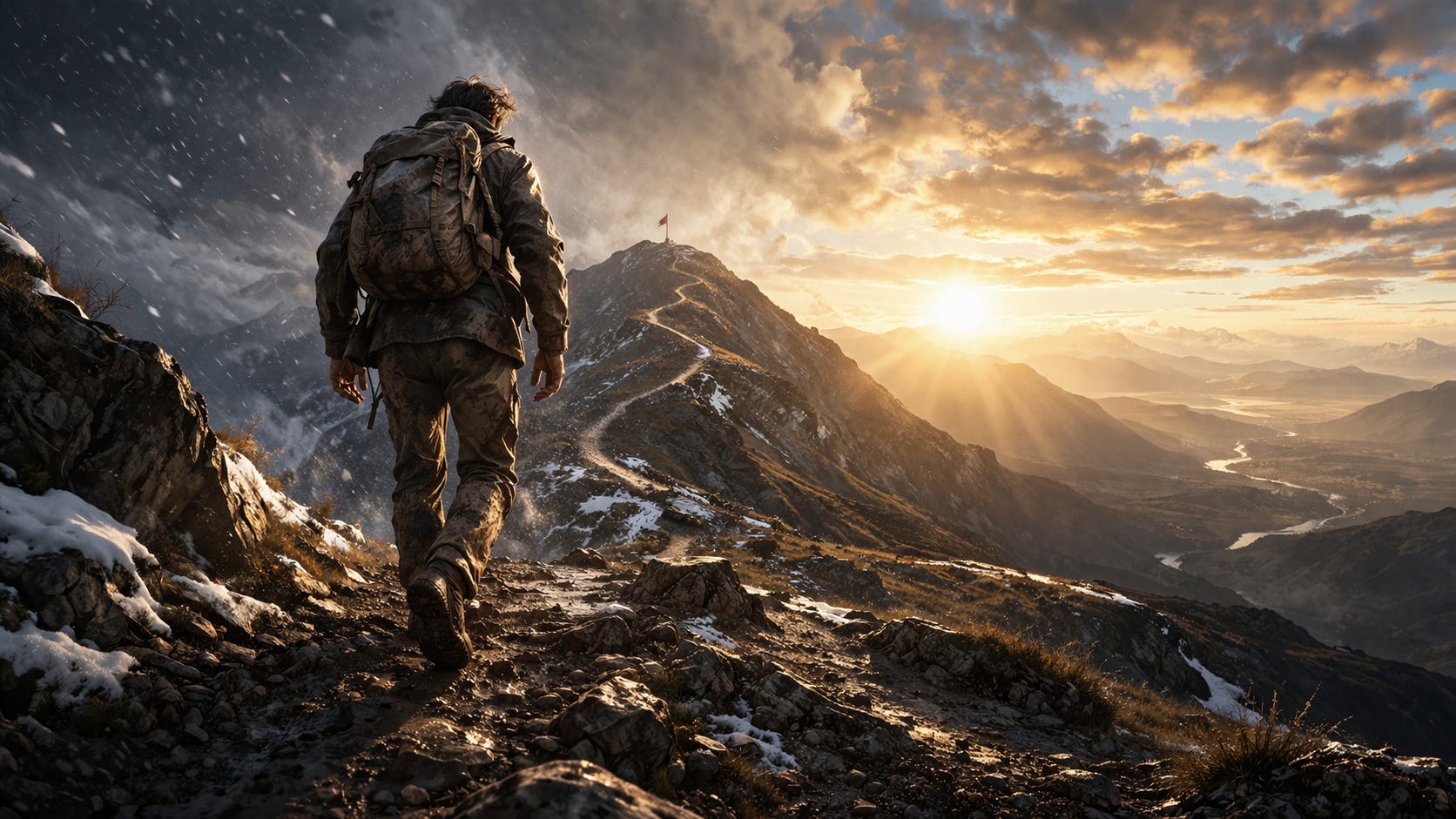

This is an episode summary of the Reversing Climate Change podcast. It’s a short bonus episode in which Matt Schmitt, CEO and co-founder of Structure Climate, calls in to read Rudyard Kipling’s “If—” and share what the poem means to him and his work in carbon dioxide removal. The contribution was prompted by the recent Emily Swaddle episode in which Ross and Emily spoke about poems that have mattered to each of them.
You can listen to the podcast on Apple Podcasts, Spotify, YouTube, or wherever else you listen to podcasts. You can also listen to it
Sometimes you read a poem on a carbon removal podcast and it's goofy. Sometimes you read a poem and people start writing you wanting to share their own favorites...
Matt Schmitt, CEO and co-founder of Structure Climate (a company I formally advise), was inspired by the recent Emily Swaddle episode where we spoke about poems that mean a lot to us. He wrote me immediately to read a poem of his own and share what it means to him and his labor in carbon dioxide removal.
The poem is "If—" by Rudyard Kipling, from circa 1895.
Matt zooms in on two lines that have stayed with him: the bit about meeting with triumph and disaster and treating those two impostors just the same, and the closing image of filling the unforgiving minute with sixty seconds' worth of distance run.
Listen in to hear more about why Matt loves that triumph and disaster are both capitalized; why "treat" is the perfect verb—carrying both the everyday sense and the older sense of negotiating a treaty; why the unforgiving minute is unforgiving (it doesn't care whether you think it is sixty seconds or not, the minute is sixty seconds); why the map is always wrong when the map and the ground disagree, and what that has to do with how we navigate physical, social, and spiritual terrain; and why sharing poetry on a carbon removal podcast feels right even when it's hard to articulate exactly how it ties in...
As Matt puts it, we often think what we measure is important not because it's important but because we can measure it. And that doesn't always leave a lot of room for the beauty and spirit we need to do the things we can measure.
If you have a poem you'd like to read on the show, drop me a line.
“If—” by Rudyard Kipling
If you can keep your head when all about you
    Are losing theirs and blaming it on you,
If you can trust yourself when all men doubt you,
    But make allowance for their doubting too;
If you can wait and not be tired by waiting,
    Or being lied about, don’t deal in lies,
Or being hated, don’t give way to hating,
    And yet don’t look too good, nor talk too wise:

If you can dream—and not make dreams your master;
    If you can think—and not make thoughts your aim;
If you can meet with Triumph and Disaster
    And treat those two impostors just the same;
If you can bear to hear the truth you’ve spoken
    Twisted by knaves to make a trap for fools,
Or watch the things you gave your life to, broken,
    And stoop and build ’em up with worn-out tools:

If you can make one heap of all your winnings
    And risk it on one turn of pitch-and-toss,
And lose, and start again at your beginnings
    And never breathe a word about your loss;
If you can force your heart and nerve and sinew
    To serve your turn long after they are gone,
And so hold on when there is nothing in you
    Except the Will which says to them: ‘Hold on!’

If you can talk with crowds and keep your virtue,
    Or walk with Kings—nor lose the common touch,
If neither foes nor loving friends can hurt you,
    If all men count with you, but none too much;
If you can fill the unforgiving minute
    With sixty seconds’ worth of distance run,
Yours is the Earth and everything that’s in it,
    And—which is more—you’ll be a Man, my son!
Resources
The Wikipedia article about the poem
Vexed to Nightmare by a Rocking Cradle—The 2026 Horror of W.B. Yeats' "The Second Coming"
The beautiful uncut hair of graves—Walt Whitman on the Equality of Death
The universal cannibalism of the sea vs. one insular Tahiti—My favorite chapter of Moby-Dick
More from the show
Ad-free episodes and other benefits come with a paid subscription.
Carbon Removal Newsroom, the news show that ran alongside this one, is over. Its episodes are still up, on the feed Climate Workers Anonymous now uses.
Carbon Removal Memes is still goofing around.
The books that come up on this show are collected on my Bookshop shelf.
🎧 Apple Podcasts · Spotify · YouTube
Paid subscribers get this episode ad-free. The ads in the free feed are inserted by Spotify when you press play. They are not in the file I make.
Full Transcript
Matt Schmitt: Hey Ross. This is Matt Schmitt. I’m CEO and co-founder of Structure Climate, speaking to you from Minneapolis, Minnesota. I was so inspired by your recent episode with Emily when you touched on poetry and started talking about poems that meant a lot to you, that I wanted to share a reading of a poem with you and your audience, and also then share some of what it means to me. And so today I will be reading “If—” by Rudyard Kipling.
If you can keep your head when all about you Are losing theirs and blaming it on you, If you can trust yourself when all men doubt you, But make allowance for their doubting too; If you can wait and not be tired by waiting, Or being lied about, don’t deal in lies, Or being hated, don’t give way to hating, And yet don’t look too good, nor talk too wise:
If you can dream — and not make dreams your master; If you can think — and not make thoughts your aim; If you can meet with Triumph and Disaster And treat those two impostors just the same; If you can bear to hear the truth you’ve spoken Twisted by knaves to make a trap for fools, Or watch the things you gave your life to broken, And stoop and build ‘em up with worn-out tools:
If you can make one heap of all your winnings And risk it on one turn of pitch-and-toss, And lose, and start again at your beginnings And never breathe a word about your loss; If you can force your heart and nerve and sinew To serve your turn long after they are gone, And so hold on when there is nothing in you Except the Will which says to them: “Hold on!”
If you can talk with crowds and keep your virtue, Or walk with kings — nor lose the common touch; If neither foes nor loving friends can hurt you; If all men count with you, but none too much; If you can fill the unforgiving minute With sixty seconds’ worth of distance run — Yours is the Earth and everything that’s in it, And — which is more — you’ll be a Man, my son!
So the two parts that I want to touch on are Triumph and Disaster, and then the unforgiving minute.
The Triumph and Disaster: “If you can meet with Triumph and Disaster and treat those two impostors just the same.” The idea of Triumph and Disaster both as impostors I think is so rich and real and also uncomfortable. But often what we face — nothing is ever as good as it seems, nothing is ever as bad as it seems. To Kipling’s credit, both Triumph and Disaster are capitalized, which I think actually adds to the feel of them being an impostor. “Meet with Triumph and Disaster and treat those two impostors.” “Treat” here is another word that I love, because, I mean, yes, there is the basic, you know, treat people how you want to be treated, and yet there’s also the use of “treat” as negotiation, or to sign a treaty, with the idea that there is a long-term component to it. You are treating with Triumph and Disaster. And yes, they are impostors, and yes, you should treat them just the same. And if you can do that, well, then so much the better.
And then the second part: “If you can fill the unforgiving minute with sixty seconds’ worth of distance run.” This idea of the unforgiving minute, the minute that is sixty seconds — it does not care whether you think it is sixty seconds or not. The minute is sixty seconds. And the question is, can you fill the unforgiving minute with sixty seconds’ distance run?
I think that we have a tendency, when we look around, to see the land and to see the maps that we use to navigate that land. And the land could be physical, the land could be social, the land could be spiritual or cultural. And our maps likewise do their best to portray what the mapmaker thought was important to portray about the land. And yet if the map and the ground disagree, the map is wrong. It’s not a negotiation between the map and the ground. The map doesn’t get a chance to treat with the ground. The unforgiving minute is the unforgiving minute. And if you can fill that unforgiving minute with sixty seconds’ distance run, then the world will be yours and everything in it. And what’s more, you’ll be a man, my son.
I do want to acknowledge that there are a lot of gender-coded references throughout this poem, it being maybe a hundred years old or so. But yeah, that’s what I wanted to share.
Ross, I really appreciate the opportunity to use your platform, your audience, your listeners, as a chance to have this kind of dialogue. I think that this sort of thing is important even if it’s difficult to measure, and yet I try to keep in mind that we often think what we measure is important not because it’s important but because we can measure it. And so even if it’s hard to describe exactly how reading poetry and sharing thoughts about poetry ties into carbon removal — to me, Ross, I have to say, it feels good, it feels right. And so it is my pleasure to contribute this to the show.
Once again, this has been Matt Schmitt, CEO and co-founder of Structure Climate, calling in from Minneapolis and sharing “If—” by Rudyard Kipling.
See you all out there.