

This is an episode recap of episode #360 of the Reversing Climate Change podcast. You can listen to me (Ross Kenyon) chat with novelist and screenwriter Jon Raymond on Apple Podcasts, Spotify, YouTube, or right here on the page, video included.
Writing fiction about climate change is notoriously difficult. Some authors have gone for massive ensemble casts to defeat the hyperobject. What happens if you zoom in on quieter stories between a few people instead?
Jon Raymond is a screenwriter and novelist whose work I very much enjoy. He is a frequent collaborator of Kelly Reichardt's, on films such as Old Joy, First Cow, Night Moves, and Showing Up. He also adapted James M. Cain's novel, Mildred Pierce, which became an HBO miniseries starring Kate Winslet.
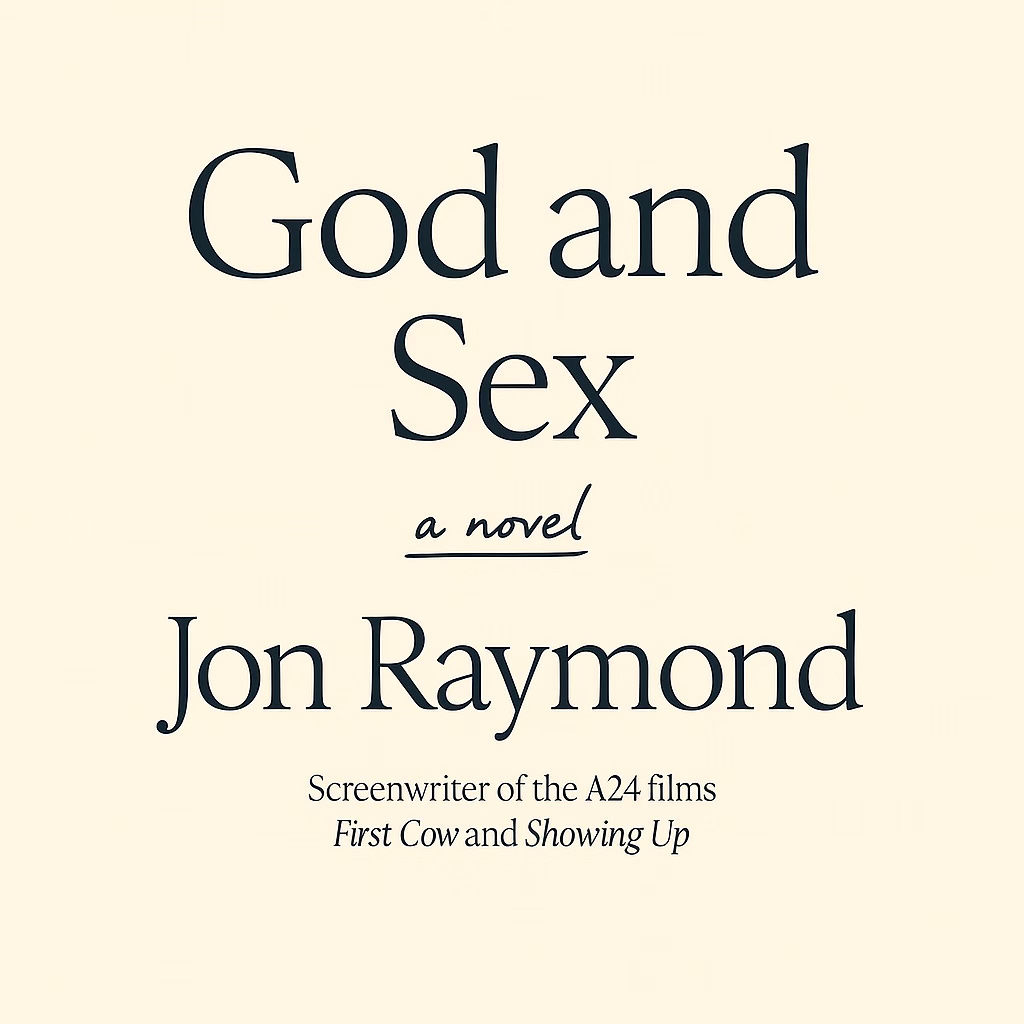
His novels keep coming back to how to live with a changing climate. Denial is about climate culpability for one person, and it’s very good. God and Sex is about miracles and doubt, with climate as the setting. We discuss both books at length in this show.
They're both worth reading.
This episode's sponsors

Philip Lee LLP: legal resources for carbon removal buyers and suppliers
Arbonics: forestry project developer in the EU
Listen to the RCC episode with Lisett Luik from Arbonics
Become a sponsor by emailing carbon.removal.strategies[at]gmail.com
Use this affiliate link to use Riverside to record your podcasts
Sign up for the 9Zero climate coworking space with my referral code
Resources
Eichmann in Jerusalem by Hannah Arendt
Go (re)watch The Sixth Sense—it's great.
More from the show
Ad-free episodes and other benefits come with a paid subscription.
Carbon Removal Newsroom, the news show that ran alongside this one, is over. Its episodes are still up, on the feed Climate Workers Anonymous now uses.
Carbon Removal Memes is still goofing around.
The books that come up on this show are collected on my Bookshop shelf.
🎧 Apple Podcasts · Spotify · YouTube
Paid subscribers get this episode ad-free. The ads in the free feed are inserted by Spotify when you press play. They are not in the file I make.
Full Transcript
Ross Kenyon: Thanks for listening. I am Ross Kenyon. I’m the host of Reversing Climate Change. If you’ve listened before, you know that I’m a carbon removal and climate tech entrepreneur, but I’m also someone who’s obsessed with the humanities. That’s where I come from. I come from a background where I did undergraduate work in history.
I did PhD work in political philosophy before deciding that wasn’t the right fit for me. But I think it’s so important to engage with the arts and humanities. I think in a field like climate, they’re often neglected. But I don’t think they should be. In fact, I think more could be done to make them the powerhouses that we know they can be.
Most of the things that we care about, I feel like have a basis in the humanities. We spend so much time listening to stories, reading, watching TV, watching films. Storytelling is very much key to who we are. And today I have a storyteller whom I really admire. I’ve watched so much of his content. I’ve read several of his novels.
You may have too. Jon Raymond is the screenwriter who’s frequently collaborated with Kelly Reichardt. You might know them from their first big film that made a splash, especially in the indie world, which was Old Joy, where you can see Bonnie “Prince” Billy. It’s a road trip movie. It’s two old friends talking about life.
It’s quiet. You know? It’s a lot about feeling and being, and it’s not just about action, zippy dialogue. It’s mostly just processing of life. I don’t even know how else to put it. They’re very hypnotic films in a way. The film work that he’s done since Old Joy is wonderful too. I recently watched Showing Up with Michelle Williams, and I find her to be extremely engrossing in it.
And again, to be a quiet, sad, meditative kind of film you should definitely check out. Mildred Pierce starring Kate Winslet in a miniseries from HBO that’s nearly 15 years old at this point. It’s just a wonderful period piece adaptation of a novel about the Great Depression and what it was like during that time.
Much of his work has a strong ecological and climate angle. He wrote a film called Night Moves starring Jesse Eisenberg about an eco-terror plot to blow up a dam. And his two novels, which we discuss at length here, Denial and his new one, God and Sex, are both strongly informed by climate. I have to warn you that there are spoilers here.
But I don’t think spoilers should prevent you from enjoying it. In fact, I find the desire to... How do you do a podcast? The podcast is to tell you that you should consume Jon’s work, and it’s worth your time to both view and to read. But if we can’t talk about the substance and the theme of the books, then we can’t really make a podcast telling you to go and do it without saying, “It’s good and you should check it out, and here are some vague themes that maybe you care about.”
I think it’d be a terrible show. Jon and I discuss his work in detail. I don’t mind knowing the stories of films before I see them. Same with novels. I find sometimes it helps me absorb the story better if I know the broad shape of it, and I’m curious how much of that surprise element is really necessary for appreciating literature, and I suspect it’s actually not as great as you might think.
So just a heads-up, we spoil a lot of Jon’s work, but I don’t think that should stop you from enjoying this show at all. Denial’s about a near future where climate has been addressed, at least partially, because there’s been a tribunal where many people who are responsible for it are tried for crimes, but some of those people have escaped prosecution, similar to Nazis fleeing to South America after World War II and other places, and a journalist’s quest to hunt one down.
I think it’s a really fascinating book. I greatly enjoyed it. God and Sex is a new book of Jon’s that you should go and pick up. It’s about a writer who’s working on a book about trees, and there is a climate event that potentially produces a miracle, and there’s a question of how to understand miracles and what it means to doubt. And even though you can be so sure of something, what happens in its aftermath.
I’ll let you get to the show in just one second, but before we get there, if you would please give a great rating and review on Apple Podcasts, Spotify, or wherever you listen to shows, if there’s a rating and reviews function, please do it.
It helps so much. I can’t overstate how much it helps getting more people to see the show and listen to it. And also, if you’d please become a paid subscriber for $5 a month. You know, not that much money. You get rid of the inserted ads. You get bonus content. I put out some bonus content every month of special parts of shows.
In fact, today’s show actually has some bonus content in it that I’m gonna cut out. People who want it can get some little extra with Jon and I. Just thanks for listening. I’ve been fond of saying recently that I’m honored by people listening to the show, and I truly am. There’s so much content. It’s just absurd.
I’m often overwhelmed with it and trying to keep up with the things that I think I need to, let alone want to. You could be doing other things right now, and I’m just glad you’re choosing to spend it with me. I do not take that for granted. Thank you so much. I hope you have a wonderful day, and here’s the show with Jon.
So thanks for listening. Bye for now.
Ross Kenyon: Thanks for being here, Jon.
Jon Raymond: Thanks for having me.
Ross Kenyon: It’s my pleasure to have you. I’ve spent a lot of time in your brain recently. Read two of your novels. Hanging with Kate Winslet. I watched several of your Kelly Reichardt films that you co-wrote. Really interesting work, and I’m happy that you’re spending time writing about climate. I might not have predicted that from you, given your body of work.
Jon Raymond: Yeah. I mean, my body of work, such as it is, definitely falls into a kind of realist or naturalist tradition, I think, which I think people rightfully associate with small scale interpersonal dramas.
People obey the laws of gravity and science and usually involve kind of small emotional journeys for people. And I think that in today’s world though, that kind of relationship to climate change is part of reality. I mean, it is part of the actual, really often small scale dramas of our lives.
And it’s actually popped up in the work I’ve done for a long time. Like, my first book, The Half-Life, dealt with the early beaver trade in the Northwest, which in a sense was a form of ecological devastation. I’ve done a movie about blowing up a dam. I’ve written a book that involved a plot line about privatizing the wastewater of Los Angeles. And these are just things that for me kind of as a West Coast person especially are part of everyday life.
Ross Kenyon: And much of your film work, especially the films with Kelly, strike me as part of an outgrowth of Dogme 95 and Lars von Trier and the mumblecore movement and the Duplass brothers and things that are supposed to be relatively quiet, laconic.
They’re very personal. They have a sort of meditative quality to it. And granted, even Night Moves feels a little bit like that too. There isn’t a huge amount of talking. But I also see a lot of stylistic divergence with your writing. I don’t find that as strongly in your writing, maybe because you’re so descriptive.
They’re still thoughtful and there’s a lot of third person omniscient narration happening where you’re telling me about feelings and things of that nature. But I see those as stylistically very distinct. Am I incorrect about that?
Jon Raymond: No, no. I think that there’s kind of a range of things.
I mean, Kelly is an amazing director, and I think the measure of her ability is how comfortable she is doing so little in a certain sense, or like really allowing the moments to breathe, the shots to linger. I think the quietness and the miniaturism of the films is very much about her and the conversation that I’m having with her.
I mean, for me, a few of those films are based on short stories that I wrote. And for me, the short story form is more where some of the quietness and miniaturism are most evident maybe in the prose that I do. Novels are like a different animal though, and they kind of need bigger engines I have found.
And those do tend to get a little bit bigger and, you know, I would love to be able to write a novel that existed more on the level of smallness of the films or the short stories. And I might be starting to figure that out, but it’s still not yet really happened.
Ross Kenyon: Wow. Well, I look forward to reading that.
Jon Raymond: Yeah.
Ross Kenyon: As pertains to silence, I think that’s such an underrated aesthetic choice. I saw Tig Notaro do stand-up at Outside Lands seemingly a decade ago, and the stand-up before her felt so uncomfortable with silence. Manic, filled every second with a quip. And Tig would come out there and be silent for 20 seconds and then say four words, and destroyed.
And the amount of control that that showed and confidence, I felt taken care of by her, and it was the funniest thing I think I’ve ever seen live. Among the best.
Jon Raymond: That makes total sense to me. I think that’s like the black belt of artistry, that ability to dwell in those silences.
And often in those silences, it’s where the audience has a chance to have a thought, you know? And it’s also, in writing, it’s where a lot of the expressiveness comes in. You mentioned the idea of describing things, and those can be moments of real lyricism and kind of what I would call ekphrastic sort of writing, which is the sort of joy of writing about visual images.
And so to sort of get out of the constant talking, the constant guiding of someone, is when something really interesting happens.
Ross Kenyon: Which makes the contrast all the more striking because Will Oldham seems like a chatterbox. How do you rein him in for something like Old Joy? He seems like once you turn that guy on, he goes. Maybe that’s an incorrect impression. I’m a Bonnie “Prince” Billy fan, so I think I’m allowed to say that.
Jon Raymond: Yeah, I mean, I’ve loved Will’s stuff forever. I don’t know him well enough in person to know how much he rambles, but he keeps finding new things. It’s amazing.
Ross Kenyon: Yeah. One of those artists like Tom Waits that you’ll see pop up in a movie. You’re like, “Cool. Guess Will’s in this.” That’s great.
Jon Raymond: Yeah, totally.
Ross Kenyon: Do you consider climate to be a hyperobject? A lot of novelists and theorists of writing consider it to be one of those topics that’s so big it’s hard to see and hard to communicate about. Do you agree with that, and how do you deal with it?
Jon Raymond: I mean, yeah, in a sense it is, I guess, technically a hyperobject as I kind of understand that. It does create the entire atmosphere of our lives literally. I mean, it is the air that we’re breathing and the heat that we’re feeling.
And that does become sort of hard to navigate. But I think that makes it all the more, well, sadly kind of juicy as a topic, you know? It brings immediate kinds of existential drama and suspense in a certain way. The book I did before the new one was called Denial, and that was specifically about a global Green New Deal that had happened. It was a futuristic book. I’m not really actually into science fiction that much, but this was a very soft science fiction book about a future in which humanity really did get its shit together and solve... Not so much solve, but at least address a lot of climate issues, which also created a certain kind of judicial issue.
And there were, like, Nuremberg style trials for carbon criminals. And so that book became kind of a Nazi hunter story in eco drag, I describe it as. Where a—
Ross Kenyon: Okay. Cool.
Jon Raymond: —where a reporter uncovers a former oil executive in hiding in Mexico and goes to track him down. But it was for me a way to try and just project a future period.
This was something I was writing in like 2020, when we were having the mega fires here on the West Coast. And the idea of somehow speaking back to this unfolding, very in your face apocalypse was just like a practical matter for me. Like, I had to figure out a way to even comprehend a future as long as a 30-year mortgage at least.
Like how can I... what could happen to make that possible? And thankfully a certain noir plot device allowed me to think about that. But yeah, to me, talking about this hyperobject, it becomes just an ambient subject in almost everything.
Ross Kenyon: Yeah, you can contrast it to someone like Kim Stanley Robinson, who’s attempted to tell stories about climate by making enormous ensemble casts of characters that represent different points of view and experiences.
And yours, it seems like you zoomed in really far. Denial’s a great book. I really like it. Also, you should send it to Stanley Tucci. I think he would be a great person to run that empty seat role.
Jon Raymond: Oh, that’s an interesting idea.
Ross Kenyon: That’s who I imagine in there.
Jon Raymond: That is a very interesting idea. The film project of that is slowly making its way through the world. But that’s not the person that is currently hovering over that seat, but we’ll see. I can’t really talk about it because it’s too delicate. But that is a really interesting idea. I like it, yeah.
Ross Kenyon: Yeah. I get a producer credit for that now, once it goes?
Jon Raymond: Absolutely, yeah.
Ross Kenyon: My people will call your people. Don’t worry.
Jon Raymond: Yeah, the back end will be hefty. But no, Kim Stanley Robinson is, to me, a very awe-inspiring writer, and there is a level of research that goes into those novels, and of just scientific understanding, that is so far beyond what I could possibly reproduce.
And so thankfully, I had not read his work before I wrote Denial because I would have probably felt more worried about my own just sort of groping for scientific verisimilitude. But as long as you can’t really compete with that, you might as well not even try as far as I’m concerned.
And do it in your own way, you know? I like a smaller, more intimate storyline as much as I like his giant global ensemble cast as well.
Ross Kenyon: Well, if you style it in terms of noir, that’s a genre with very strong conventions, so you understand what that means. It can be a more contained story. It doesn’t have to be how the entire world grapples with climate change. It’s about individually distinct characters that have their jobs that they’re working with.
And actually, I think the zooming in allows for great contrast in Denial because this possible Tucci character in my head is a very charming person. And yet he’s someone that has been charged for high crimes and is a fugitive, and there’s this question of: can this person be a good person and also be institutionally responsible for great amounts of harm, and how should we understand that? Is he actually a good person? Is there some degree of sociopathy there? Like, how do we deal with the personal and the impersonal bits of mercy and justice in our lives?
Jon Raymond: Yeah, absolutely. I mean, it was kind of a crime and punishment story, and as a couple of these have been. Night Moves has some of that element as well. And I mean, this is I think for me part of the realism question.
Like, I love the Kim Stanley Robinson stuff, and certainly Ministry for the Future reads in some ways like a policy paper in novel form, which is fascinating and great. And to me, the failure of a lot of science fiction I read is just how historically thin the characters are and how they are kind of androids being manipulated.
In a more naturalist, realist mode, I do think it’s required to kind of test your characters and your situations against reality as you actually understand it, and against personalities that are real to you, you know? And that disgorges very mixed characters and mixed bags.
I have many morally questionable friends who I adore. I’m amused by a lot of people that I might diverge from morally in different ways, and some of them in very small ways. And I think this I guess is what literature is good for, for me, in addressing questions like our own culpability for climate change and sort of larger social movements.
To read a newspaper, to read a policy paper, the perversity of human behavior doesn’t really register. And in literature it profoundly does, and you kind of have to understand that whoever is dealing with these problems is radically fallible.
Ross Kenyon: I’ve been musing lately about how the empathy generation that happens in literature, good television, has, typically in our culture, made us more sympathetic to characters that we should feel a stronger moral bright lines towards.
Like, why are we so enamored with the anti-hero? And that’s kind of a terrifying thing. And then we have an anti-hero that leads the country, and we’re somehow okay with it and act like maybe those things aren’t as connected. I think too much empathy can maybe lead us astray, too.
Jon Raymond: Yeah. No, I hear that. But, I mean, you can go back to Milton and farther to find the charismatic Antichrist, you know? Villains are funner to write. Villains are more interesting. That’s just sort of a law of fiction, I think. But I think you’re absolutely right, the diet that we’ve fed ourselves, I’d say particularly in prestige television, of satanic patriarchs, it is a kind of conditioning for this.
And I guess that was why for me... I’ll just go ahead and spoil the ending of Denial, but it was important for me that this charming, not even a sociopath, but really just a charming petroleum executive does end up having to pay for the really the policy crimes that he was responsible for.
Even though our agent or our journalist finds him a good hang, he does ultimately have to pay for that. And that was important for me and, you know, that’s part of the fun of writing, too, is you get to exact punishments on people. And I’ve done that in a few books in different ways.
But God, there was something else I was gonna say. Oh, the other element of sort of mass cultural conditioning that I think is really unfortunate, and this was a big part of the Denial genesis too, is there’s the satanic patriarch trope that we have, but then there’s also just the post-apocalyptic trope that is really the narrative of my lifetime, you know?
Of watching the world be destroyed in every possible imaginable manner. By zombie or meteor or pandemic or whatever. And to me, that’s also a similar way. It also becomes a death wish of a certain sort. Like, how many times do we have to imagine the world exploding on our watch?
And that for me was part of the argument of Denial. Like, let’s try to do a future that is neither utopic, like let’s not pretend we’re gonna solve it all, but nor do we have to pretend that the world is gonna die with us. That we can actually imagine that there’s some sort of middle ground, which is a pretty rare thing to imagine, I think.
Ross Kenyon: I think it’s successful ambiguity because it doesn’t lead to this like, “Well, who really knows?” I’m still thinking about the climax of Denial where they’re at a bullfight, and the empty seat is still just, he’s talking and pretending almost like it’s not really happening. And you feel a great degree of pity for this person. You’re like, wow, this is like a different lifetime of his, maybe, you know, a couple decades ago, and it’s finally catching up to him, and you wonder like, how would I feel then?
It’s 1960 and Eichmann gets scooped out of Argentina by Mossad. Like am I somehow then thinking like, “Oh, it’s different for Eichmann all these years later.” The answer to that should be no. But in your case, it doesn’t end up being a really hard no. I end up thinking like, what type of culpability should be applied to this person so long in the past? And how important is the symbolism of them now facing repercussions even though they are no longer a threat? And what theory of justice are we even using? Those are the kinds of good questions I think we should be thinking about.
Jon Raymond: Yeah, yeah. And in this case it is different than Eichmann. I mean, it’s parallel to Eichmann, but if you’re talking about climate change, like who’s not guilty?
And this is part of the debate that they have in that book, that he might have been at the top of the corporate pyramid, but all of the consumers were buying it, you know? It’s not like he was doing this into a vacuum or forcing people to burn carbon or to eat meat or do all the various sort of non-criminal activities that we’ve sealed off in some way.
There’s a lot of ambiguity. I mean, to me, you talk about the empathy generation. I don’t know, I haven’t heard that phrase before, but so—
Ross Kenyon: Might be my original coinage. Probably not, but maybe. Big coinage.
Jon Raymond: I like it. But there’s also this virtue mongering kind of generation that we’ve entered as well, that very much likes to portion out guilt and non-guilt.
And again, this is part of like a long Western tradition of a Manichean kind of worldview, that there’s good and there’s bad and there’s people with halos and people with pitchforks, and that there’s this kind of justice that will ultimately be meted out, and that’s just not really how the world works.
Ross Kenyon: I agree with that. But then I, without any—
Jon Raymond: But I’m so pissed still.
Ross Kenyon: Exactly. Yeah, but I am so pissed, I was gonna say. But I also just absolutely adore characters like Jean Valjean, and I like these sort of beautiful Christian martyr-type characters who have a conversion moment and actually are just good. Like, there’s not a lot of complexity to Jean Valjean. It’s a beautiful story, but—
Jon Raymond: Who’s Jean Valjean, actually?
Ross Kenyon: Oh, sorry. From Les Mis. Victor Hugo.
Jon Raymond: Oh, okay.
Ross Kenyon: Are you too contemporary? You don’t read the classics?
Jon Raymond: No, I love the classics. And actually I bought it a few years ago, but I did not read it, so it’s sitting on my shelf.
Ross Kenyon: I picked it up a long time ago. And it’s wonderful. I didn’t expect it to be as good as it is.
Jon Raymond: Oh, no, I’m sure it’s great as a novel. I have no doubt.
Ross Kenyon: I felt like it would be another one of those obligatory, like, okay, I’m making my way through this. And I’m like, oh, I’m on every page. And there’ll be an important chase scene, and then there’ll be 100 pages about how the sewers of Paris were constructed, and how night soil is the most important fertilizer, and we’re throwing it away down the... I’m like, “Go back to the chase scene. You’re in the middle of the action right now.”
Jon Raymond: That sounds great. No, actually maybe, yeah, I often like to read a big 19th century novel in the summer, so maybe that’ll be the one that I do this summer.
Ross Kenyon: Wow. If I could have that influence, that would bring me great pleasure.
Okay. So we should talk about God and Sex too, because it also seemingly is just structured around ambiguity as well. That’s clearly the thing that we keep coming back to with your work. Was there a miracle? Is there not a miracle? This is clearly a question that’s keeping you up at night.
Jon Raymond: Yeah. Well, I mean, you did a good segue there with the sort of whatever theological epiphanic moment you’re talking about in Les Mis, which I don’t know. But yeah. So the new book is called God and Sex, which is, I recognize, a sort of ludicrous title.
Ross Kenyon: Very provocative title.
Jon Raymond: Yeah. But apropos, you know?
Ross Kenyon: Yeah. I think so.
Jon Raymond: It does have those things. And yeah, it is fundamentally about a miracle that may or may not have happened, in the context of an adulterous love triangle in Southern Oregon. And it also involves a climate disaster as the sort of backdrop, but which at a certain point becomes not the backdrop and becomes very much the foreground.
But there is a prayer that may have been answered in a moment of duress. And the characters are then, I guess again in what I would hope is a sort of realistic or naturalistic way, left to parse the reality of that, you know? And I think the question of what would I or my friends do if the hand of God sort of gently touched something, how long would we believe that had really happened?
Or how quickly would we, like, re-narrate it in a way that was more acceptable to our worldview? That kind of provides the central spine, I guess, of the book. And if this sounds coy, I don’t care too much about doing spoiler stuff, so we can—
Ross Kenyon: Go ahead. Whatever’s useful to you is fine with me. We can talk openly about it.
Jon Raymond: Yeah, I could go either way. So I guess we can see. If we have to, I guess we can. But if we don’t have to, I guess it’s great to leave some mystery. But either way.
Ross Kenyon: I think it’s good reading for its own sake. There are plenty of those books that you know what’s gonna happen, they’re still worth reading. Movies that you know what’s gonna happen at the end of The Sixth Sense. It doesn’t matter, it’s still amazing knowing what the twist is.
Jon Raymond: Yeah, totally. No, you basically know, on that level, with almost every artwork you enter.
Ross Kenyon: Yeah, there’s only a couple stories, right? There’s just variations on it.
Jon Raymond: Yes.
Ross Kenyon: Yes. Yeah. Well, miracles, okay. I hear back from people who have had profound psychedelic experiences, paranormal experiences. Many of them come back to this, like, “It felt so real. Now that I’m removed from it, did it really happen? Did I think that? Did I communicate? Did the divine intercede in some way, or is this some sort of physiological process? What actually happened to me?” And I think a lot of people do have that experience as it wears off over time. I think that’s fairly common.
Jon Raymond: Yeah. I think absolutely. As with any experience, the experience becomes the memory of the experience and the interpretation of the experience and the whittling down of the experience in some kind of way.
And yeah, the psychedelic insights being one of the primary kinds of ones that way. And so, for me, unlike probably, I’m expecting, Victor Hugo or a Dostoevsky or a million kinds of religiously-minded writers who are working in a more, I guess, New Testament sort of ideology where, yes, there is some sort of revelation that can occur, some kind of change of soul or some sort of communion with a higher power.
God and Sex is constructed in what I understand as a more apophatic tradition, which is a more negative theological tradition, which is built around the idea that you actually can never know, that there is a fundamental unknowing at the root of any sort of understanding of the divine.
And that any sort of attempt to describe it or to articulate it is kind of doomed to fail, and that the best that we have is a sort of process of elimination as far as what is not divine. And I think this book very much proceeds on the sense of absence and silence and lack of understanding, which is not to say it’s not also infused with certain divine questions, you know. They just are sort of left a little bit in darkness.
Ross Kenyon: Well, much of the book is about a... The back of the book describes it as being a new age writer, someone who’s writing a nature book about trees, and it has a sort of pantheistic or panentheistic attitude to it. Which I think if you talk to people who have feelings like all of life is connected, consciousness is a field, they express feelings like that.
Jon Raymond: Yes.
Ross Kenyon: Those don’t necessarily leave huge amounts of room for doubt. I think those are very positive thinking. So why contrast them in this way?
Jon Raymond: I mean, it probably has very much to do with just a family romance that I’m dealing with through my life, which is a dad who was a Buddhist and sort of with outcroppings into Sufism and what would definitely be categorized as new age kind of ideologies, I think, in a kind of sophisticated way, but definitely new agey.
And that, if you wanted to put a bigger sort of lens on it, could also be called an American transcendentalist sort of tradition, that is that kind of, probably has some nature worship involved in it and is pretty secure in its sense of a good universe sort of taking care of itself in some way.
My mom is Jewish and is not, like, observant in any way, but definitely, I think, has more of an Old Testament sort of mentality, with a divinity that’s much more insane.
Ross Kenyon: Very rule-based.
Jon Raymond: Yeah, and is capricious and jealous and to be feared. And that sort of trying to square the circle between those two has been sort of an interesting project for me over the years, you know.
I lean much further towards my mom’s worldview, but I’ve wanted to leave room in that. But also, yeah, there is a pantheistic sort of nature lover in me too. So getting the hippie and the rabbi together is kind of... It’s a conversation that’s been happening in different ways.
Ross Kenyon: Do you think this book is pointed at the climate movement or people who are climate concerned, or is it much broader than that?
Jon Raymond: I guess I would hope it’s broader in a sense, but they all are so interwoven in a certain way. The other thing I was trying to kind of deal with in this book is, as I had said, I had addressed sort of different kinds of climate things in different ways, and generally with a kind of political prism in mind, and the politics, the morality being sort of a political morality in some kind of way.
And as we have moved into a period of history where really reality itself is being questioned by a lot of people in ways that are largely perverse and disgusting. You know? Like, that some of the basic things that we take as reality have been withdrawn in a lot of people’s minds.
As far as the efficacy of vaccines, or the fact of climate change at all, you know? To me, I guess the sort of focus needs to get down even lower into a more theological plane than into a political plane, you know? And that there are certain very fundamental questions of reality that I wanted these characters to be grappling with.
And so they didn’t end up being the sort of topical questions of vaccines or fascism. But in my mind, that is sort of the ambiance of my own writing. You know? That like, “Oh, I thought we had agreed that fascism was bad,” you know? And it turns out many people did not go to the same school that I went to.
And so this thing of a miracle that someone has to sort of grapple with and kind of unravel in some way, yeah, for me is a sort of surrogate in a way for a lot of different kinds of foundational questions that are being undone around us right now.
I don’t know if it comes through. I don’t think it does come through. I mean, it’s a small story, but that for me was the sort of atmosphere.
Ross Kenyon: I like that climate still is a prominent part of the book, but it’s a fact of the universe rather than the star of the show, you might say. And there are those old human stories too. Like, both of these books have very strong themes of betrayal.
There’s a mechanic of betrayal in both of them that is seemingly very interesting to you for narrative purposes. Like, you want to talk about the ethics of it. Okay, we’ll spoil a little bit. When the love triangle is revealed in God and Sex, the husband is very, very understanding, which is potentially even more aggravating than him becoming murderously jealous.
Jon Raymond: Yeah. Again, I like people to behave like they actually would, you know? And there are plenty of people that are... Not that they want their marriage to be destroyed, but they are not vindictive people, and they understand that other people exist, and they are actually mature.
I get so annoyed in so much popular culture of just the emotional immaturity of people when it’s like, that actually doesn’t describe a lot of the people that I know, you know? People are much more self-reflective and, you know, not necessarily mellow, but just are not as unwise as most people in popular culture are. Emotionally, yeah.
Ross Kenyon: Wow. Have you always felt that way, or is that just something that as you’ve become older and lived more life, you’ve just seen more wisdom accumulate over time?
Jon Raymond: No, I’ve always, I think, felt that way. Like, even as a kid, watching movies like, you know, watching like those John Hughes movies as a teenager, I was just like, “Who are these people? This is so stupid.” Like, this isn’t really how people are, you know? And I will say it felt politically retrograde to me, a lot of those.
Where I’m like, these are like stereotypes and sort of emotional narratives that are, in that case, predicated on some form of Reaganite nostalgia tripping. And it’s just like, even as a teenager I was like, “I don’t, these are not the people that I know. This is stupid.”
Ross Kenyon: Well, your books feel very... I think the highest praise you can give to any sort of writer is that the artifice is hidden, and those worlds felt real to me. And I’m wondering if they felt real at least partially because the characters do have some amount of wisdom. You’re like, “Oh yes, that is how people would actually act in this situation, have doubts about their own actions. And then once it is revealed to others, maybe they would have some degree of understanding as well, and it isn’t just now they have to have a duel in the courtyard.”
Jon Raymond: Yeah, I mean, I don’t think everything needs to be reality TV sort of juiced, you know? Like, of people just acting like idiots. And there’s still plenty of drama to be had in life, you know?
There’s no shortage of actual moral questions that you don’t have to put steroids in. I mean, honestly, that said, a novel is kind of steroidal. It’s like, even God and Sex, which is small, it is a ludicrous and large kind of device that is being deployed in there. But yeah, at least you can kind of shape it in a way that doesn’t feel insulting to someone’s intelligence.
Ross Kenyon: I’ve been thinking a lot about my life recently and how I’ve spent so much time acquiring knowledge and reading lots of books and trying to read the canon and be well-informed. And trying to shift over to wisdom as a goal of mine.
Jon Raymond: Yeah.
Ross Kenyon: And in my head, I have this unassumed model of becoming wise where the problems do not get brought to me or I’m somehow above it and monkly. And actually, it might just mean more cases get brought to me because I’m wise and I have to exercise more discretion, not less.
Jon Raymond: Totally. No, I think wisdom is an underrated literary virtue, you know? And I’ve thought about this really explicitly with, like, Ursula Le Guin, who to me is an extremely wise sort of voice, but not lacking in flair or weirdness or anything. And to me the sort of moral engagement that you get to have by being wise or judicious is actually deeper and more intricate as opposed to more aerial, you know?
It’s like, like you were just saying, it’s not that you’re above it, you’re just actually involved in the minutiae of the scales, you know? And that feels like a more rabbinic sort of quality, too. Like you’re balancing everything out in the most elaborate way possible.
Ross Kenyon: Yeah, even if you are rabbinic and you know the law very well, the next step is to know which of those laws to apply and when, and when also to show mercy regarding them. It’s not, you know the laws and it’s done. Applying them is a whole probably greater step.
Jon Raymond: Applying them is the pleasure, you know? That’s what’s fun. And that to me has been the enormous pleasure of collaborating with Kelly on the films. It’s a form of gossip that we get to engage in, with fictive characters that are informed radically by real people.
And you just get to have those very precise conversations about particular people and particular situations, and that’s a pleasure unto itself.
Ross Kenyon: What are you gonna be working on next? I know it’s a dangerous question to ask a creative person that, but what are you excited about right now?
Jon Raymond: I have a novel started, and so that’s kind of working up into something. I mean, it’s still so far away, but it is actually something where I’m trying to do a book that does not rely on big narrative hamburgers in a certain way, and it’s more like dealing with a girls’ soccer coach, life in a middle class kind of scenario. And that’s kind of filling up my days right now.
I have a couple actually really fun film projects going with Todd Haynes. One of them is another adaptation, like a miniseries adaptation thing, of the novel Trust by Hernán Díaz, which was a really big book of late. It won the Pulitzer. Really widely beloved book. And that will also be a Kate Winslet thing, again. So sort of returning to some of that team and format. So that’s cool.
And then a variety of other film things in different states of reality, you know? So it’s sort of impossible to say. But yeah, the Denial film project is, you know, not dead. It’s definitely alive. So maybe that’ll happen. Who knows?
Ross Kenyon: Is it in development hell somewhere else?
Jon Raymond: I wouldn’t call it a hell, but these things take a while, you know? So there is, it’s making its slow progress. I don’t feel like we have been assigned to hell yet. I think it’s definitely still climbing.
Ross Kenyon: Is there a lot of hunger from the commercial parts of art for climate related stories? Do you find that to be a help or a hindrance or neutral?
Jon Raymond: I think it’s helpful. I do. Yeah. I think that... I mean, I have no idea, honestly. My sense of the market is nonexistent. Like, I don’t know really what people want.
Ross Kenyon: There’s people like me. As many mes as there are, that’s your audience.
Jon Raymond: Given my chance, it’s these Kelly movies that I end up doing. So these are not major blockbusters. But I do think it offers people... My experience, and maybe this is yours too, is in the culture industry world, people want to do interesting things, and they’re trying to find ways to address big issues and be part of a conversation.
They generally seem to lack the courage to do it in a really interesting way. But they are desiring to do things, I think. And so yeah, I think that people are drawn to things that feel relevant.
Ross Kenyon: I think a really compelling part of Denial that I liked was the prion-based illness, which I imagine will become more likely with climate change as meat becomes more stressed over time. And that’s a very subtle way of talking about climate-induced disease and health risk that adds to the story, does not feel added for its own sake. It really ups the stakes in a way that I find useful. And yet it’s subtle. You don’t overplay that either.
Jon Raymond: I never call it mad cow disease, which kind of renders it sort of ridiculous already. But that basic idea, yeah, certainly of eating beef and... Well, I mean, there’s so many ways in which industrial meat production is an incredible stress on the planet, as everyone really knows.
Whether anyone will address that or whether we’ll just run headlong into all of the dangers, I would say probably the latter, you know? Like, we will—
Ross Kenyon: Yeah. I think that’s where the smart money is, yeah.
Jon Raymond: This has been super fun. Thank you so much for doing this.
Ross Kenyon: Oh, I’m so pleased that you’re here. I obviously am a big fan of your work and enjoyed spending so much time with you recently, so this is a terrific little cherry on top. Thanks for being here, Jon.
Jon Raymond: Thank you.


