


Episode 411 of the Reversing Climate Change podcast. You can listen to it on Apple Podcasts, YouTube, Spotify, or wherever you enjoy your shows. You can also listen to the full thing Attached to this blogpost is a full transcript of the episode and some brief additional points of analysis up top.
Varsha Ramesh Welsh, cofounder and CEO of Offstream, was on the Reversing Climate Change show this week to talk about her work living and breathing MRV (Monitoring, Reporting, and Verification). To my delight, we sketched out what a future might look like where humanity gets much better at measuring what happens on our planet. But first, some quick definitions…
Key taxonomy: MRV, dMRV, and Managed MRV
MRV (Monitoring, Reporting, and Verification): This is the overarching process that must be followed to get credible carbon credits issued. It involves a project developer or a contracted third party monitoring developer operations, reporting on that data, and having an auditor verify it in some way. Depending upon the project type, it often requires detailed plans that outline exact sensor placements, hardware usage, and monitoring frequency. Historically, this was often done using pen and paper.
dMRV (Digital MRV): This refers to the category of software platforms built to ingest various sources of operational data, visualize it, streamline reporting, and send it off for verification. Despite the “digital” label, Varsha notes that 95%-plus of projects still rely on some human intervention, such as combining a digital truck odometer reading with a human-taken photo or bill of lading. It perhaps just shifts the wet-to-dry system ratio to dry.
Managed MRV: This is the service model Offstream leans into, recognizing that simply selling a dMRV software tool still leaves the project developer with the burden of managing the software. This can literally require a full-time hire. Managed MRV combines the software platform with human expertise to make critical judgment calls on what data is most efficient to track, while handling the administrative heavy lifting of actually collecting that data every month.
Unmanaged MRV: is just a joke because I spend too much time on memes it turns out. Willem Dafoe implies the existence of Willem Dafriend…
Anyways, here are some big thoughts:
Does Carbon Dioxide Removal Have a Surveillance Capitalist Future?
It shouldn’t be surprising I lit up when Varsha started talking about a future where our ability to gather improves so much that essentially all infrastructure has a positive or negative carbon benefit that is monetized. It’s such a fascinating thought experiment, not least of which because it tells you a lot about a person by how they react to it. Any world sufficiently advanced to have that type of tracking surely has it for much else.
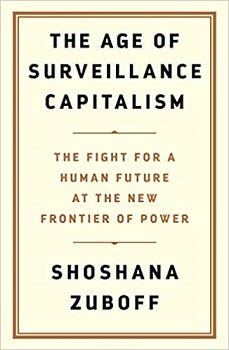
What does the world look like when we (or really I should say, some) have access to so much granular detail about humans and their behaviors (I mean more than now, by way of Shoshana Zuboff’s The Age of Surveillance Capitalism)? Are you happy that your car insurance goes down because your insurer knows you drive less and stop less rapidly? Or do you get the sense that over the coming years you will be more measured than any previous generation by many fold? Will it stop at some dignity-respecting limit, or will our thoughts eventually be read? Will it be advanced punitively, or because it saves us money to provide our data? (Likely both.) Before you know it, the whole social contract around data and what we opt-in to might make it too expensive or annoying to opt out of.
And with so much riding on behavior prediction, it’s hard to see how we wouldn’t end up in some Minority Report world, or even a world where those with the access to the best datasets and AI models use it to accrue massive wealth via markets of all kind, including prediction markets. Those not on the right side of the K-shaped economy will have their data help the well-off make more money off of the data which they can’t afford to opt out of giving. It’s easy to see why those inclined to Marxian thought liken this to a new form of primitive accumulation.
Varsha is nonplussed by this grim scenario I painted. She thinks it’s a pretty good deal if data lowers transaction costs and lots of other costs and we can solve some of humanity’s persistent issues with a tighter feedback loop around accountability both good and bad. A world that rewards carbon stewardship and punishes pollution would certainly be a cleaner one. It might be a healthy and happy one, where good habits result in wealth and we lower the gains that come from charm, deception, and life’s soft skills. It might be a more meritocratic and just place. It might even permanently end debates over theodicy, which will disappoint many working theologians.
If things get weird, she has faith in humanity rising to overturn the bad social contract and replace it with something new. I’m hesitant to expect that, but I can respect difference on this matter. Kudos to Varsha for presenting a bold envisioned future and making me think of how this could play out.
How’s it make you feel? Hopefully, at least conflicted. If I could introduce some of this energy to your life, I consider this entire podcast a success.
What even is MRV, let alone dMRV?! Or Managed MRV?! Doesn't that imply the existence of Unmanaged MRV? If everything is pretty much digital now, do we still need that pesky 'd' letter?! Are there still dudes with clipboards hanging around?
In this episode of Reversing Climate Change, host Ross Kenyon sits down with the cofounder and CEO of Offstream, Varsha Ramesh Walsh, to untangle the complicated web of carbon credit data collection.
Offstream has evolved significantly after realizing that carbon project developers don't just want another software tool to manage... they want someone to simply get the job done for them. Varsha introduces us to the concept of "Managed MRV," explaining why handing off the heavy lifting of Monitoring, Reporting, and Verification can sometimes be cheaper and far more effective than trying to handle it all in-house.
But this show also gets big. Varsha argues that practically every piece of modern infrastructure has the potential to become a carbon dioxide removal or environmental asset. For that to be true, we would likely enter a world where we are all much more persistently observed and quantified, and with rewards and punishments to match. Is the future of carbon crediting one of surveillance capitalism with the social contracts of data sharing to match? Would that solve more problems than it creates? How are we even meant to live?!
Varsha also shares her incredibly disciplined approach to information consumption as a founder, offering a highly focused counter-narrative to being "well-informed".
Turns out nothing is truly small when you start to poke at it just a little bit.
This episode's sponsors
How to fire a carbon market consultant, and how to know when you should

David LaGreca shares his expertise from countless carbon projects during his time at EcoEngineers and beyond
2026 EcoForums Training Series: Navigating Global Carbon and Fuel Regulations, Market Mechanisms, and Life-Cycle Analysis Fundamentals
Philip Lee LLP: legal resources for carbon removal buyers and suppliers
Listen to the RCC episode with Ryan Covington from Philip Lee LLP about project finance
Listen to the RCC episode with Lev Gantly about the history and current status of CORSIA
Resources
Check out my new show, Climate Workers Anonymous
Subscribe to the Climate Workers Anonymous Substack
Varsha Ramesh Walsh on LinkedIn
The Age of Surveillance Capitalism: The Fight for a Human Future at the New Frontier of Power by Shoshana Zuboff
More from the show
Ad-free episodes and other benefits come with a paid subscription.
Carbon Removal Newsroom, the news show that ran alongside this one, is over. Its episodes are still up, on the feed Climate Workers Anonymous now uses.
Carbon Removal Memes is still goofing around.
The books that come up on this show are collected on my Bookshop shelf.
🎧 Apple Podcasts · Spotify · YouTube
Paid subscribers get this episode ad-free. The ads in the free feed are inserted by Spotify when you press play. They are not in the file I make.
Full Transcript
Ross Kenyon: Hey, thank you for listening to Reversing Climate Change. This is the host, Ross Kenyon. I am a climate tech and carbon dioxide removal entrepreneur. Before I introduce today’s guest, do you know that there’s a second podcast right now? I took the old feed of Carbon Removal Newsroom, which has been sitting dormant for a couple years, and I just built a new show on top of it called Climate Workers Anonymous. If you’re a millennial American, you probably know about PostSecret, which is where people would anonymously submit things that they were too embarrassed, ashamed, scared to talk about publicly, mail it in, and it would be published as part of a collective art project. And that’s what I’m doing for people who work in climate. You listen to this show, it would not surprise me if you did work in climate or something adjacent. If you have something that you’d like to share that you would not like attributed to you yourself, you should go check out Climate Workers Anonymous. Subscribe on Substack, whichever podcast apps you use.The link to do that is in the show notes.
Also, if you wouldn’t mind, before we start, opening up your podcast app and giving this show, Reversing Climate Change, a great rating and review on whichever podcast apps you use. I’ve been noticing a lot of people on Spotify recently have been giving me five stars. Thank you if you’re listening. I really do appreciate that a lot. And if you aren’t over on Substack following me, Climate Workers Anonymous and Reversing Climate Change, you’re missing some really cool content that ties in with the audio versions of the show. So if you are on Substack, you want a little extra, let’s connect over there.
Today’s show is with my friend Varsha Ramesh Walsh. I invited Varsha on to untangle essentially what the D is in MRV.There’s MRV, there’s DMRV. I used to see people talking about MMRV, where these fault lines are, how that’s changed over time. And I asked Varsha on to explain taxonomical differences between all of these various approaches, as well as specifically what Offstream is doing at this moment, because I know that they’ve grown and changed a lot. Essentially Offstream helps biomass carbon credit producers or those who might theoretically like to produce carbon credits figure out how to do so in as easy a way as possible. It’s a huge lift to figure out how to quantify all of these things and then also to figure out the relative merits of which methodology to use, which registry to issue your credits through, and about a thousand other questions. There’s a lot to know.
And also coincidentally, Offstream was the first sponsor, I believe, of Reversing Climate Change. When I started taking sponsorships a few years ago, Varsha was an early supporter of trying to stand that up, and I am very grateful. So thank you, Varsha. Appreciate you helping validate that as a way of valorizing the podcast. You help other people valorize their carbon removal projects, and you helped me valorize mine, funnily enough. Thank you so much to Varsha for being willing to hang with me on this level without a lot of warning. I had a lot of fun hanging with her. If you like what she’s doing, you should definitely check out Offstream. The link to do so is in the show notes. Thanks for listening. Really appreciate you hanging out. And here’s the episode of Reversing Climate Change with Varsha Ramesh Walsh.
Ross Kenyon: At long last, Varsha, thank you. We did it. We’re in the same room together digitally.
Varsha Ramesh Walsh: Yeah.
Ross Kenyon: I was explaining to you earlier that you’re in this very unique spot that a lot of friends of mine find themselves in, where you’ve got a lot to say, you’re very experienced, you’ve been doing this for a long time, and somehow that disadvantages you for coming on the podcast because then I second-guess myself. I’m like, “Varsha can do so many things. We need to wait until for the exact right, perfect thing, and then we’ll do it.” And that just means we’ve been talking about doing this for, like, two years or something foolish.
Varsha Ramesh Walsh: It’s probably been two years. Yeah, but I think that it’s perfect. And I appreciate it, one, because I don’t get that many chances to come on your podcast, so I really wanna make it worth it. And I feel like I did a lot of podcasts when we were about maybe over a year ago now, and they all capture how we thought about what we did at Offstream then, but it has actually evolved a lot. And so this is my first podcast in quite a while, and I think that the way we understand what our customers need and support them today is actually sort of different and much clearer than it used to be, so I’m really excited to get to talk about it. Yeah.
Ross Kenyon: It’s a really cool thing to talk about because you started off doing one thing, it sounds like, and maybe the market changed or your customers changed or you understood yourself in a different way than you do now, and it’s changed over time, which also isn’t that easy for people to do. Sometimes people get really stuck on the way that they set out to do things, and it’s hard for them to change, and maybe you’ve held this a little bit more lightly than others.
Varsha Ramesh Walsh: Sure. I mean, I think if you’re game, I can go into some of the evolution and also, I mean, you’re a founder too, like why we... Like founding’s a little bit of the story, but I think the way I like to think about it is that our North Star has actually always been the same, which is true. Not everyone gets to have that. And I think I’ve been really clear that since starting Offstream, our goal is to help project developers get carbon credits more seamlessly. And that North Star is broad enough that I think what we’ve learned is the way we do it matters a lot, and that has been what’s really refined.
So when we started, I think SaaS was king. I was obsessed with this concept that it was gonna be a software platform. But I also believed that the best way to build good software was to do the work yourself and then build software once you figure out the work. So I actually have to thank Grant Faber suggested... Our very first paid customer at Offstream was actually just a climate accelerator called Brink. But Grant Faber was doing a...
Ross Kenyon: Brink was your first customer?
Varsha Ramesh Walsh: Brink, the APAC, yeah.
Ross Kenyon: I worked in their climate tech accelerator. That’s-- I didn’t realize that was your...
Varsha Ramesh Walsh: Yeah. I mean, when you think in the sense that like Offstream LLC was a thing and they paid Offstream LLC to give a workshop on carbon credit certification. And when you’re early, all you’re looking for is someone to pay you to do something in the realm of what you’re thinking of. So they weren’t paying us a subscription or anything. But I was like, “This is sick.” Like Grant introduced me to Nina at Brink. She was sold. Like we put a contract in place. And doing that content, like it was validating that people had questions about this process and needed support, right? Like that was all I was looking for. The bar was much lower then.
And we had a couple projects like that that we did, and then we were starting to really hone in on things. But anyway, the broader philosophy was that, you know, if you think about what you want to build a platform to support, if you can break it down into 10 pieces and try to do the work at each of those 10 stages, it’s the best way to then figure out what can you automate? What can you not? How do you build a platform to support it? So we always had that philosophy at Offstream, and so we were kinda just doing the work for our customers while we built the platform alongside them. And that really started to accelerate through, I would say, late 2024, all of ‘25, and in early ‘26, we had kinda been doing that now for over two and a half years, and what we realized was what our customers wanted was actually someone to just do the work for them.
And so we had kept thinking we were gonna automate our human team out of doing what they were doing, and then at some point we were like, “Oh, actually, this is the thing people really want.” Like, this is why they’re choosing us. This is what makes it actually work. And it’s allowing us to deliver more value than we would if we were just a software platform. And so kind of what we first started doing by necessity turned into exactly what I think we’re meant to do now, which we’re calling Managed MRV. But the way I like to think about it is we’d always been doing it. We couldn’t really articulate to the market and to customers what it was called or why it was different from the many, many software platforms out there. But finally, the words came together and I think we wrote a blog post about it, and it’s really caught on. Like, I think the language Managed MRV resonates with people. I like to think about it as just we get the job done, but you can’t sell a product called We Get the Job Done. So instead, we came up with this. And it really is just words to describe things we’ve been doing for a while. But I think that that’s an important skill for any startup to really get right is how can you differentiate what you do and embrace it? So yeah, it’s been really energizing.
Ross Kenyon: If you want to understand the wormholes that have been chewed through my brain by the internet, the way that I’m gonna ask this question will elucidate that for you, which is, do you know the... God, I’m so, so sorry to do this to you, Varsh. Do you know the meme format of the X implies the existence of Y? It’ll be like, Willem Dafoe implies the existence of Willem the friend and stuff like that.
Varsha Ramesh Walsh: I...
Ross Kenyon: It’s like managed MRV implies the existence of unmanaged MRV. Is that a...
Varsha Ramesh Walsh: Yes. Oh my gosh, that’s such a good meme format. Should we...
Ross Kenyon: Oh yeah, ‘cause there’s a crossover with, by the way. I don’t know if you wanna reveal that or not, but you have...
Varsha Ramesh Walsh: I will reveal that one of my moments of pride was when our teammate Emma was accepted into the Writer’s Room of Carbon Removal Memes, and apparently she’s doing well. I mean, I only hear from her, but she’s really...
Ross Kenyon: Reliable narrator.
Varsha Ramesh Walsh: Yeah, we have a moderately reliable narrator in Emma, but genuinely, no, memes are a big part of our culture at Offstream, and it’s actually... It’s like, I’m so happy that... Like, Emma came to Offstream not from carbon removal, not from anything in climate. And so a proud moment is just that she understood the market enough to be able to contribute with humor, which I think is a really good milestone, so...
Ross Kenyon: Yeah, to be funny about something, I think you need to...
Varsha Ramesh Walsh: You need to get it. Yeah.
Ross Kenyon: About the fault lines, and you need to... Yeah, there’s a lot you need to know. Yeah. She’s up to speed.She’s very good.
Varsha Ramesh Walsh: Good. I’m so glad. Yeah. So yes, for managed MRV, the existence of managed MRV does imply the existence of unmanaged MRV. Maybe the way I’d frame it is just somebody has to manage MRV, and it’s just a question of who. So, unmanaged MRV might be somebody purchasing a software tool that hooks up to their machines and pulls data in, collects it, has some automations like looking for anomalies, and then prepares that data to be pushed out, usually to a registry, maybe to a buyer or another intermediary. Like, I think every good software DMRV platform does that.
And I think what we realized through doing our work and building, like, we do have a software platform because it’s hard to do managed MRV well without it, is that there are lots and lots of steps that require both expertise, like making a judgment call. What should I track? If I could choose to track a photo of this versus an invoice, what’s better? What’s more efficient? And then advocating for it, kind of like what’s easiest, and then managing the admin work of actually getting all the data every single month, making sure it gets collected, and making sure systems are designed well, that they’re actually working, and then reminding people, following up with them, kind of looking at it with the human touch and then pushing it out the door. Like there’s often a full-time person, whether they’re a head of carbon or a head of MRV sometimes, using that software platform. And so the management has to be done, and from our perspective, it’s more expensive in many cases to do it in-house than to purchase something like managed MRV.
Ross Kenyon: Okay. What do even people mean with MRV and DMRV? And I see these things get thrown around and we didn’t really define it for people.
Varsha Ramesh Walsh: Oh yeah, we didn’t...
Ross Kenyon: People probably listening, I imagine that they know, but these terms are alienating to some extent.
Varsha Ramesh Walsh: They definitely are, and we actually shied away from the acronyms for a while as a result of that.
Ross Kenyon: Or did it make it more confusing paradoxically?
Varsha Ramesh Walsh: Hard, right? Because, so I’ll define... I’d like to define MRV and DMRV, but before I do so, I’ll just spend a second on this. Like, we see that DMRV is something that gets asked a lot about in requests for proposals, RFPs, and then as a result, lots of early-stage developers are going around with a checklist. They’re like, “Okay, well, what’s my registry? What’s my DMRV? Like, what’s my path forward?” Like, years before they need those things. But we sort of started to see that that acronym, as well as registry selection and some other choices, were signals that developers felt they needed to send to the demand side of the market to show them they were serious. And so, since we did that thing, we kind of embraced the category acronym. But in embracing it, we’ve also had to sort of figure out how to articulate our unique approach to it.
But we can start with MRV, which is a much broader category. Stands for monitoring, reporting, and verification. It’s basically the process that needs to be followed to get credible carbon credits issued. Like, monitoring needs to happen of what’s going on, it needs to be reported on, and then somebody needs to verify it. And actually, often there are three different parties doing those three things, right? Like, the project developer is monitoring, a platform is helping them take that data they monitored and report out on it, and then an auditor is usually verifying it. And so when people refer to MRV, I think they have different definitions, but often we’ll hear it described like, “What registry did you choose? What methodology are you following?” And like, “What are you monitoring? Who are you gonna report it to, and who’s gonna verify it?”
And so that is like a much bigger umbrella category, and within it, there are these specific deliverables. Like, you could have an MRV plan, which essentially is a more detailed version of like what exactly are you gonna monitor with what sensors and what frequency? Where is that data gonna live, and where is it gonna go? And depending on the project type, that MRV plan might be 80 pages. Like a BECCS project has to, in an MRV plan, identify every single sensor placement in the capture process and the storage process, and then also report out on often like the specific hardware that’s gonna be used. All of that kind of lives in the MRV world, and then the DMRV acronym stands for digital MRV. And it’s been kind of co-opted by the category of software platforms that ingests various sources of operational data, visualizes them, helps to make reporting easier, and then sends them to be verified. And the D standing for digital is kind of funny to me ‘cause like everything’s digital in 2026.
Ross Kenyon: It’s like kind of my follow-up here. Like how... Is there someone just standing there monitoring in person with a clipboard? And like, no...
Varsha Ramesh Walsh: Okay, so yes, yes. Like early, early MRV was done on pen and paper. So that’s why the D had to be added. But...
Ross Kenyon: That’s just the default, so maybe it’s just MRV as well. Are there any more dudes with clipboards or is that fully...
Varsha Ramesh Walsh: I think there are still dudes with clipboards. I think the reality of most DMRV platforms today, even that have the D in front of them, have some data that might’ve been originally captured via clipboard. Yeah. And I think that if that data on the clipboard is accompanied by some other data, I’m actually totally okay with it, you know?Yeah. I think people get on their high horses about data collection and data integrity, and there are things that are just impossible in certain contexts and often those specific projects are the ones that potentially have the most social benefits or just are creating the most jobs. And so in an ideal world, there would be no human intervention in any of the data that is collected as part of a carbon credit. But I’m confident that in most projects today there is, like 95%-plus projects. So, it is what it is. And I think credit buyers understand that, and when there’s human intervention, they just look for two or three different data points to back up the one that was touched by a human so that they can have confidence in it. And that’s okay.
Ross Kenyon: Yeah. So the project type you’re describing strikes me as something like the work that’s being done with distributed biochar, and there’s cameras that are being installed on kilns so that they can theoretically have that captured digitally. No one can-- Of course, I think probably any system can be gamed, and I’m wondering if you’ve seen much of that come through your system. But...
Varsha Ramesh Walsh: It doesn’t have to be distributed biochar. Like, we work with a ton of North American lumber mills, and they receive feedstock deliveries and they need to track them. And so that feedstock is being delivered by a human driving a truck, and often the way we track them is some combination of the truck odometer plus a bill of lading plus a photo taken by a human, you know? And it doesn’t have to be a rural distributed project to have these data collection limitations.
Ross Kenyon: Yeah, you’re like, “Okay, so what? You could put a transceiver on the car. You can track the mileage if you wanted. You could have cameras doing things.” Like, I could see how if you had a perfect panopticon of a surveillance state, you could perfectly measure all of this, and like maybe that’s the direction that the world is heading.
Varsha Ramesh Walsh: I don’t think so. Yeah, no, I don’t think so.
Ross Kenyon: You don’t think so? I’m being a little hyperbolic. Not really, but a little bit. What here, take issue with it.What do you...
Varsha Ramesh Walsh: No, I think that we have two forces. One, akin to what you’re saying, like, there’s definitely a lot more private data just in the public ether. But I also think that people are much more aware of data privacy and trying to push back in some instances. So I think those will be opposing forces for balance. That’s all. Maybe I’m just less sold that that’s the direction. You know, I think we’ll see. Yeah. But I think the art... Maybe just to bring it back to projects for two seconds. Like, I just, I think that in the future, every type of operator with a physical asset will be a carbon project developer, and we’re already starting to see that. Like for...
Ross Kenyon: Everyone?
Varsha Ramesh Walsh: What? Everyone. Like, if you own an asset that could either avoid emitting carbon or remove carbon, at some point like you will be removing it and then getting credits for it, or avoiding it and getting credits for it.And this isn’t actually that crazy. Think about it. Like, you buy a heat pump, you get a tax credit for that. It’s just an extension of that. And so anyway, the reason I believe this is ‘cause we’ve seen it in like the biomass space, carbon removal space. So, you know, three years ago, the folks developing projects were all startups. They were all like biochar project developers, and that was their full-time job. Now, there are these operating companies that have wood waste that just want to produce biochar, and the carbon credits are mission critical to the economics. So now they’re a project developer, but not really, right? Like they’re not gonna necessarily... They’re like a lumber mill operator that needs another revenue stream. And so I just see it going that way. And as a result, we can’t have these gazillion hoops that everyone has to jump through to get one credit. Like the way we get data needs to feel flexible to them so they can just keep doing what they’re doing and we can get the data we need. So that’s...
Ross Kenyon: Don’t mess with our hoops.
Varsha Ramesh Walsh: Yeah. I, the hoops are... I’m for hoops. I’m for hoops. But...
Ross Kenyon: Heard it here first, Varsha’s pro...
Varsha Ramesh Walsh: I’m for hoops. I’m kind of bummed actually that the NBA finals are over. I wanted another game.
Ross Kenyon: Mm, yeah.
Varsha Ramesh Walsh: Call myself a Knicks fan or a Spurs fan, but that’s okay. I just wanted more hoops. So, no, I think that the hoops, like it’s a delicate balance, right? It’s like you need to set rules and people need to adhere to them, but also we’re... And they need to improve. But at the same time, like there’s... If we want this industry to scale, it can’t be so expensive in both paying for vendors like Offstream, paying registries, changing your operating a lot, asking people that pay you for information that’s really proprietary for them. Like I think there’s just some things that are challenging about the hoops. So our philosophy is like how easy can we make it to get the data we need with minimal changes to your operations? Um, so you can just text us your data if you need, or you can WhatsApp it instead of using an app because we all know apps are dead. It’s 2026, so...
Ross Kenyon: This vision of the future you paint is so interesting to me, where it’s like everyone who could theoretically create an avoidance or a removal will eventually do so. I don’t think I’ve ever heard someone make such an all-encompassing prediction about that. It’s really fascinating to me. It makes me think of... There are both good and bad ways to view this, but there’s car insurance you can get now that’s much cheaper because it measures your mileage and it has algorithms it runs it through and knows that youre low risk or high risk. And...
Varsha Ramesh Walsh: Totally. And you need your phone in the car all the time, right? They...
Ross Kenyon: And there’s a thing that you plug in and you’re like, “Okay, this will save a couple hundred bucks a month,” but there’s also this lingering thing of like, what else are you learning about me and how-- is that gonna be monetized? Or like this is starting to creep me out. And also everyone who has anything right now in AI, if you can build a proprietary data set that’s industrial or something like that that has value, that’s the new moat that everyone is looking to have so that they can train their own smaller sets and build their own models off of these smaller sets, and that’s really gonna be the future. The way that car insurance works in that case is it makes your life cheaper and easier in so many regards. But also you’re just increasingly tracked and you’re incented positively. It’s not like there’s some big brother watching you. You’re just like, “Oh, I’m saving a couple hundred dollars a month.” And if you have all of that stuff that you’re like, “Okay, I’m making carbon credits over here. All of my health data is going into my app here. This is saving on my health insurance. All of my life is being quantified by algorithms outside of my control by billionaires who are frankly very bizarre men,” then is that the future that we’re heading into? And some of it’s good, like obviously better health decisions, better driving, better carbon credits, but also we’re being observed constantly.
Varsha Ramesh Walsh: Yeah.
Ross Kenyon: Out? Is that too much for you? Have I...
Varsha Ramesh Walsh: No, I mean, I think that it doesn’t freak me out, the future you just painted. But this is... I think it’s a social contract, and if I wanted to opt out of it, I would just opt out of it. Like, I would move somewhere, I would go off the grid, I’d get rid of my phone. I wouldn’t participate. But I am happy with the contract. I’ve opted in, and it serves me today. Like, they already monitor my energy consumption, you know? Like, they already know what I’m doing. They know when my sprinklers...
Ross Kenyon: Are they in the room with us right now?
Varsha Ramesh Walsh: They might be... And I think, you know, with AI as a great example, like, I know we pay for the tier of AI that doesn’t train on our data, so we have to, so we do that. But like, it still has our data, and it’s a contract that I opt into because the utils I get from the AI are higher than the downside of my data being out there, and that equation may change, and if so, I would just opt out, you know? So that’s how I feel.
Ross Kenyon: Yeah. I wonder too, this is maybe going too far I feel, but it’s all related here. I wonder as remote imaging and sensing gets better, you’re just like, “Oh, if you’re outside, everything’s being captured and that’s being fed into various systems.” You’re like, “Cool. Is there...”
Varsha Ramesh Walsh: See that you’re really concerned about the surveillance state, Ross. I am seeing...
Ross Kenyon: I had zero idea this podcast would go this direction, and I am really sorry if that’s not what you wanted it to be.
Varsha Ramesh Walsh: No, it’s okay. I actually just don’t share the concern. Like, I hear that you are, I think I probably don’t know enough and I don’t want to. Like, I’m currently opting out of learning about that.
Ross Kenyon: What?
Varsha Ramesh Walsh: Yeah. And this is something we talk about a lot. I think that as a founder, you kinda have to control what data you take in versus not, and you just ignore some. You just actually ignore some data sometimes. And this is a category of information I’m just not actually gonna open the door too much. So yeah.
Ross Kenyon: You’re one of the few people who talks to me in this kind of way. I remember we had a conversation at Carbon Inbound, which I can delete this part if you don’t want, where you’re just like, “You know what? That’s not a thing that I need to be thinking about, and it’s gonna pollute my information...”
Varsha Ramesh Walsh: It is. Same. Yeah, no, I agree. I love that I have that, but go ahead. I’m one of the only people who talks to you in that way.
Ross Kenyon: I just think I like that idea. I’ve read books about controlling what goes into your brain so you have enough space, your RAM isn’t eaten up by a bunch of foolish things and blah, blah, blah, or just things that you can’t control and like you shouldn’t be focused on. But I’ve never heard anyone block a conversation topic in that same kind of way where you’re just like, “I-- No, thank you. We will go somewhere else.” Like, okay, fine, Varsha.
Varsha Ramesh Walsh: You’re right. Well, perhaps there’s a more tactful way to do so.
Ross Kenyon: You weren’t rude about it. I’m being a little bit silly, but...
Varsha Ramesh Walsh: Was being open with you because we’re friends, you know? Yeah, I actually think that’s been really an important tenet of my growth. It was the ability to decide that like I didn’t need to process all the information that was thrown at me all the time, and this came up for me during COVID when I really struggled. Like, I had a hard time with the news. Like, I just was anxious all the time. I mean, the news was insane. There was so much uncertainty and like I didn’t like it, and I was like, “I could just not watch the news ‘cause what’s gonna change? I’m in my home.” Like, you know? So for some time I just didn’t, and it really helped me because I think there’s so many problems in the world and like I really think it’s my job to focus on the ones I can fix.
And so as a leader of an organization, I think I have an obligation to keep myself educated on world news, and I do through channels that are less alarming, let’s call it. And then I choose to like read a ton about energy policy and that sector of the news and then I just listen to our customers and I just have faith that those are the sources of data that I need.And so that means turning off faucets where like I don’t wanna have that in my sink. I don’t know if I love that acronym, but I just turn off the channel if I don’t want it, and it’s really served me actually. So, yeah.
Ross Kenyon: I have so much envy for this, and I wonder what my life would be like if I were that because I’m the opposite. I’m like, well, clearly I need to read the entire Talmud and clearly James Joyce. I’ve only read a little bit of James Joyce. I need to read all of that too and all the energy policy and all the other stuff and the news at the same time.And it’s cool that you get to sound smart when you make connections that maybe other people aren’t connecting in that way, but it’s not like laser-focused.
Varsha Ramesh Walsh: Probably more worldly than I am in this moment, Ross.
Ross Kenyon: How valuable is that though? Like you’re serving customers, you know what they want. You’re building something that is actually doing a thing that you think is really important. I hope that I’m on that track for my own specific customer set. I never think of them that way, but...
Varsha Ramesh Walsh: Yeah. No, I think it’s also, it’s like chapters, eras, as my favorite artist likes to say. Like, I’m definitely in a very focused chapter right now, and I think it’s actually important to be able to modulate, right? Like focus and then zoom out if you need to. And so I do zoom out from time to time, but I zoom out within the context of typically the energy sector and decarbonization and climate, and more broadly, like infrastructure. Like, the question I ask myself a lot is just like, “What’s getting built?” Because of my thesis that everything that’s getting built has the opportunity to be a carbon removal asset in the future. So like, how can we just get it to do so, basically?
Ross Kenyon: We’re talking about hooks. How come that’s not the hook? I’ve never heard anyone say such...
Varsha Ramesh Walsh: Oh, well that’s actually my whole thing. Like, every piece of infrastructure today is clean infrastructure, even if we don’t call it that. And we’ll need to generate some sort of credits and do reporting. Yeah. I really believe that. Like, it just is.
Ross Kenyon: And so whenever you’re in investor meetings, you get to say, “Our TAM is the entire world.”
Varsha Ramesh Walsh: Yeah, pretty much.
Ross Kenyon: Everyone loves that, right? That’s a great thing people love.
Varsha Ramesh Walsh: Yeah. No, I try not to spend too much time in investor meetings, one, so in terms of channels.Two, it is actually what I’ve always believed and the big question, like whenever we’re interviewing candidates, they always ask me this too. It’s like, I wish I knew our path from where we are today to that future, you know? That’s the part that’s uncertain for me that I’ll likely share in your new project on things that bring me... Like, things that make me... I wish I knew the perfect clear path how we, where we go from, okay, there’s this really small segment of the population today who’s doing these projects that utilize physical assets, whether they’re new or existing, to remove or avoid carbon.Like, everything that’s happening, low-carbon materials, CBAM, like, all that’s happening in parallel, but how do we get from where we are to then this future economy where everyone is incented through capitalism to reduce their footprint and then remove carbon, because I just, I think that’s inevitable. It’s just the direction we’re going. It’s just like those steps.I wish I had the perfect plan ‘cause then I think we could... But I think the market will evolve, and it’ll be very interesting to see the journey.
Ross Kenyon: Uh, I know you don’t think of it this way, but is it a nice version of surveillance capitalism? That’s like, is that actually what that fut- maybe?
Varsha Ramesh Walsh: I don’t have enough-- I haven’t thought about it enough. I mean, I think surveillance is like a negative way to put it, but I think humans are sharing a lot of their data today with various stakeholders as part of a social contract and like if that’s no longer serving the human population, like we will figure it out and get out of it, you know?Like, collectively. So I guess I just believe in the future collective action of humans figuring it out. You don’t, it sounds like. You’re like really worried about it. Yeah.
Ross Kenyon: No, I have like, you know, inside me there are two wolves, and one of them is George Orwell’s, “If you want a picture of the future, imagine a boot stomping on a human face forever.” And like that’s in me a little bit. And then I also have this naive, beautiful version where we figure it out and we stop being so cruel to one another for very few real reasons, and we sort of get it together before our technology outpaces our politics and we kill ourselves off before we can...
Varsha Ramesh Walsh: Yeah. That is a concern for me, the slowness of politics and policy. Um, you may or may not know I was actually a political science major.
Ross Kenyon: Did not know that. That’s so interesting.
Varsha Ramesh Walsh: Yeah. I had aspirations of serving in the Foreign Service. I wanted to work in the government, and then I realized everything moves so slowly, and I would lose my mind. But, you know, like, I get it. My personal experience aside, I think that is one of my concerns is that partisan challenges globally. Like the US is particularly challenging, but even ex-US, like there’s just really not this... We’re so far from, I think, where we need to be, which is that people put policy, politics aside and pettiness aside to just come up with some solutions that align with whatever their monetary policy is, whether it’s capitalism or something else, and then other priorities. And the change takes so, so, so long no matter what. Like even in our current administration and in the US right now, like the farm bill is such a challenge. Like it’s not even that partisan, you know what I mean? And so that’s probably the thing that concerns me the most of everything you just said is that the policy will take too long to catch up with some of where technology is going.And so the solution for us is the way I bring peace to my own brain in that is just like, are there-- can we continue to find private sector standards that companies choose to hold themselves accountable to? Because then at least there’s some quasi-regulation. So yeah.
Ross Kenyon: Okay.
Varsha Ramesh Walsh: Yeah.
Ross Kenyon: I wanna ask you before it gets away from me. We were talking about words, and it sounds like not only did finding the right words unlock new customer relationships or how you pitch Offstream to customers, but maybe it even helped you personally change how you understood what you’re doing in your business. Did I understand you correctly?
Varsha Ramesh Walsh: That’s right. Yeah.
Ross Kenyon: Tell me about that.
Varsha Ramesh Walsh: Sure. So I guess by embracing, like by having this language, like managed MRV to describe what we do, it definitely has helped us communicate to external parties the difference between what we do and just standalone software. But also, it has meant we have leaned into who we hire, how we staff the team, how we build product, and how we then want to grow. So we’ve always had customer success leads who were really talented, like typically engineering background or carbon science, and really understood the methodologies. And now that we’re leaning into this managed MRV, we’ve doubled down on that. Like, our most recent CS hire was a carbon science PhD. She’s our first PhD, which is very exciting, but she’s not too PhD about it. She’s like really talented and humble and awesome and very customer-oriented as well. But I’m doubling down on the basically expertise within our customer success team is a big change.
We build a ton of tooling that our team uses internally. So from a product perspective, we have a roadmap that’s pushing things to customers, but where customers just don’t wanna use software, we’re like, “Okay, they can just notify us some other way, and we’ll do it with our own software in-house.” And like, I do think that’s the future of software. Like I’m not necessarily into all of my apps replacing their dashboards with AI agent type things, but like I do think user interfaces are going to go away over time. And then the third thing is like as we expand, we’re really focused on biomass-based CDR right now, but we’ve always wanted to support other types of projects and other types of credits. So we already do work in tax credits, specifically a lot in 48E ITC, which is for energy production today. But as we do that, this managed MRV just parlays into managed compliance basically, right? It’s like, I think we’re gonna really stick with the managed part of it because it lowers risk for us, it lowers risk for our customers. It gives them what they want. And it also, I think, is potentially required to be successful in any sort of compliance field because everyone thinks compliance is black and white, but it’s actually just a bunch of gray area, you know?
Yeah, I actually broadly... Like, that was something one of my, one of our advisors said to me early in Offstream’s existence. He is just a close mentor. His name’s Gabe. He used to work at Indigo with me, and then he was at Ripple buying carbon credits for a while, so he’s really familiar with the market. And yeah, I do think most of compliance is gray area, and so having management of it with a human who can reason and make judgment calls better than AI will ever, and just hold AI accountable is actually just the future where we’re heading. So yeah.
Ross Kenyon: Oh, Varsha, you’re such a strange, interesting combination of a person ‘cause you’re... Okay, so there’s really big thoughts, but you also block out a lot of information. I think also, my guess is you probably had dreams about the soil enrichment protocol, and you dream in details, too. And so it’s both of those, but then very, very practical. Like, I would trust you to get stuff done, for sure. But also our long-running joke is you are such a noticer of body language that I will have the most small thing. I’m like, “Okay, Varsha, I know that you notice everything emotionally that is happening here at the same time.” The combination of things that you are is so bizarre and fascinating to...
Varsha Ramesh Walsh: That was really kind of you to describe me so well. Thank you, Ross.
Ross Kenyon: I got it right, broadly?
Varsha Ramesh Walsh: So. Yeah. Yes, and like I’m actually a big believer in that. Like, everyone’s got a lot of parts, and I just let mine shine. So...
Ross Kenyon: I think you definitely let them shine.
Varsha Ramesh Walsh: Yeah. Yeah. Thank you.
Ross Kenyon: Varsha, we did it. I’m not even sure that it was the show that we intended to make. It’s okay though, right?
Varsha Ramesh Walsh: I think it’s a great show. I think it was a perfect balance of everything I wanted to cover. Thank you for having me, and we’ll talk soon.
Ross Kenyon: Okay. Thank you, Varsha.
Varsha Ramesh Walsh: Bye, Ross.


