
Carbon Removal Isn’t a Startup
Private equity, infrastructure thinking, and why many climate founders are pitching the wrong story to the wrong investors.

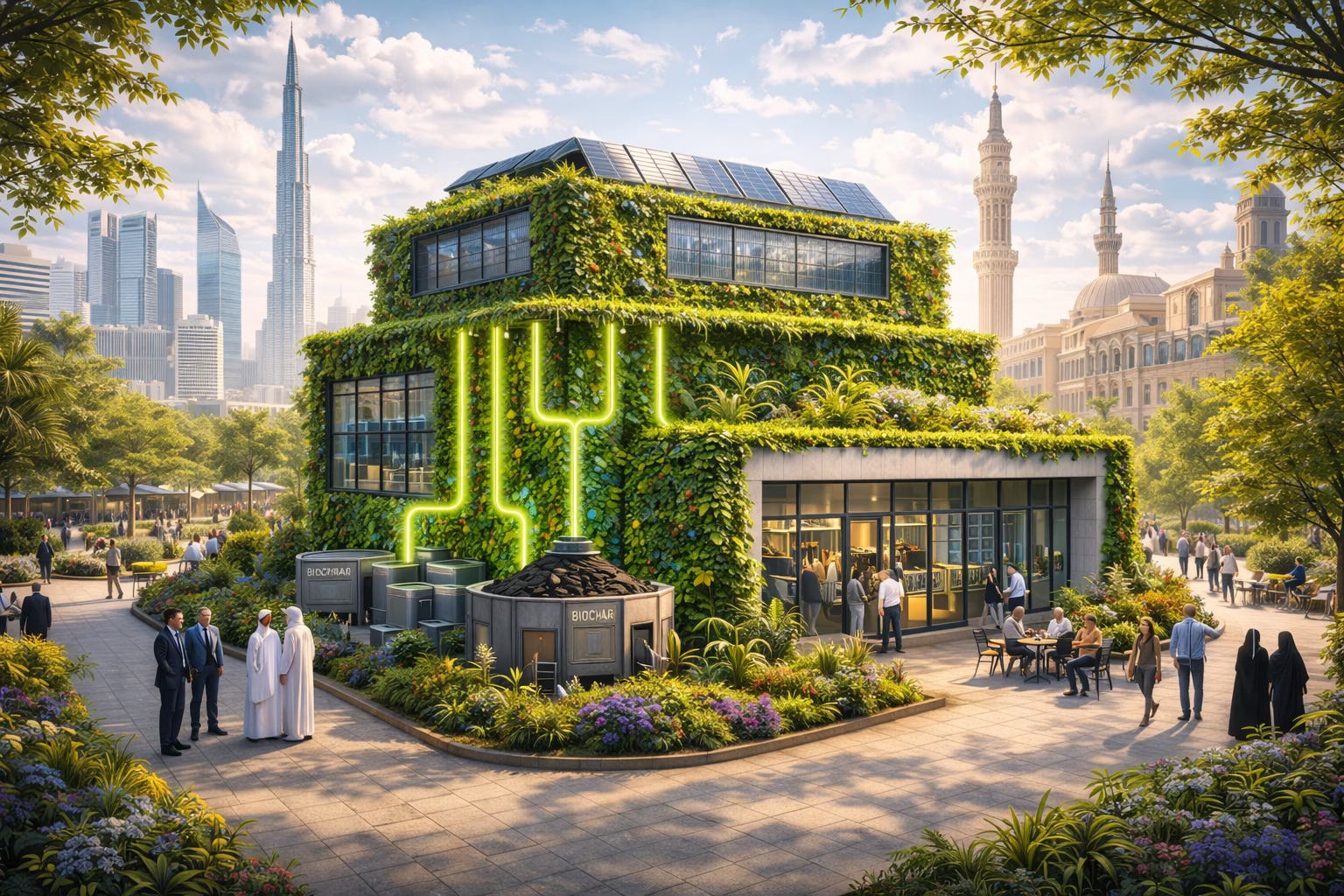
This is a summary of episode #383 of the Reversing Climate Change podcast, “The Biochar Company Owned by a Data Center Company Owned by Private Equity—w/ Alastair Collier, A Healthier Earth”. You can listen to it on Apple Podcasts, Spotify, or wherever you enjoy your shows. You can also listen to the full episode right below this text.
🔹 Quick Takeaways
Carbon removal is infrastructure, not software—atoms don’t scale like bits, and venture logic can break quickly.
Private equity cares about unlevered yield, not vision decks—slide two should explain how the project makes money.
Biochar may work for PE because it fits capital deployment constraints—DAC is too uncertain, BECCS too large, weathering too diffuse.
Demand quality matters more than policy ambition: long-term commercial offtakes beat politically contingent revenue.
Insetting is not a silver bullet—accounting boundaries make it far harder than founders assume.
Repeatability beats creativity. PE wants cookie-cutter projects, not bespoke climate art.
$5M is a ticket size dead zone—too big for angels, too small for institutions.
Most founders are optimizing for the wrong capital—VC return profiles don’t match project economics.
Infrastructure investors fund discipline, not optimism—being early, late, under- or over-budget are all failures.
You don’t “sell your company”; you enable infrastructure to exist. Ownership follows capital reality, not founder mythology.
📝 Carbon Removal After the Startup Illusion
The central claim of the episode is simple and unsettling: most carbon removal founders are telling a story that no serious capital provider believes. Venture capital logic—fast scaling, exponential upside, deferred profitability—works when you’re moving information. It often collapses when you’re moving biomass, concrete, steel, and heat.
Collier’s experience inside private equity exposes the mismatch. Infrastructure investors don’t ask how big the market could be; they ask whether a specific project generates predictable cash flows over 15 years. They want contracted revenues, conservative assumptions, and unit economics that survive stress; not narratives about saving the world.
That difference explains why biochar emerged as viable for PE. Not because it’s morally superior, but because it fits capital deployment realities: project sizes in the tens of millions, multiple revenue streams, and timelines that match infrastructure horizons. Other carbon removal pathways may be technically promising, but they miss the financial window these investors operate within.
🧱 Why Venture Capital Keeps Failing This Sector
Collier is blunt about VC mismatch. A 30% IRR return hurdle makes sense for software; it might be fatal for biochar plants. Worse, early VC-backed pilots often introduce risks—unproven feedstocks, weak contracts, bespoke designs—that later scare away institutional capital entirely.
The result is a graveyard of “successful” demos that can’t scale. Not because they failed, but because they succeeded the wrong way.
Private equity works differently. It demands boring competence: repeatable designs, standardized contracts, credible counterparties, and management teams that hit timelines precisely. Creativity lives in the appendix. The front of the deck is cash flow.
This is why Collier insists founders stop calling themselves startups. You’re building infrastructure, and infrastructure belongs to those who finance it. The tradeoff isn’t purity versus corruption; it’s existence versus irrelevance.
🏗️ The Real Bottleneck Isn’t Money
One of the episode’s most counterintuitive points is that capital is not scarce. Collier describes multiple institutions willing to deploy $50–150M into biochar today—if only they could find projects that meet their criteria. The gap isn’t interest; it’s translation.
Founders pitch biochar’s benefits. Investors want to know who buys the output, under what contract, at what price, with what downside protection. The mismatch is cultural as much as financial. Climate founders optimize for inspiration; infrastructure investors optimize for survival.
The lesson is uncomfortable but clear: carbon removal will scale only when its builders stop trying to sound visionary — and start sounding boring.
That may be tragic for the startup mythology that grew out of software eating the world.
But it might be excellent news for actually pulling carbon out of the atmosphere.