A Week at Sea: Lessons from a Tall Ship Blue Water Passage
What a century-old tall ship taught me about anxiety, beauty, teamwork, and the physical reality beneath our climate abstractions.
This is a recap for episode 377 of the Reversing Climate Change podcast from host Ross Kenyon. You can listen wherever you enjoy podcasts, like Apple Podcasts, Spotify, or YouTube.
And if you want some video ASMR content of sailing sounds, I made that for you too:
🔹 Quick Takeaways
The ocean does not care about your plans—a week aboard the Statsraad Lehmkuhl is a study in surrender, humility, and recalibration.
Seasickness is egalitarian: CEOs, scientists, innovators, and sailors all ended up on the bucket brigade at some point.
The ship becomes a micro-society with watch rotations, communal labor, sleep deprivation, and shared vulnerability forging rapid trust.
Beauty arrives unexpectedly: dolphins, whales, bioluminescence, fog-soaked dawns, and moments of silent awe that reset your nervous system.
The lesson beneath the lessons: climate abstractions melt away when you’re physically inside the systems you’re trying to protect.
Presence is compulsory: there’s no internet, no notifications, no escape—just weather, bodies, teamwork, and the next bell.
The voyage becomes a metaphor for climate work: disorienting, difficult, communal, full of small indignities and sudden grace.
📝 A Tall Ship, a Big Ocean, and a Recalibrated Life
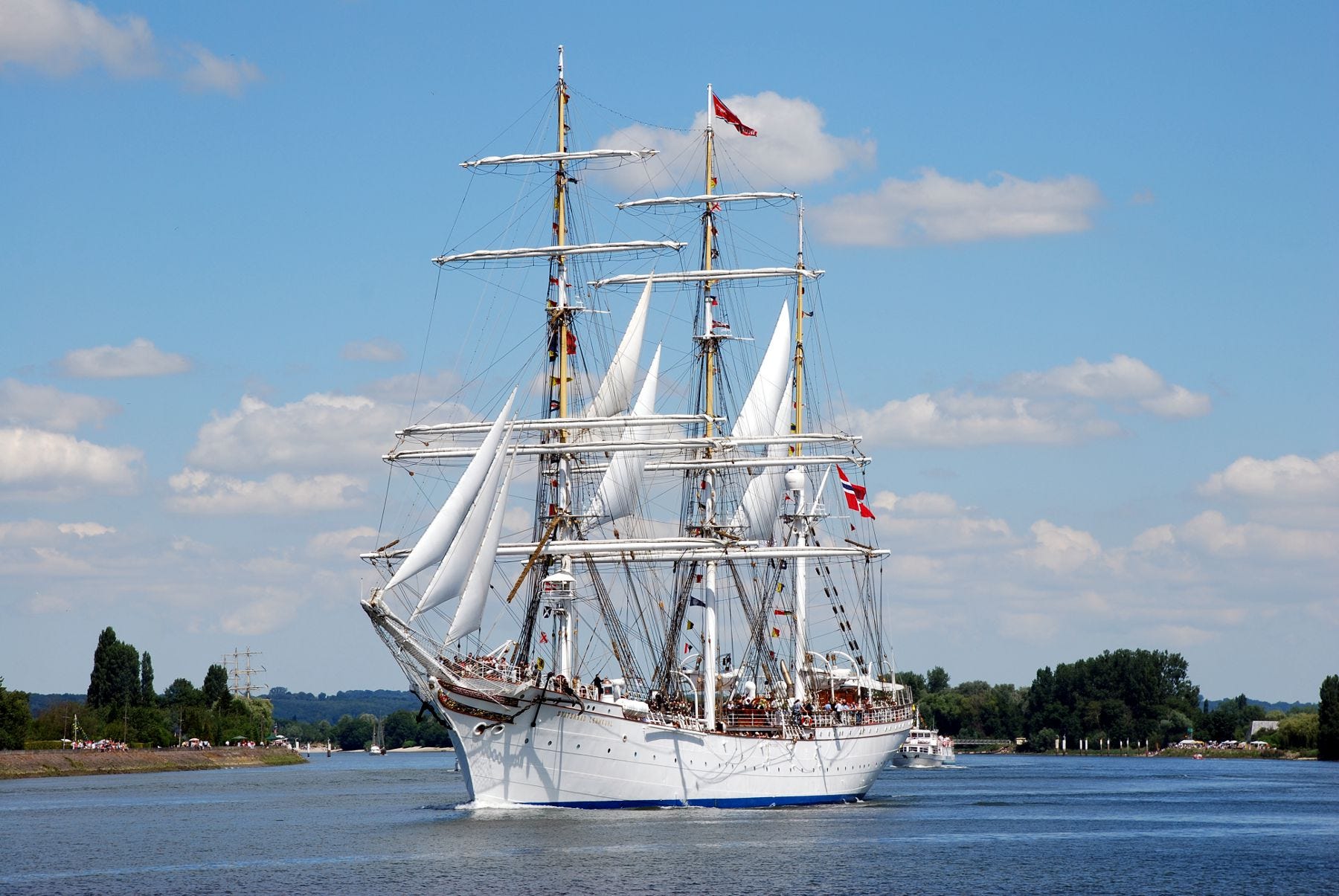
The Statsraad Lehmkuhl is a 110-year-old Norwegian tall ship with steel ribs, creaking timbers, and hammocks packed in like a kind of maritime dormitory. Boarding it in Seattle felt like stepping out of modernity and into something slower, older, and more honest. And then, as the ship left the protection of the Sound and entered the Pacific, the voyage stopped being quaint and became very, very real.
The swells grew. The wind rose. People got sick. The bucket brigade began. A ship full of climate innovators and scientists turned into a floating monastery of nausea and teamwork. There were four-hour watch shifts in the middle of the night, learning to take the helm on a pitching deck, hauling lines in frigid spray, and waking up in a hammock that swung like a pendulum over the snores of strangers. And yet, once the fog lifted and the sea flattened, something inside everyone seemed to rearrange. The ocean teaches quickly and ruthlessly, and then just as quickly rewards you with dolphins at the bow or a glowing line of bioluminescence in the wake.
🌊 The Sea Forces Presence
The most surprising part wasn’t the discomfort but the attention it produced. You can’t disassociate at sea. Your phone is useless. Your calendar disappears. All that remains is the next bell, the next task, your own body’s stubborn limitations, and the unfathomable mass of water beneath you.
Ross describes the ship as a small, temporary society—one where hierarchy mattered less than who could hold a line in the wind, who brought snacks to sick crewmates, who cracked jokes at 3 a.m., who cared for others without being asked. The voyagers were strangers on Monday, comrades by Sunday. And woven through everything were the scientists from the University of Washington, calmly gathering ocean data on a deck that tried to throw them overboard every few minutes. Their professionalism amid chaos became its own quiet lesson: climate science is built by people willing to suffer a little discomfort for the sake of knowing.
⚓ Why Climate People Should Go to Sea
Climate work is emotionally abstract. Most of us read graphs, not waves. We experience climate change as numbers, not motion. But a week on the Lehmkuhl collapses all that abstraction. You feel the ocean’s power in your stomach, your balance, your sleep, your fear, your awe. You remember that the world is big, physical, indifferent, and unimaginably beautiful.
By the time the ship passed beneath the Golden Gate, Ross had been changed in ways he didn’t fully understand yet. The voyage wasn’t a vacation, or a leadership retreat, or an adventure story. It was a recalibration. A reminder that climate work is ultimately about protecting a world that touches us before it convinces us. A world we live inside, not above.


Brillinat framing on how the physical overwhelms the abstract. I rememer my first multi-day sail and the way sleep deprivation and nausea basically forced presence, kinda like the ocean wouldn't let me intellectualize anymore. The bioluminescence detail really captures that sudden grace after all the discomfort, dunno why but those moments seem to recalibrate everything.